REVIEW · ATHENS
Athens City of Rebellion Private Walking Tour
Book on Viator →Operated by Culture Hunters · Bookable on Viator
Resistance in Athens is more than a theme. It’s built into the streets, squares, and landmarks you’ll pass anyway. This private walking tour strings together the city’s history of pushback—from resistance to the Ottomans to today’s fights for social justice—so you leave with a sharper feel for why Athens looks the way it does now.
I like the small-group, conversation-friendly format, which makes it easier to ask questions instead of just taking photos and moving on. I also like the way the route mixes famous sights with less expected stops, so the story doesn’t feel like one long museum lecture.
One consideration: this walk is not ideal if you have walking difficulties. It’s also weather-dependent, since it’s built for going outside between stops.
In This Review
- Key things I’d focus on before you go
- Seeing Athens Through Resistance, Not Just Ruins
- Monastiraki: Where the Tour Starts and the Pace Feels Human
- The Tzisdarakis Mosque Stop: Ottoman Past as a Lens for the Revolution
- Ayìa Dynami (Sacred Power): When Churches Carried Resistance
- Syntagma Square: A Single Place With Many Occupations
- Hotel Grande Bretagne: Luxury Address, Heavy Past
- Tomb of the Unknown Soldier: Not Just a Monument
- Hellenic Parliament: The Old Palace After Victory
- University Students and Liberties: A Political Role for Campus Life
- Navarinou: Citizen Initiative in the Middle of Exarchia
- Exarchia Square: The Neighborhood Where Activism Lives
- Price and Timing: Is $86.82 Worth It?
- Who This Tour Fits Best (and Who Might Skip It)
- The Logistics That Actually Matter on a City-Walk
- Should You Book the Athens City of Rebellion Walk?
- FAQ
- How long is the Athens City of Rebellion Private Walking Tour?
- What is the starting location for the tour?
- Where does the tour end?
- Is admission included for the stops?
- Is the tour private or group-based?
- Is the tour suitable for kids?
- Is it accessible for travelers with mobility issues?
- Do I need to worry about weather?
- What is the cancellation policy?
Key things I’d focus on before you go

- A story built across eras: Ottoman occupation to Nazi headquarters to student-led liberties and present-day activism
- Multiple layers in one square: Syntagma Square gets tied to monarchy history, the Tomb of the Unknown Soldier, and the occupation-era narrative
- Exarchia as the present-day chapter: street art and citizen initiatives tied to current issues like police violence and gentrification
- A route that starts easy and ends in motion: Monastiraki to Exarchia keeps the momentum going for about 2.5 hours
- Your guide can connect the dots: the strongest part here is having context for what you’re seeing in real time
- Free admissions at the key stops: the listed visits come with admission ticket notes as free, so your money mostly goes to the guide and storytelling
Seeing Athens Through Resistance, Not Just Ruins
Athens is famous for its ancient monuments. But if you only see the classics, you miss half the city. Athens has also been a place where ordinary people and organized groups fought for freedom—sometimes against empires, sometimes against fascism, and sometimes against the pressure of powerful governments and institutions.
That’s the core idea of the Athens City of Rebellion Private Walking Tour: you’ll walk through locations tied to resistance stories, and your guide will help you connect why those conflicts still echo in everyday life. You’ll move from early modern Greek resistance against the Ottomans into the 20th-century occupation period, then land in Exarchia, where activism is part of the neighborhood’s identity.
This is not a tour that asks you to memorize dates. It’s a tour that helps you read Athens like a living document. And if your goal is to understand modern Greece beyond headline-level history, that’s exactly the right kind of framing.
You can also read our reviews of more walking tours in Athens


Monastiraki: Where the Tour Starts and the Pace Feels Human
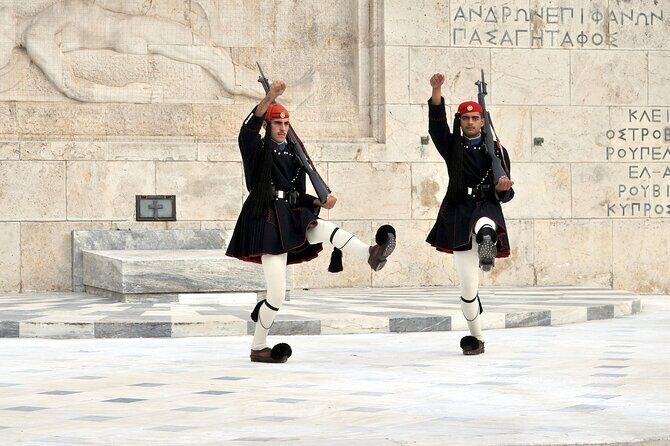
Your tour kicks off at Pl. Monastirakiou 2 near central foot-traffic. Monastiraki is a good starting point because it’s familiar, busy, and easy to reach. You get a quick welcome on the square and a sense of where the story begins before you start stacking up details.
This opening matters more than it sounds. Monastiraki is the kind of neighborhood that can swallow a visitor’s attention. A guide-led start helps you avoid the common mistake: wandering, then later realizing you missed the “why” behind what you passed.
Expect a short first stop and then a clean transition into the Ottoman-era thread.
The Tzisdarakis Mosque Stop: Ottoman Past as a Lens for the Revolution
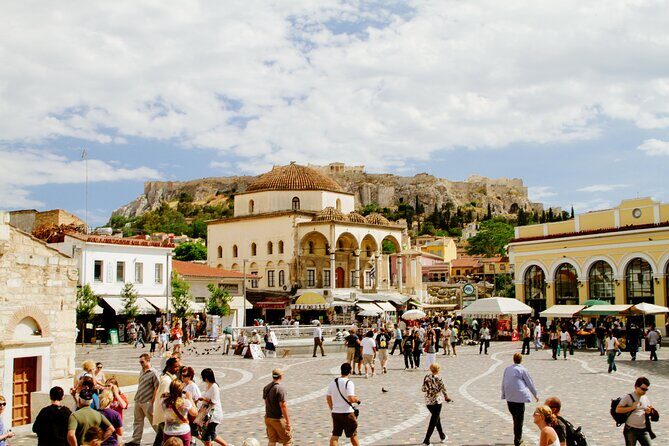
Next you’ll visit Tzisdarakis Mosque, a stop that leans hard into the Ottoman period. The tour’s way of explaining this site is practical: you’re encouraged to picture how the city’s skyline and religious landscape would have looked in earlier centuries, including the idea of an Acropolis topped with a minaret.
Then the guide connects that setting to the beginning of the Greek revolution against the Ottomans. Even if you know Greek history at a basic level, this kind of on-the-ground explanation changes the angle. Instead of treating the revolution as a distant event, it becomes something that grew out of places you can point to on foot.
One small watch-out: since this stop is short, you’ll want to stay mentally switched on. The value here is the context you’re given in those minutes.
Ayìa Dynami (Sacred Power): When Churches Carried Resistance

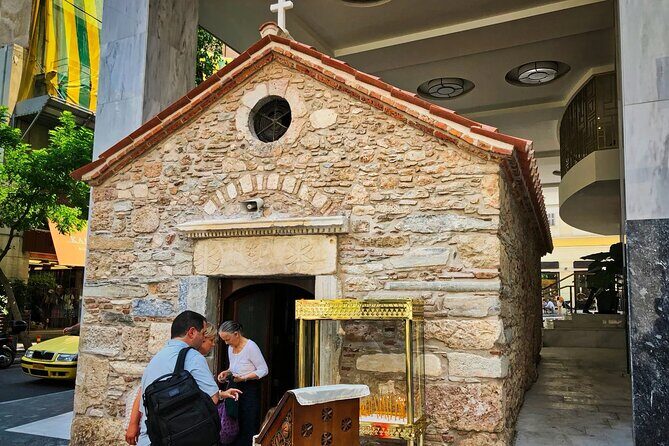
The tour moves to the Holy Church of the Sacred Power (Ayìa Dynami), again with a tight time window. This is where the story turns from political strategy to everyday survival and secret networks.
You’ll learn that this church was used by members of the Greek resistance during the Ottoman occupation. That detail is the kind of fact that changes your city-walk. A church stop isn’t just architecture; it becomes a clue to how people organized when open resistance could be deadly.
If you like history that feels human—people making decisions under pressure—this is a strong stop. And it’s a good reminder that resistance wasn’t only banners and battles. It also involved quiet places where people could plan, gather, and keep hope alive.
Syntagma Square: A Single Place With Many Occupations
Then comes Syntagma Square, the symbolic heart of resistance in Athens. This stop is longer than the earlier ones, which is helpful because the tour packs a lot of story into the square’s layers.
You’ll hear how the square ties to the old Palace of the King, the Tomb of the Unknown Soldier, and the darker occupation-era period when Nazi forces had a headquarters presence in Athens. In other words, this isn’t one straight narrative. It’s a stack: monarchy symbolism, national remembrance, and wartime power.
Syntagma is also one of those places where visitors often feel like they already know it. Big road, big monuments, lots of traffic. The tour helps you slow down and see the square as a stage that different regimes used—and different people had to endure.
If you’re the type who likes to understand why a place feels charged even when nothing is happening, this is a must.
You can also read our reviews of more city tours in Athens




Hotel Grande Bretagne: Luxury Address, Heavy Past

After Syntagma, you’ll stop at the Hotel Grande Bretagne, a Luxury Collection Hotel, Athens. Today it reads as polished hospitality. But the tour frames the building’s history in a much darker way—how it saw moments when Nazis were in power in Athens.
This kind of stop can be uncomfortable, but it’s also where your understanding starts to mature. Athens isn’t only about surviving empires; it’s also about what happens when powerful occupiers try to control the city’s image.
The practical benefit for you: you’ll walk away seeing the same street view differently. A hotel frontage becomes a chapter title.
Tomb of the Unknown Soldier: Not Just a Monument
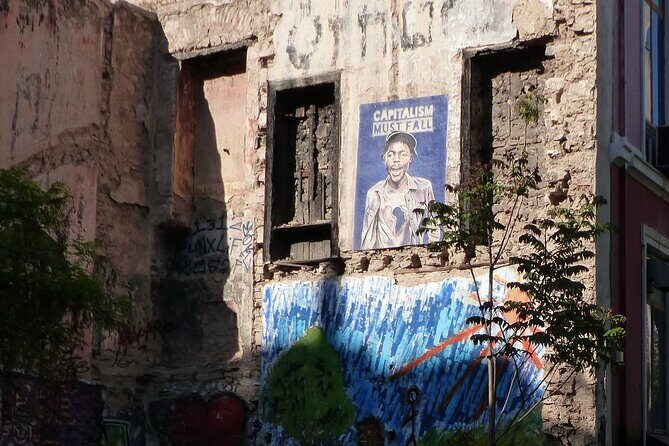
You’ll then reach Tomba Del Milite Ignoto, the Tomb of the Unknown Soldier. The tour keeps this stop brief, but it doesn’t treat it like a checkbox.
You’ll learn the story behind the Evzone soldiers and their distinctive outfits, and how they guard the Tomb of the Unknown Soldier. That detail matters because it links national identity to ritual and memory, not just stone.
Even if you’ve seen similar ceremonies elsewhere in Europe, this is one of those Athens traditions that feels sharper when you’ve just heard the occupation and resistance context. The monument becomes part of the same larger conversation: what the nation chooses to remember, and how it honors sacrifice.
Hellenic Parliament: The Old Palace After Victory
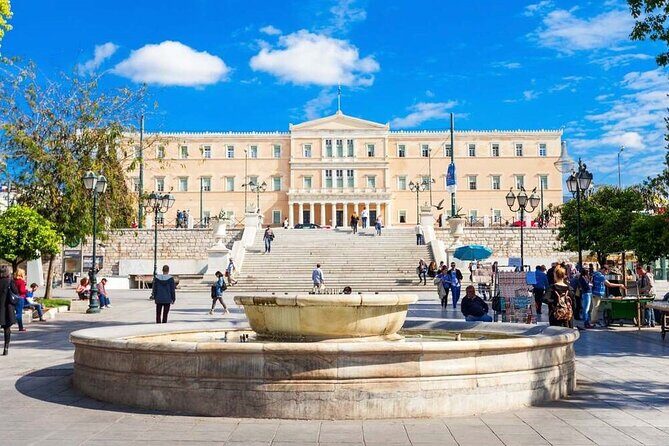
Next is the Hellenic Parliament area, where the tour points out the building’s role as the Old Palace of the First King after Greece’s revolution victory.
Again, this is about context. You’re not just looking at a grand civic building. You’re learning that power moved—and then got reshaped—after the revolution. It’s a reminder that political change doesn’t only mean new freedoms; it also means new symbols.
This stop is also a useful way to connect the earlier theme of resistance to the later reality of governance. Resistance doesn’t end when victory arrives. It evolves into the struggle over what kind of country will follow.
University Students and Liberties: A Political Role for Campus Life
The tour then goes to National and Kapodistrian University of Athens. Here, the focus shifts to students and universities as a force in the fight for citizens’ liberties.
You’ll get a clear framing of why education and youth movements mattered. The tour’s angle is that liberties aren’t only granted; they’re demanded, and students often become key players in pushing institutions to change.
This is a good stop for anyone who wants modern Greece to make sense. Athens isn’t stuck in history. It keeps reenacting the same questions—who has rights, who speaks, and who gets heard.
Navarinou: Citizen Initiative in the Middle of Exarchia
After the formal institutions, you’ll head toward Navarinou, described as a park shaped by a citizen’s initiative in the heart of the alternative neighborhood of Exarchia.
This stop works as a bridge. You go from national buildings and symbols to something more local and grassroots: a community-shaped space. The tour uses this to show how resistance culture isn’t only about protests. It also shows up in how people claim space and redesign daily life.
If you like urban details—how neighborhoods feel different because people used them differently—this stop is worth paying attention to, even though the time is short.
Exarchia Square: The Neighborhood Where Activism Lives
Finally, the tour spends its remaining time in Exarchia, specifically around Exarchia Square and nearby stops in the neighborhood.
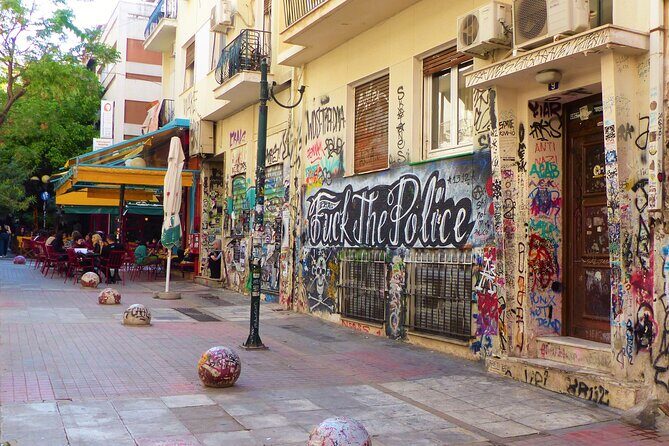
This is the present-day chapter. The tour describes Exarchia as today’s resistance epicentre, tied to issues like crisis, police violence, and gentrification. It also points to the neighborhood as a place that welcomes anarchists, refugees, queers, and artists, and you’ll see street art and citizen initiatives that show years of rebellion.
This part is where you’ll feel the tour’s heart. You’re no longer listening to history only as a past event. You’re watching how the present expresses itself.
Practical note: Exarchia can feel different depending on the day and conditions. If you’re worried about being out of place, this is still usually a respectful, guided way to understand what you’re seeing. Just remember: this is a neighborhood with strong politics. That can mean lively street energy, not just murals.
Price and Timing: Is $86.82 Worth It?
At $86.82 per person, you’re paying for a private walking experience built around specialized storytelling. The tour lasts about 2 hours 30 minutes, and it’s booked fairly far ahead (on average about 88 days), which usually signals that it’s in demand.
What you get for the money:
- A private format where only your group participates (so you’re not stuck in a giant herd)
- A route that covers multiple high-meaning locations without making you spend your day commuting between far-apart sites
- Listed stops with admission noted as free, so you’re not paying extra at each location for entry
What you should weigh:
- This isn’t a “greatest hits” tour. If you’re only here for ancient Greece and prefer light vibes, the subject matter is heavy. It’s about occupation, oppression, and modern social struggle.
- It’s not recommended for people with walking difficulties, so you need to be comfortable moving on foot.
For the right traveler, this price makes sense because you’re not buying tickets—you’re buying interpretation. Athens is a city where context turns random streets into meaning.
Who This Tour Fits Best (and Who Might Skip It)
This tour fits you if:
- You want a modern Athens understanding, not just ancient sights
- You like history that explains how the present was shaped
- You enjoy walking tours that connect places into a narrative you can remember
- You value a guide you can talk with, not only listen to
You might choose a different tour if:
- You need a very relaxing, low-emotion day
- Your walking ability is limited
- You’re traveling with very small children (the tour is adapted for ages over 10, so it’s not designed for toddlers)
If you like your Athens with a little grit and a lot of context, this is a smart use of a half-day.
The Logistics That Actually Matter on a City-Walk
The tour is near public transportation, and you’ll start at Pl. Monastirakiou 2. It ends at Themistokleous 68 near Exarchia Square. A walking tour like this is easiest when you don’t plan a complicated itinerary right after—save time for food, a slow coffee, and a chance to absorb what you just learned.
It’s also weather-dependent, so on rainy or unpleasant days it may be rescheduled or refunded. Since it’s outside for most of the time, bring basic walking comfort: shoes you can trust and a layer for changing conditions.
And yes, it’s set up as a private tour/activity, which helps you keep control of pace and questions for your group.
Should You Book the Athens City of Rebellion Walk?
If you want Athens to feel like a real place with real conflicts—and you like history that explains today’s city life—book it. The combination of Ottoman-era resistance sites, the occupation narrative around major squares, and the final pivot to Exarchia makes this tour a strong backbone for understanding modern Athens fast.
If you’re mainly after classical ruins and don’t want to engage with politics and heavy history, you may find the subject matter less fun than you hoped. In that case, choose a classics-focused route and save this one for a later trip when you want depth.
FAQ
How long is the Athens City of Rebellion Private Walking Tour?
It’s about 2 hours 30 minutes.
What is the starting location for the tour?
The tour starts at Pl. Monastirakiou 2, Athina 105 55, Greece.
Where does the tour end?
It ends at Themistokleous 68, Athina 106 81, Greece, near Exarchia Square.
Is admission included for the stops?
The stops listed on the tour are marked with admission ticket free, and the tour includes all fees and taxes.
Is the tour private or group-based?
It’s private, meaning only your group will participate.
Is the tour suitable for kids?
The tour is adapted for anybody over 10 years old.
Is it accessible for travelers with mobility issues?
It is not recommended for travelers with walking difficulties.
Do I need to worry about weather?
This tour requires good weather. If it’s canceled due to poor weather, you’ll be offered a different date or a full refund.
What is the cancellation policy?
You can cancel for a full refund up to 24 hours in advance. If you cancel less than 24 hours before the start time, the amount paid won’t be refunded.

More Walking Tours in Athens

More Tours in Athens


More Tour Reviews in Athens
- All Day Cruise -3 Islands to Agistri,Moni, Aegina with lunch and drinks included
★ 5.0 · 4,958 reviews