REVIEW · ATHENS
Athens City of Rebellion Small-Group Walk
Book on Viator →Operated by Culture Hunters · Bookable on Viator
Rebellion has a way of showing up in streets. This 2.5-hour small-group walk traces how Athens’ fights for freedom shaped the city you see now, moving from Ottoman-era resistance to modern battles against oppression. You’ll connect the dots across major landmarks and neighborhood life, from historic squares to the activism hub of Exarchia.
What I like most is the balance: you get both the famous symbolic sites and the lesser-known “why this matters” stories that explain modern Athens. I also really appreciated that the guide Maelle brings the timeline into focus in a way that feels refreshing and easy to follow, even if you’re fuzzy on how modern Greece fits together. The main catch: this tour isn’t recommended if you have walking difficulties, and it needs good weather to run.
In This Review
- Key highlights you should care about
- Athens City of Rebellion: what this walk actually teaches you
- Monastiraki Square to the Tzisdarakis Mosque: Ottoman echoes in plain sight
- A resistance church and Syntagma Square’s contradictions of power
- Tomb of the Unknown Soldier and the First King’s palace: when symbols do work
- National and Kapodistrian University: students as political drivers
- Navarinou and Exarchia Square: activism where you can see it
- Maelle’s guiding style: making modern Athens make sense
- Price, group size, and value for your time
- Getting comfortable: what to expect on the ground
- Should you book this Athens City of Rebellion walk?
- FAQ
- How long is the Athens City of Rebellion small-group walk?
- How big is the group?
- Where do we meet, and where does the tour end?
- Is there an admission ticket price for the stops?
- Is this tour okay if I have walking difficulties?
- Does the tour depend on weather?
Key highlights you should care about
- A max-6 group walk that keeps the pace conversational instead of rushed
- Modern history focus: Ottoman resistance, fascism, and today’s activism, not just ancient sights
- Syntagma Square context linking monarchy, the unknown soldier, and wartime occupation stories
- Exarchia street-level activism plus civic initiatives and street art as you walk
- All stops are free to enter (you won’t need separate admissions for listed stops)
- Mobile ticket + confirmation sent at booking time
Athens City of Rebellion: what this walk actually teaches you

This tour is built for people who love history but get annoyed by history that stops at the Parthenon. Instead, you’ll follow a straight line through Athens’ recent centuries—how resistance shaped public spaces, institutions, and neighborhoods. The story theme is simple: rebellion isn’t just a headline. It leaves traces you can still read in squares, churches, universities, and murals.
You’ll start in the center and gradually move toward Exarchia, which is described as a present-day epicenter for resistance and activism. The framing isn’t “one revolution and done.” You’ll hear about different eras of struggle: against the Ottomans, during wartime occupation, under fascism and oppression, and then the modern fight for social justice. If you’ve ever wondered why certain places in Athens feel politically charged, this tour gives you a map for that feeling.
Also, the format helps. With a small group (up to 6 people), you’re more likely to ask quick questions and keep up without feeling like you’re sprinting through a checklist. You’ll walk for about 2 hours 30 minutes at a pace that’s long enough to connect ideas, short enough to stay in control of your day.
You can also read our reviews of more walking tours in Athens


Monastiraki Square to the Tzisdarakis Mosque: Ottoman echoes in plain sight
You’ll begin at Pl. Monastirakiou 2, in Monastiraki, a square that’s easy to recognize and easy to orient yourself in. This is a smart first move: before the tour gets heavy, you’re grounded in the city center and the everyday vibe.
From there, the walk takes you to Tzisdarakis Mosque, where the emphasis is on the Ottoman past. You’re invited to imagine older layers of Athens—specifically, a version of the Acropolis skyline that included an Ottoman minaret. That kind of visual framing makes it easier to understand why the Greek revolution against the Ottomans is treated as a turning point in the tour’s storyline.
What’s useful here is the cause-and-effect approach. Rather than treating the Ottoman era as a separate chapter, you’ll hear how it connects to later rebellion. And because you’re walking, it’s not just facts in your head—you’re seeing how current geography overlaps older meaning.
One practical note: this is city-center walking, so expect normal urban foot traffic. The tour stops are short (roughly 10 minutes each early on), so it’s not a sit-and-lecture experience.
A resistance church and Syntagma Square’s contradictions of power

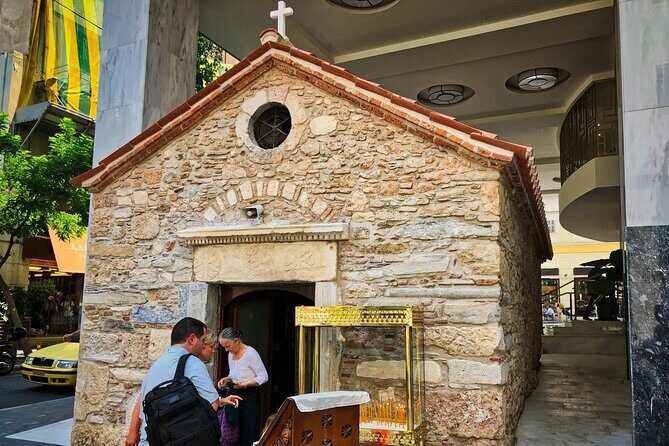
Next comes the Holy Church of the Sacred Power (Ayìa Dynami), described as a place used by members of the Greek resistance during Ottoman occupation. That detail matters. When you hear that a church served resistance efforts, the story stops being abstract. You start seeing how ordinary community spaces can carry political weight.
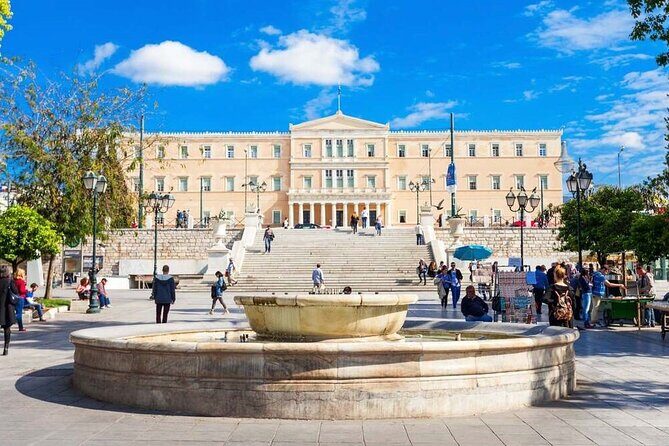
Then you’ll reach Syntagma Square, and this is where the tour’s theme gets very concrete. The square is positioned as a symbolic center of resistance in Athens. You’ll be guided through what you can spot there and what it represented during different periods—starting points like the former royal palace, the Tomb of the Unknown Soldier, and wartime occupation references including Nazi headquarters.
This section is also good if you like history but struggle with the timeline. The tour is designed for modern Athens context, including how symbols and institutions change roles over time. One of the more relatable points from past visitors is how the guide helps connect the gaps between classical-era “tour Athens” history and the modern story of who held power, who resisted it, and why some places feel politically layered.
The drawback to know: Syntagma Square is busy. If you hate crowds or you get overstimulated easily, you might find this the most crowded segment of the walk.
Tomb of the Unknown Soldier and the First King’s palace: when symbols do work

From Syntagma Square, you’ll stop at the Monument to the Unknown Soldier. You’ll learn about the soldiers who guard it—especially the story behind their distinctive outfits and what their presence means in the tour’s larger theme of national identity and remembrance. Even if you’ve seen the monument before, this is the kind of stop where a guide can make your eyes “look smarter” by giving you a reason to notice details.
After that, the walk continues to an area connected with the Old Palace of the First King in Athens after the revolution’s victory. The tour frames it as a building with a long and complicated afterlife—something that shifts from symbol to setting and picks up different meanings as regimes change.
One of the nice things about this part is that it ties visual landmarks to political stories. You’re not just checking off monuments. You’re being asked to consider how architecture and ceremony can be used by power—and how, in response, people build alternative forms of meaning and resistance.
If you enjoy a mix of “what you see” and “what it meant,” this section is a strong point of the tour.
National and Kapodistrian University: students as political drivers
Next up: the National and Kapodistrian University of Athens. The tour connects universities to citizen liberties and makes a case for why students matter in the fight for freedom. This isn’t just a stop for a quick photo. It’s a chance to understand how education and civic activism can overlap—especially in a city where politics can feel like it lives in public space.
Why this works for you: it expands the resistance story beyond street-level action and wartime moments. You’re shown that resistance can also be intellectual, institutional, and youth-driven. It’s the kind of context that helps you understand why Athens isn’t just a past tense city. It’s a present tense one.
This stop is also time-friendly—around 10 minutes—so it fits nicely between larger, heavier squares and neighborhoods.
You can also read our reviews of more city tours in Athens





Navarinou and Exarchia Square: activism where you can see it
Once you head toward Navarinou, the tour shifts into civic initiative mode. Navarinou is described as a citizen’s initiative in the heart of the alternative neighborhood of Exarchia. The point isn’t only that the park exists. It’s that it reflects how communities carve out space for their own values.
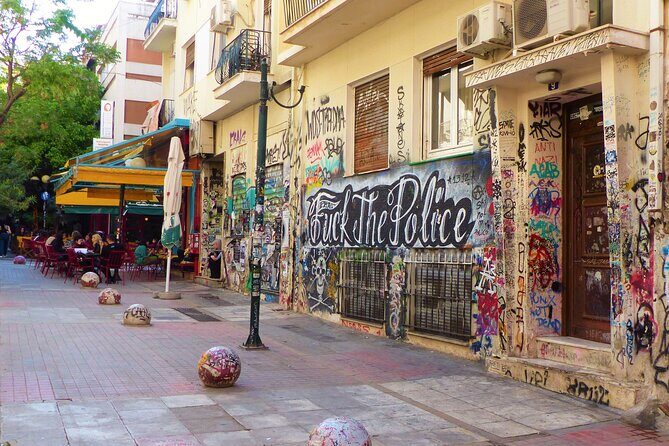
Then comes Exarchia, the tour’s centerpiece neighborhood for today’s resistance and activism. You’ll walk through the area with multiple stops here (about 20 minutes total in this section), hearing about crisis, police violence, gentrification pressures, and how street art and citizen initiatives show up in daily life.
The tour also emphasizes who Exarchia serves and welcomes—described as a place that includes anarchists, refugees, queers, and artists. That matters because it frames the neighborhood not as a theme park of rebellion, but as an ongoing social ecosystem. You’ll see how activism and identity can be part of the same street-level reality.
You should know: Exarchia is not “quiet Athens.” Even without any special event, it can feel tense and loud in places, especially when you’re near issues the tour discusses. If you prefer a strictly neutral sightseeing vibe, this neighborhood section will feel more pointed than most city walks.
Maelle’s guiding style: making modern Athens make sense
Past participants highlighted the guide Maelle, and it’s easy to see why her approach would stick. The tone described is not dry. It’s structured, but not stiff. The effect is that modern Athens stops feeling random.
One of the most practical benefits is clarity. If you’ve been confused by how stories connect—like how figures you associate with older periods fit into later Greek society, or where the Greek royal family fits—the tour is built to put those pieces in the same box. That’s valuable when you’re trying to understand what you’re looking at on the street, not just what happened in a textbook.
Maelle also appears to balance big events with neighborhood detail. That keeps the walk from becoming a lecture on names and dates. You’re hearing why certain places became symbols, and why some others became meeting points for activism.
Price, group size, and value for your time
The price is $46.29 per person, for about 2 hours 30 minutes of walking. That doesn’t sound tiny, but it’s also not in the “split a cab for two hours” range. For what you’re getting—context-heavy modern history plus a small group cap of 6 people—this is solid value.
Two things drive that value for me:
- You’re paying for interpretation, not just movement. Most of the listed stops are free to enter, so your money goes toward the guide’s storytelling and the way the route builds meaning.
- Small-group format means less crowd pressure and more chances to keep up. If you’ve ever done big-group tours where you hear only half the story, this format is the cure.
Another plus: the tour offers group discounts and uses a mobile ticket. Even if you’re traveling solo, the mobile ticket reduces friction. You can also plan on the tour being booked about 15 days in advance on average, which suggests it’s a popular choice during peak travel weeks.
Getting comfortable: what to expect on the ground
This tour is walkable, but you should treat it like a real city walk. The experience isn’t recommended for people with walking difficulties, so plan accordingly.
A few practical pointers:
- Bring comfortable shoes. The tour is short enough to be manageable, but it’s still multiple stops across central areas.
- Dress for good weather. The experience requires it, and on bad-weather days you’ll get another date or a full refund.
- Expect to use public transportation to reach the starting point easily, since the tour is near transit.
The tour runs with a max of 6 travelers, and you’ll start at Pl. Monastirakiou 2 and finish at Themistokleous 68, near Exarchia Square. That end point is helpful if you want to keep exploring Exarchia right after the tour, or if you’re planning your later meal/coffee in that direction.
Should you book this Athens City of Rebellion walk?
Book it if you want Athens with context—especially modern history and the social stories behind places you already recognize. This is a great fit if you’re the type who likes to ask, Why does this square feel symbolic? Or, Why is this neighborhood treated differently from the rest of the city?
Skip it if you mainly want ancient sights and you’re not interested in Ottoman-era resistance through to fascism-era occupation and today’s activism. Also skip (or choose something else) if walking longer stretches is hard for you, or if you know your schedule depends tightly on weather.
If you want one tour that helps you understand why Athens feels politically alive—not just historically important—this is one I’d put near the top of your list.
FAQ
How long is the Athens City of Rebellion small-group walk?
It’s about 2 hours 30 minutes.
How big is the group?
The tour has a maximum of 6 travelers.
Where do we meet, and where does the tour end?
You start at Pl. Monastirakiou 2, Athina 105 55, Greece. The tour ends at Themistokleous 68, Athina 106 81, Greece, near Exarchia Square.
Is there an admission ticket price for the stops?
The listed stops are marked as Admission Ticket Free, so you shouldn’t need paid entrances for the tour stops included.
Is this tour okay if I have walking difficulties?
It is not recommended for travelers with walking difficulties.
Does the tour depend on weather?
Yes. The experience requires good weather. If it’s canceled due to poor weather, you’ll be offered a different date or a full refund.

More City Tours in Athens
More Walking Tours in Athens


More Tour Reviews in Athens
- All Day Cruise -3 Islands to Agistri,Moni, Aegina with lunch and drinks included
★ 5.0 · 4,958 reviews