REVIEW · ATHENS
Athens Private Walking Tour: Acropolis monuments, Plaka and local food
Book on Viator →Operated by Athens Walks Tour Company · Bookable on Viator
Acropolis in four hours, and you still eat. This private walk lets you get your bearings fast on the Acropolis, then slow down for Plaka streets and local bites that feel like part of daily Athens. One thing to plan for: food and drinks cost extra, about 15 euros per adult.
I like that the pace is controlled for your group, not a big herd, and that the guide is with you from the start to the finish. Past guides praised in this route include Daphne, Maria, Vicki, Demetrius, Christina, and Marina, and you can see the pattern: clear explanations and patient help with questions and photos.
In This Review
- Key highlights worth circling
- Why this private Athens walk works better than wandering
- Getting to the Acropolis with entry already sorted
- Parthenon and the Acropolis spine: what you learn while walking
- Theatre of Dionysus: how Athens staged its ideas
- Odeon of Herodes Atticus: Roman Athens, still speaking
- Erechtheion and Temple of Athena Nike: the details most people miss
- Plaka and Anafiotika: cobblestones, tiny shops, and late tavern energy
- Monastiraki Square and the market walk you can actually use
- Food tasting: souvlaki and loukoumades, plus what to budget
- Timing, comfort, and photo strategy on a four-hour schedule
- Price and value: what $300.35 is buying you
- Should you book this Athens Acropolis and Plaka food walk?
- FAQ
- Is this tour private?
- How long does the Athens private walking tour last?
- Are Acropolis entrance fees included?
- What should I budget for food and drinks?
- Is there a vegetarian option?
- Where do we meet and where does the tour end?
- Can I cancel for a full refund?
Key highlights worth circling
- Private, 100% exclusive: only your group on the route.
- Acropolis entrance included: you’re not standing around buying tickets.
- Flexible start time: pick what fits your day.
- Classic Acropolis set, plus street-level Athens: Parthenon sights followed by Plaka and Monastiraki.
- Food tasting built into the walk: expect Greek staples like souvlaki and loukoumades (paid separately).
- Guides who adjust to your wishes: people highlight tailoring stops for food, shops, and pacing.
Why this private Athens walk works better than wandering
Athens can feel like a lot at once. You’ve got giant ancient ruins on a hill, then sudden drops into lively neighborhoods below. This tour’s strength is simple: you get a plan, but it’s still flexible enough to fit how your feet and attention are doing.
The private part matters more than you’d think. With a group, you tend to accept whatever pace is set by the slowest person in line. With just your people, you can linger where you want—on an overview point, on a detail carving, or on a menu board—without the whole schedule collapsing.
Also, you’re not just told what to look at. You’re guided through why the places mattered, which makes the Acropolis feel less like a checklist and more like a story you can follow.
You can also read our reviews of more walking tours in Athens


Getting to the Acropolis with entry already sorted
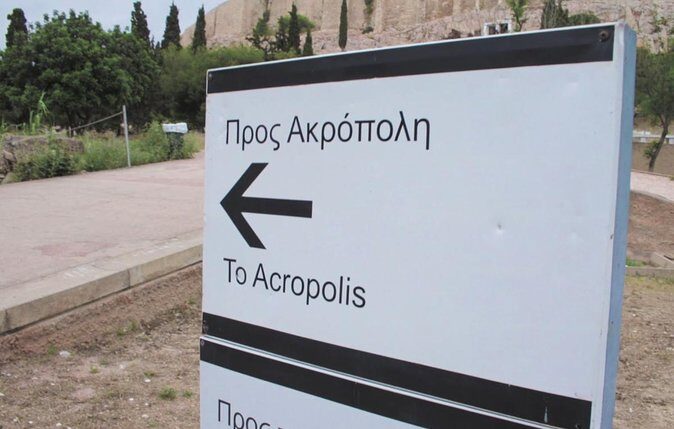
You’ll start at Porinou 5 in Athens, or meet your guide at your hotel/residence if you’re in the city center. The tour ends in Monastiraki Square (Apollonos 21 area), which is a nice payoff because you finish in a place with easy connections and lots to do afterward.
Entrance for the Acropolis is included, so you don’t have to spend your limited sightseeing time on ticket logistics. That’s a real value point in a city where waiting can eat up an hour without giving you much in return.
And yes, this is a walking tour. The physical requirement is listed as moderate, so come with comfortable shoes and a pace you can sustain for around four hours.
Parthenon and the Acropolis spine: what you learn while walking
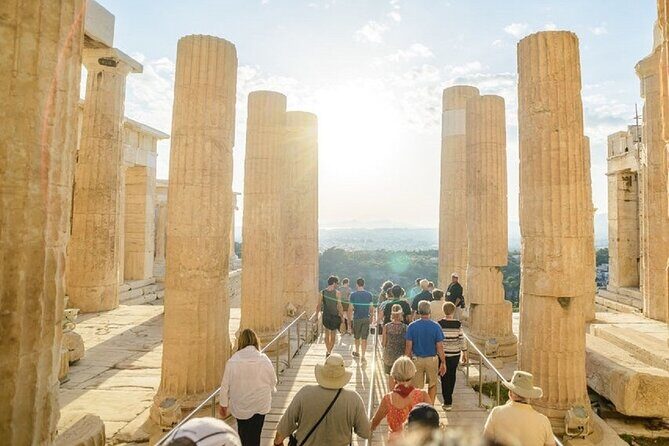
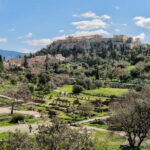
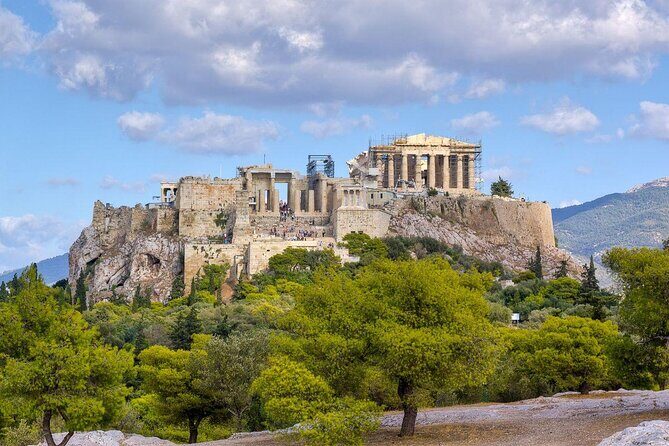
The Acropolis sits on a rocky outcrop above Athens, and it changes the way you see the city. From the first viewpoints, you can understand the basic idea: this was the ceremonial and political core, not a random place to build something tall.
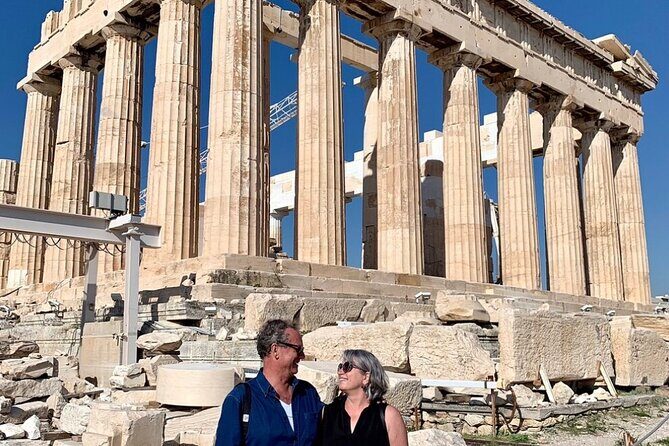
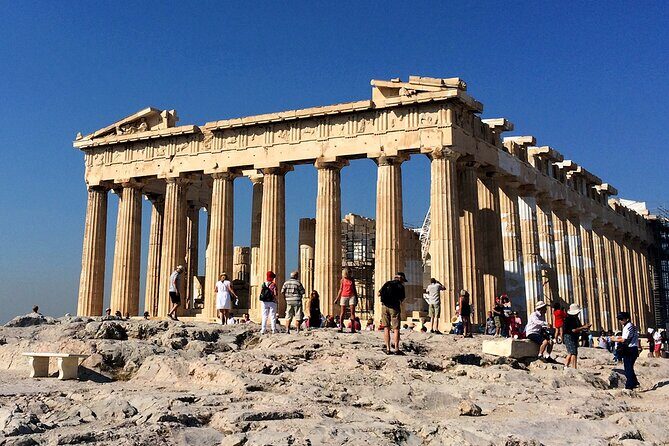
The route takes in the Parthenon, dedicated to Athena, with construction starting in 447 BC during the height of the Delian League. What I like about this approach is that it doesn’t treat the Parthenon like a museum object. You see it as part of a larger plan—temples, theaters, and worship spaces stacked on the hill.
Your guide’s job here is to connect the dots without drowning you in dates. Based on the strong feedback from guides like Daphne and Maria, you should expect explanations that are paced so you actually retain what you’re hearing instead of leaving with a fog of names.
Practical tip: when you look at the Parthenon, shift your focus between the big silhouette and the smaller architectural cues your guide points out. That switch makes the whole site feel more legible.
Theatre of Dionysus: how Athens staged its ideas
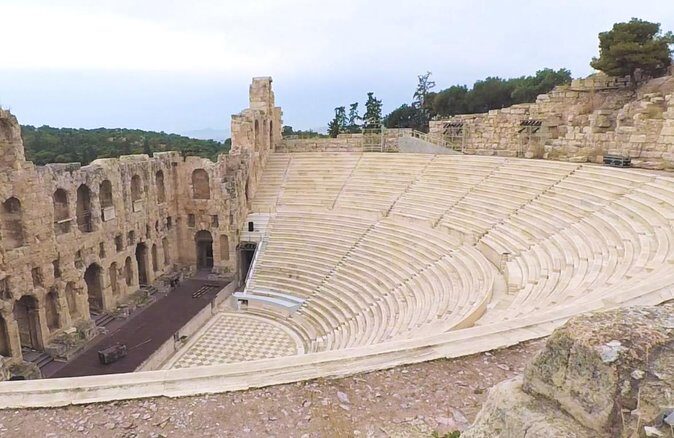
Next up is the Theatre of Dionysus, built on the south slope of the Acropolis hill. It links the Acropolis to city life in a very direct way—this was a stage tied to civic and religious events, including the City Dionysia.
Standing near the theatre’s layout helps you visualize how performance worked in ancient Athens. Even if you’re not a theatre person, it adds a key layer: this wasn’t only about temples. It was also about public gatherings where stories, values, and politics could be acted out.
This stop is also a good rest point mentally. After temple-focused sightseeing, the theatre brings a different kind of attention—more human, more about crowds and expression. That variety is part of why the whole 4-hour arc feels balanced.
Odeon of Herodes Atticus: Roman Athens, still speaking

The Odeon of Herodes Atticus is a stone Roman theatre on the southwest slope of the Acropolis. It was completed in AD 161 and later renovated in 1950, which gives you an important clue about what the Acropolis does so well: it keeps getting used, rebuilt, and reinterpreted.
This is where the Acropolis starts to feel less like a closed chapter. You’re looking at a later structure, but it’s placed in an ancient context that still dominates the skyline. Your guide should help you notice how the setting influences the experience of performance—how you move through the space, how sound and sightlines would have mattered.
If you care about how civilizations overlap, this stop is a smart one. It’s a reminder that Athens didn’t freeze in time. It kept changing.
You can also read our reviews of more food & drink experiences in Athens






Erechtheion and Temple of Athena Nike: the details most people miss
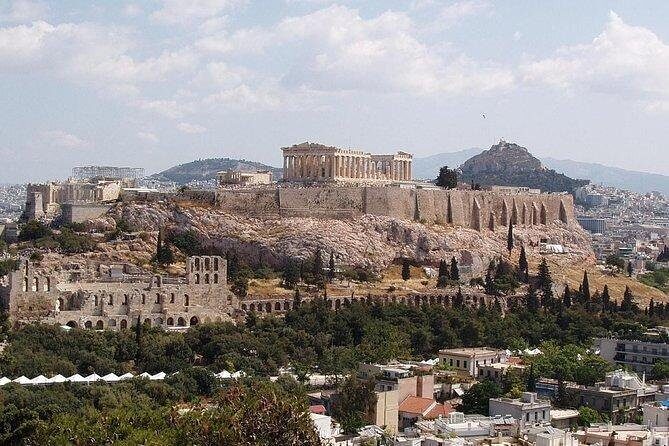
Two temples on the Acropolis are famous for reasons beyond their size.
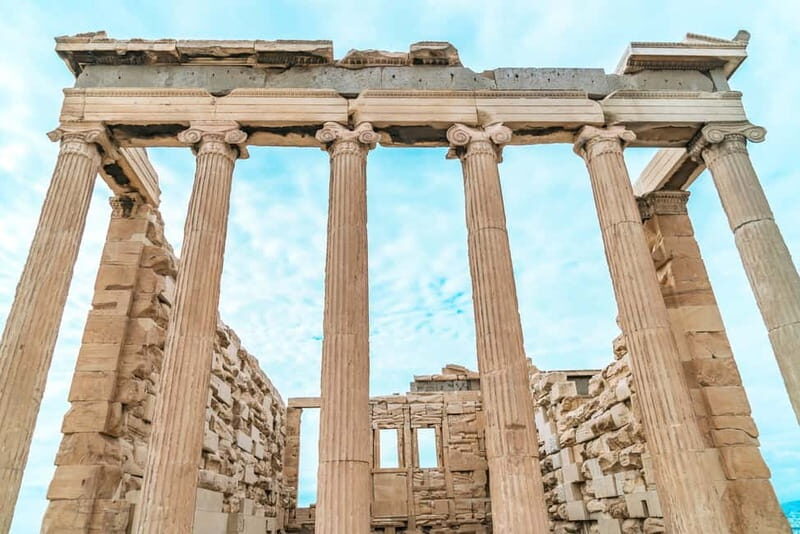
The Erechtheion (dedicated to Athena Polias) is an Ionic temple-telesterion on the north side of the hill. The Ionic style is a big visual clue—your guide can point out how these design choices shape the feel of the space. It’s also a good moment to slow down and look sideways at architecture instead of only aiming your phone upward.
Then there’s the Temple of Athena Nike, built around 420 BC and described as the earliest fully Ionic temple on the Acropolis. This stop is valuable because it teaches you to read the site like an architectural map. You start to understand which spaces were about protection and victory, and how Athena was honored through different forms of worship.
What to watch for: don’t treat these temples as identical. They’re close together, but they belong to different purposes. A good guide helps you spot that difference without turning it into a lecture.
Plaka and Anafiotika: cobblestones, tiny shops, and late tavern energy
Once you step down from the monumental hill, Athens shifts. Plaka sits in a hillside “village” feeling with narrow cobblestone streets and tiny shops selling jewelry, clothes, and local ceramics. This is the part of Athens that feels lived-in, not staged.
One charming detail: Cine Paris shows classic movies al fresco, and family-run tavernas keep going late. That means your tour doesn’t just end at the view—it hands you a neighborhood where you can keep the night rolling.
Near Plaka is Anafiotika, with whitewashed homes that give an island vibe. Even if you’ve never been to the Greek islands, the look is instantly readable: bright walls, tight lanes, and a change of mood from the Acropolis climb.
A balanced note: Plaka can attract a lot of tourist traffic, so if you love quiet streets, ask your guide to guide you through the calmer lanes for a few minutes before stopping for food.
Monastiraki Square and the market walk you can actually use
From Plaka you transition into Monastiraki, known for landmarks around the area like the ruins of Hadrian’s Library, the Ancient Agora, and the rebuilt Stoa of Attalos. There’s also a museum nearby exhibiting Athenian artifacts, so even after your tour ends, you’re positioned to keep exploring.
Monastiraki Flea Market is a jumble in the best way: artisanal soaps, handmade sandals, and souvenir T-shirts mixed in with all the browsing energy you’d expect. The key is that your guide can help you sort what’s a fair buy versus what’s mainly mass souvenir.
This is also where the food side clicks back in. The local market atmosphere includes seafood, meats, fruits, and vegetables, plus street eats. It’s the kind of place where you can learn the basics of what Greeks actually snack on and buy, not just what’s packaged for visitors.
If your goal is to shop for small gifts without turning it into a full-time job, finishing here is a smart move.
Food tasting: souvlaki and loukoumades, plus what to budget
Food isn’t included in the price. You should budget about 15 euros per adult for food and drinks. That’s important for planning, and it’s also where you get value: your guide isn’t just walking you by restaurants, they’re steering you to tastings tied to the route and the neighborhood.
For what you can expect, the sample menu points to:
- Main: souvlaki of pork or chicken, grilled meat pieces on a skewer (a classic Greek fast food).
- Dessert: loukoumades, deep-fried dough soaked in sugar syrup or honey, with cinnamon and sometimes sesame.
If you’re vegetarian, there is a vegetarian option—just tell your guide at booking so they can plan for what you’ll eat.
One practical tip: if you’re hungry at the start, pace yourself. The tastings can add up fast once you’re walking, smelling, and tasting, and the tour lasts long enough that you’ll want to enjoy your final dessert instead of rushing it.
Timing, comfort, and photo strategy on a four-hour schedule
This tour is built for about four hours, and that time has a job: cover the Acropolis highlights and still give you time in Plaka and Monastiraki. The moderate fitness requirement is real. You’ll be walking through changes in elevation, and you’ll spend time looking up, then looking around at street level.
Bring what helps you enjoy that rhythm:
- Comfortable shoes with grip
- Sun protection, especially if you’re there on a hot day
- A water plan for between tastings
For photos, I’d use one rule: shoot wide first, then come back for details. The Acropolis is photogenic, but the real win is capturing a few angles, then using your guide to point out specific architectural features you’d otherwise miss.
Also, you’ll like the end location. Ending at Monastiraki Square means you’re not stranded in a dead zone—you can keep exploring, grab a late coffee, or take transport home without needing a big plan.
Price and value: what $300.35 is buying you
At $300.35 per person for about four hours, you’re paying for a few things that matter in Athens:
1) Private time with a licensed guide
You’re not sharing time with strangers, and you can ask questions without feeling rushed.
2) Acropolis entrance included
That’s a direct cost that you don’t have to handle yourself.
3) A route that blends major monuments with local neighborhoods
This is where the value tends to show. Many tours do monuments only, or neighborhoods only. Here, you get the big hill first, then the Athens you’d actually wander through afterward.
Food and drinks are extra at about 15 euros per adult, so your total spending will be higher once you eat. But that’s also part of the transparency: you’re not forced into set-menu pricing for everything.
If you’re a couple or a small group that wants a first-day orientation with freedom, this price can make sense. If you’re traveling solo and cost is your top factor, you might consider whether a cheaper group option would meet your needs. But if you want the Acropolis explained and then real local bites in the neighborhoods, this format is built for that.
Should you book this Athens Acropolis and Plaka food walk?
Book it if you want a guided plan that covers the Acropolis without turning your visit into stress, and you still care about eating in the neighborhoods right after. This is a strong match for first-timers, couples, and anyone who likes history but hates feeling trapped in long lines and rigid group pacing.
Skip it only if you’re trying to keep costs extremely low, or if you dislike walking and want a purely vehicle-based experience. Also, if you’re expecting food to be fully included in the price, adjust your expectations and budget for the about 15 euros per adult for tastings.
If you book, do one smart thing: send your guide a note about what you want most—temples, theatre, shopping lanes, or the food side—so your private time goes exactly where you’ll enjoy it.
FAQ
Is this tour private?
Yes. This is a private tour/activity, and only your group will participate.
How long does the Athens private walking tour last?
The duration is approximately 4 hours.
Are Acropolis entrance fees included?
Yes. Entrance fees of Acropolis are included in the tour price.
What should I budget for food and drinks?
Food and drinks are not included. The estimate provided is approximately 15 euros per adult.
Is there a vegetarian option?
Yes, a vegetarian option is available. You should advise at the time of booking if you need it.
Where do we meet and where does the tour end?
The start location is Porinou 5, Athina 117 42, Greece. The tour ends at Monastiraki Square, Apollonos 21, Athina 105 57, Greece. You can also meet at your Athens hotel or residence as the meeting point if it’s in the city center.
Can I cancel for a full refund?
Yes. You can cancel up to 24 hours in advance for a full refund. If you cancel less than 24 hours before the start time, the amount paid is not refunded.

More Walking Tours in Athens

More Tours in Athens



More Tour Reviews in Athens
- All Day Cruise -3 Islands to Agistri,Moni, Aegina with lunch and drinks included
★ 5.0 · 4,958 reviews