REVIEW · ATHENS
Athens: The Acropolis and Acropolis Museum Tour in German
Book on GetYourGuide →Operated by LITTLE OWL TOURS · Bookable on GetYourGuide
Myths sound better on the Acropolis. This tour uses a German guide to turn the stones into stories, so you hear why places were built instead of just memorizing dates. I also love that you don’t stop at views: you get original sculptures in the Acropolis Museum, including pieces from the Parthenon.
The one thing to plan for is the walking. You’ll climb uphill on uneven, sometimes slippery terrain, and there’s no elevator at the sites or museum route. If you have mobility limits, this isn’t the right fit.
In This Review
- Key highlights you’ll actually feel
- Setting the tone: a German guide makes the Acropolis readable
- Start at the Theatre of Dionysus, not the Parthenon
- South slope climb: where the views and the architecture start talking
- Propylaea to the Parthenon: the stop-by-stop highlights that matter
- Propylaea (the grand entrance)
- Temple of Athena Nike
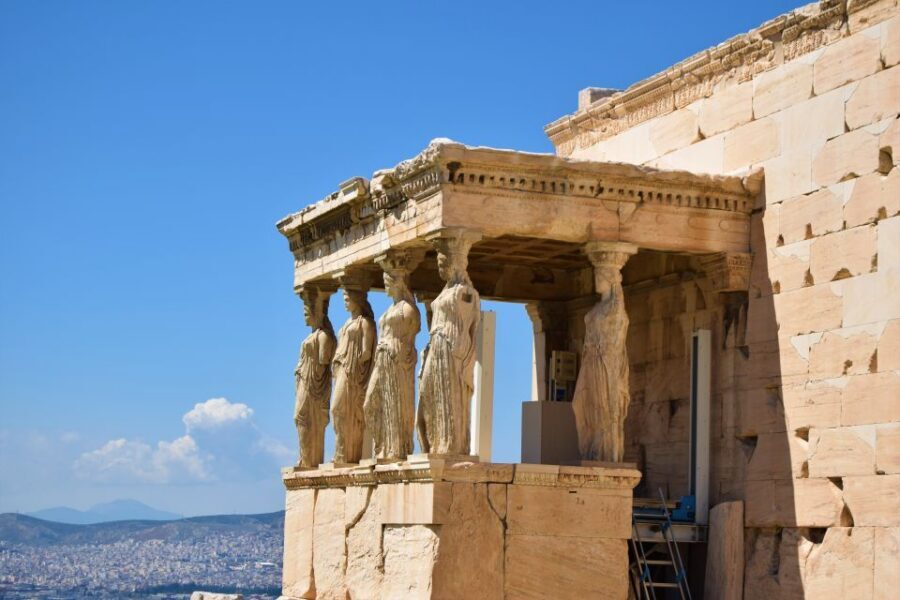
- Erechtheion
- Parthenon and the classic views
- Acropolis Museum: where originals beat interpretation
- Price and time: does $152 for 3 hours make sense?
- What to wear and how to pace yourself on uneven stone
- Who should book this Acropolis plus Museum tour?
- Should you book this tour or DIY the Acropolis?
- FAQ
- How long is the Acropolis and Acropolis Museum tour?
- Is the tour guided in German?
- Does the price include entry tickets?
- Do I need to buy museum and Acropolis tickets separately?
- What are the main sights included in the itinerary?
- Is there time to take photos on the hill?
- Is hotel pickup and drop-off included?
- What should I bring for the tour?
- Are there any items I should not bring?
- Is this tour suitable for people with limited mobility?
Key highlights you’ll actually feel
- German licensed guide telling mythology and historical tales in a lively way
- Theatre of Dionysus as your warm-up stop before the main Acropolis climb
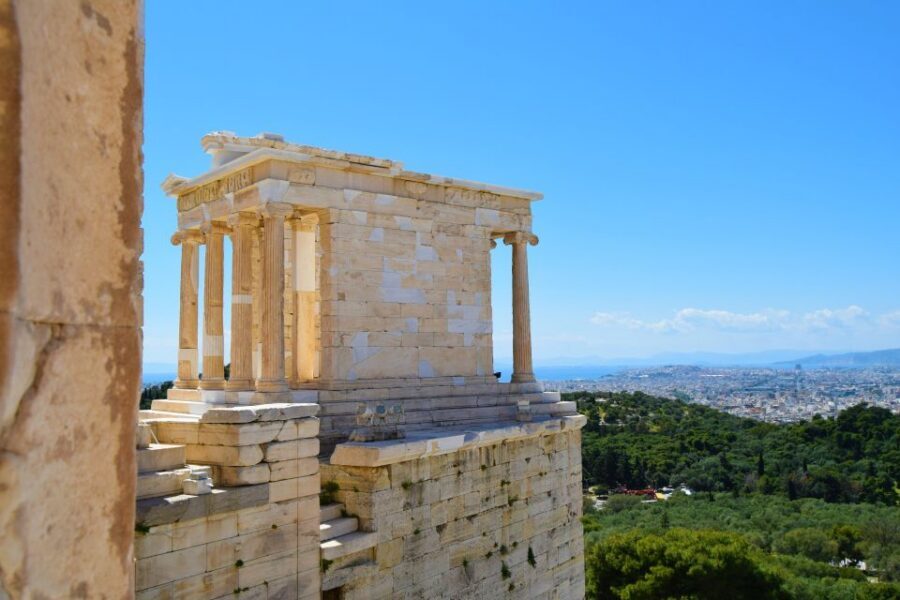
- Big-name temples on one route: Propylaea, Temple of Athena Nike, Erechtheion, and the Parthenon
- A focused museum finish with the original Caryatids and Parthenon sculptures on display
- Photo time at the Parthenon to grab your views without rushing
Setting the tone: a German guide makes the Acropolis readable
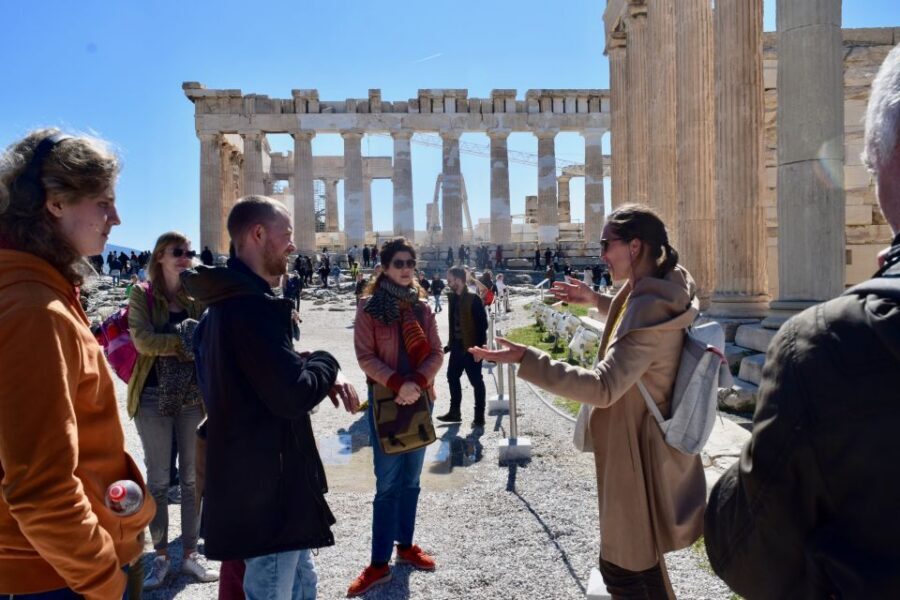
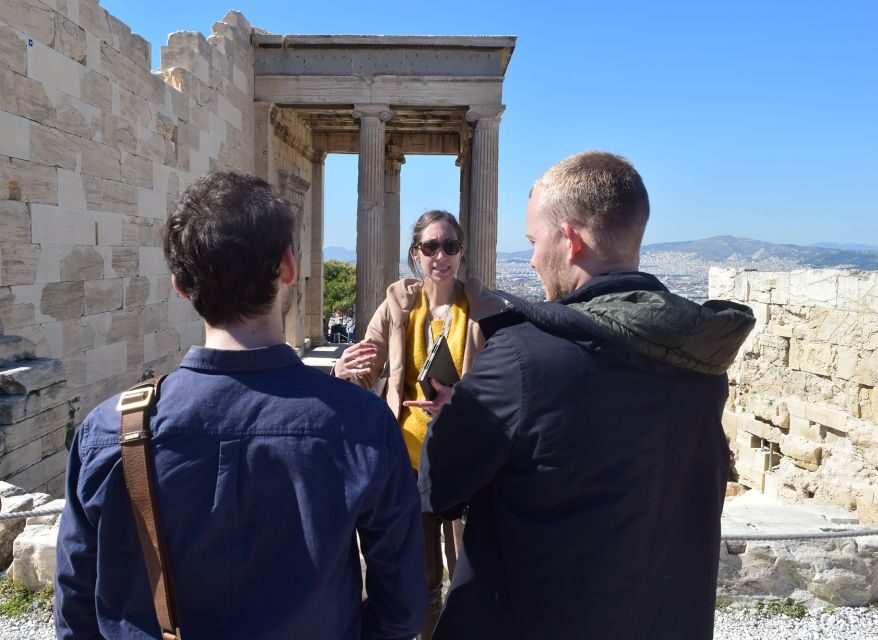
The Acropolis can feel like a quiz: Parthenon here, Erechtheion there, and everyone staring like they’re waiting for the right caption. This tour works because the guide tells myths and historical tales as you walk. You’re not handed a dry timeline. You’re given the dramatic reasons behind what you’re seeing, which is exactly how ancient Athens liked to explain the world.
A second reason this is satisfying is the balance between monuments and museum objects. The Acropolis is stunning, but it’s also filled with copies and missing pieces depending on what you’re looking at. The Acropolis Museum is where the story becomes physical. Seeing originals changes the way the temples hit your imagination.
If you’re the type who likes practical order, you’ll appreciate how the tour builds momentum: you start with the Theatre of Dionysus, then work your way up the south slope to the major buildings, and you end at the museum where the details are easier to study.
You can also read our reviews of more museum experiences in Athens

Start at the Theatre of Dionysus, not the Parthenon
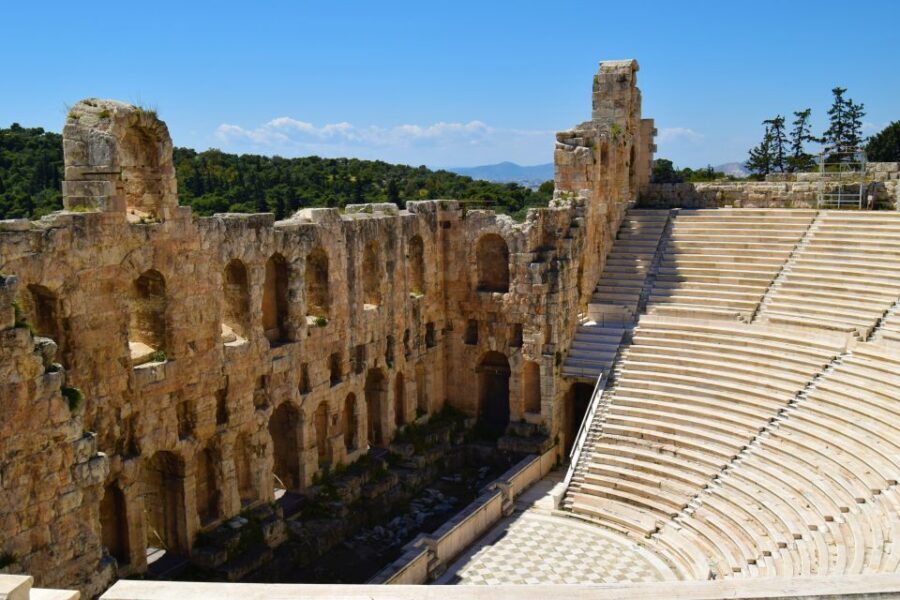
You begin with a bit of context at the Theatre of Dionysus. It’s not a random warm-up stop. This is where you get a feel for ancient Greek drama and the public performances connected to theatre traditions. The tour framing matters: it helps you understand that the Acropolis wasn’t only about temples. It was also the stage for civic identity.
From there, you move along the Acropolis approach and climb the hill from the south side. Along the way, you pass sights tied to early Athens life—like the Herodion and the remains of what’s described as Athens’ first pharmacy. Even if you don’t catch every detail, the walk helps you picture the hill as part of daily history, not just a postcard viewpoint.
Then comes the uphill payoff: the route leads to the large entrance gate area and up toward the Propylaea, the grand gateway into the temple complex. That big architectural moment is a psychological switch. Suddenly you’re not outside the story anymore—you’re stepping into it.
South slope climb: where the views and the architecture start talking
As you ascend, you get the kind of changing angles that make the Acropolis feel alive. From the slopes, you can look toward major structures like the Temple of Athena Nike, the Erechtheion, and the Parthenon. These aren’t just named for you—they’re tied to the purpose behind their existence.
The guide doesn’t just point. You get explanations about why structures were erected and even what techniques architects used to build them. That part is underrated. On the Acropolis, it’s easy to treat the buildings like sculptures you can’t touch. Hearing how they were constructed helps your brain stop treating everything as magic.
There’s also a practical side to this climb. The tour includes time to pause and absorb, and it moves in a way that gives you enough breath to actually enjoy the scenery. Still, wear good shoes and bring water. The tour asks for that for a reason: this isn’t a sit-and-smile stop.
Propylaea to the Parthenon: the stop-by-stop highlights that matter
Here’s what the route emphasizes once you’re at the heart of the complex.
Propylaea (the grand entrance)
The Propylaea is the gate that makes everything feel official. When the group moves through it, you’ll understand why it was designed as a statement. Expect the guide to tie it to the idea of transition—entering a sacred zone with intention.
- All Day Cruise -3 Islands to Agistri,Moni, Aegina with lunch and drinks included
★ 5.0 · 4,958 reviews





Temple of Athena Nike
This stop connects architecture to civic symbolism. You’ll see it in context and learn why it was erected. Even without any technical background, the guide’s storytelling method helps the building feel like a message.
Erechtheion
The Erechtheion is one of those places where a quick glance doesn’t do it justice. The tour slows you down enough to notice its character. You also get a sense of its significance through the myths and historical tales explained by the guide, rather than a list of facts you’ll forget ten minutes later.
Parthenon and the classic views
The Parthenon is the headline. But what makes this tour worthwhile is that it’s not treated like a photo wall. You’re guided through the meaning behind what you’re seeing, with time to take in the scale and details.
After the main guided time, you’ll have a photo stop and free time for about 20 minutes on top of the hill. That matters because the Acropolis doesn’t always give you the same lighting twice. Use that window to photograph the temple views you care about most.
One important note: the itinerary is built to keep you moving at a human pace, but it can still be physically demanding. On very hot days, parts of the Acropolis can close for a stretch. The good news is that a guide can adjust with breaks in the shade when needed, so don’t plan for perfect smooth weather.
Acropolis Museum: where originals beat interpretation
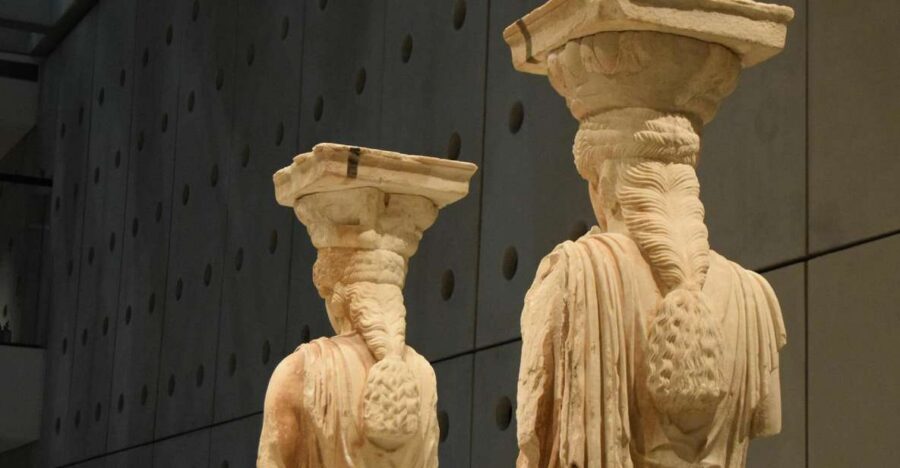
If the Acropolis is the stage, the Acropolis Museum is the backstage. This is where the tour earns its second half.
You’ll visit the museum with a guided tour and focus on the works that make the temples make more sense. The big selling point is the chance to see the original Caryatids and Parthenon sculptures. Seeing originals changes the way you judge the buildings above. Suddenly, carvings aren’t abstract. They’re character.
The museum display approach helps you understand the themes behind what you saw earlier. The guide brings you through key pieces so you’re not just wandering by yourself. You also get the sense of how the Acropolis art was meant to be read—through figures, materials, and placement.
The museum is also a practical win for your brain. On the hill, you look at structures from a distance and in bright light. Inside, you can actually focus on details and forms without squinting. Even if you only remember a few things, that transfer from outdoor views to indoor originals sticks.
Price and time: does $152 for 3 hours make sense?
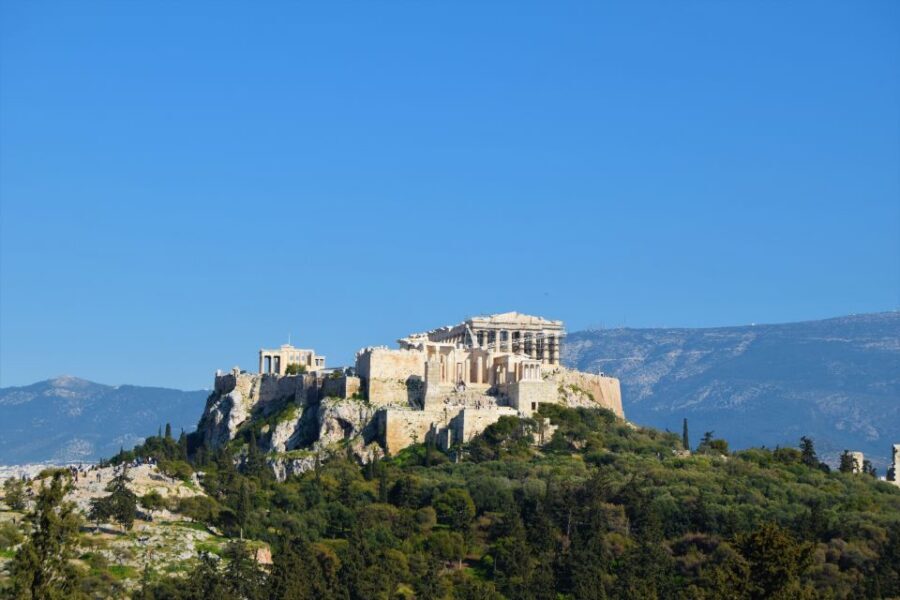
At $152 per person for a 3-hour tour, this isn’t a bargain-basement option. The value comes from three things that are hard to replace with self-guided sightseeing:
First, you get entry tickets to both the Acropolis and the Acropolis Museum plus administration fees for ticket pre-booking. That saves time and reduces the hassle of figuring out ticket logistics on the spot.
Second, you’re paying for a licensed German guide who explains myths and historical tales. If you’re the kind of person who wants context—why a building exists and what it meant—this is where the money goes. If you only want scenic photos, you could do it cheaper on your own.
Third, the format is efficient. In about three hours, you cover the major Acropolis highlights and finish with the museum. That makes it a good choice if your Athens schedule is packed or you don’t want to spend a full day doing just archaeology.
So the real question isn’t whether it’s cheap. It’s whether you’ll use the guide’s storytelling and the museum’s originals. If yes, it’s a solid use of your time.
What to wear and how to pace yourself on uneven stone
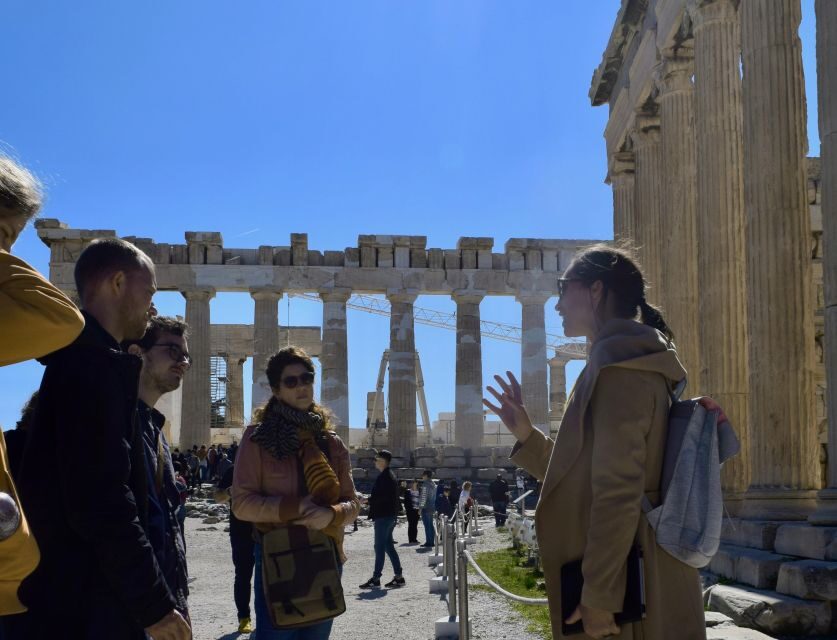
The tour isn’t designed for lounging. You’ll be walking uphill and on uneven surfaces. The information you’re given is clear: bring comfortable shoes, a sun hat, and water. It can also be slippery at times, so treat every step like it matters.
Also, note the accessibility limits: the tour is not recommended for people with limited mobility, and there’s no elevator involved in how you’ll move through the areas. If you’re in a wheelchair or have mobility impairments, this route isn’t suitable based on the stated guidance.
Heat is another practical consideration. Athens in warm months can push you into survival mode. On extremely hot days, parts of the Acropolis may close for periods. This tour’s structure includes breaks when conditions demand it, but you’ll still want to arrive ready for the reality of sun and stone.
Who should book this Acropolis plus Museum tour?
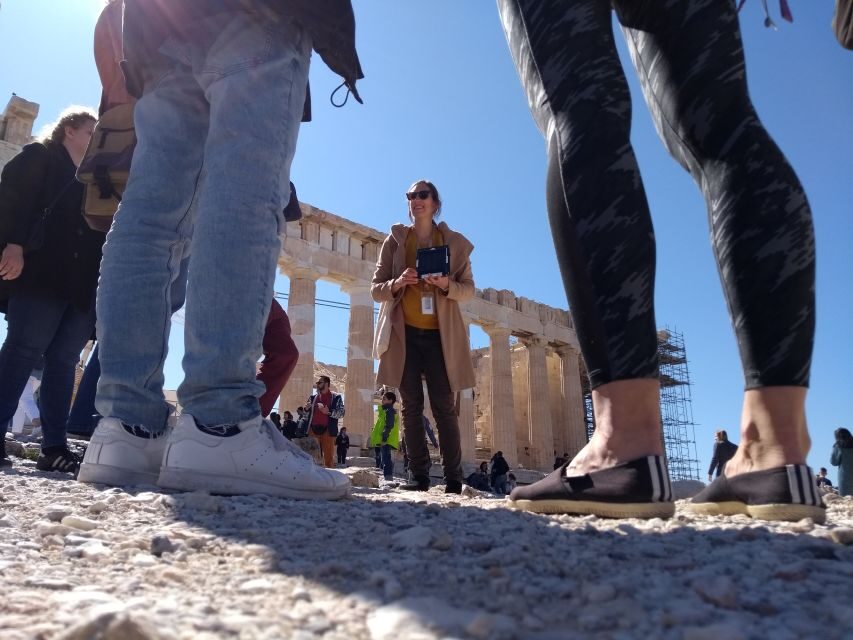
This tour fits best if you want three things at once:
- You want guidance in German and prefer stories over dry bullet points
- You care about original sculpture enough to make the museum portion worthwhile
- You can handle an uphill walk on uneven surfaces for a few hours
It also works well for families when kids can handle outdoor walking and attention. The guide style is described as funny and engaging, and it’s been noted as enjoyable even for school-age children. If your group loves theatrical explanations and myth-driven context, you’ll probably click with this.
If you’re pregnant, or you have mobility impairments or wheelchair needs, this one is not a match based on the stated limitations. Choose a different format that has fewer stairs and less uneven terrain.
Should you book this tour or DIY the Acropolis?
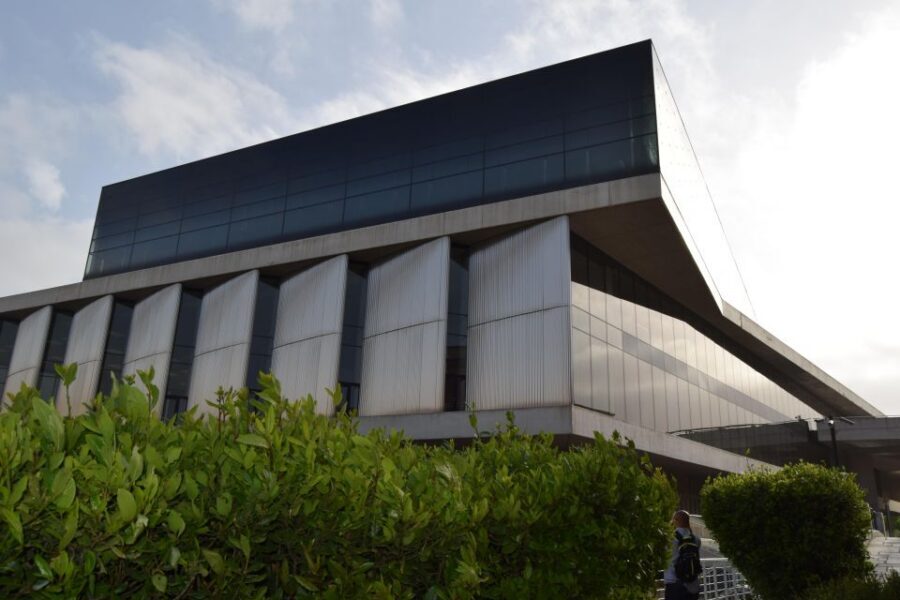
Book it if you’ll value the combination of German storytelling, major temple highlights, and then the museum’s Caryatids and Parthenon sculptures. This is the kind of tour that turns your visit from sightseeing into understanding.
Go DIY instead if:
- you only want photos and broad views, not explanations
- you don’t plan to spend time studying sculptures indoors
- you’re not comfortable with uphill walking on uneven stone
My practical rule: if you’re going to the Acropolis once (or only once soon), don’t waste that day by staring without context. Paying for a guide and ending at the museum is how you get the most meaning per hour.
FAQ
How long is the Acropolis and Acropolis Museum tour?
The tour lasts about 3 hours.
Is the tour guided in German?
Yes. You’ll have a live tour guide in German.
Does the price include entry tickets?
Yes. Entry tickets to both the Acropolis and the Acropolis Museum are included, along with administration fees for ticket pre-booking.
Do I need to buy museum and Acropolis tickets separately?
No. The tour includes the entry tickets and pre-booking administration fees.
What are the main sights included in the itinerary?
The tour includes the Theatre of Dionysus, the Propylaea, Temple of Athena Nike, Erechtheion, the Parthenon, and a guided visit to the Acropolis Museum.
Is there time to take photos on the hill?
Yes. After the Parthenon section, there is a photo stop with free time of about 20 minutes.
Is hotel pickup and drop-off included?
No. Hotel pickup and drop-off are not included.
What should I bring for the tour?
Bring comfortable shoes, a sun hat, and water.
Are there any items I should not bring?
Yes. Weapons or sharp objects, food and drinks, and drones are not allowed.
Is this tour suitable for people with limited mobility?
No. It is not recommended for people with limited mobility, and there is no elevator. Wheelchair users are also not suitable for this tour.



More Museum Experiences in Athens



More Tours in Athens

More Tour Reviews in Athens
- All Day Cruise -3 Islands to Agistri,Moni, Aegina with lunch and drinks included
★ 5.0 · 4,958 reviews