REVIEW · ATHENS
Athens: Women in Ancient Greece Guided Walking Tour
Book on GetYourGuide →Operated by Culture Hunters · Bookable on GetYourGuide
Athens changes when you flip the lens. This Women in Ancient Greece guided walking tour tells the city through the roles, rumors, and real limits faced by women in ancient Athens, with stops tied to major myths and goddesses. You’ll hear stories of Sappho, Aspasia, and Agnodice, plus how mythology shaped what society expected of women—right alongside views of the Ancient Agora and Pnyx.
I particularly like two things: the guide’s ability to connect big famous names (Athena, Demeter, Pandora) to everyday life, and the way the route keeps you moving through real Athens neighborhoods like Plaka and Monastiraki. If you like history that feels human—not only marble—you’ll like this format a lot.
One consideration: it’s a mostly outdoor walking tour with steps, and it’s not a good match if you have mobility issues or heart problems. Also, many stops are exterior-only, so tickets to archaeological sites are not part of the experience.
In This Review
- Key things I’d focus on
- A women’s lens on Athens: what this tour really gives you
- Where you start: Monastiraki Square and the Church of the Virgin Mary Pantanassa
- The mythology thread: Athena, Penelope, Demeter, and Pandora in everyday terms
- Stop-by-stop Athens: from Hadrian’s Library to the Pnyx voting hill
- Monastiraki (quick orientation)
- Hadrian’s Library (exterior viewing)
- Plaka (10-minute walk with story focus)
- Gate of Athena Archegetis (myth in stone)
- A secret stop (the bonus that changes the experience)
- Ancient Agora of Athens (power, public life, and constraints)
- Pnyx (15 minutes): where voting began
- Viewpoint moment (5 minutes) and Filopappou Hill (10 minutes)
- How good is the walking pace and what should you bring?
- Price and value: what $44 gets you in Athens
- Who this tour is for (and who might skip it)
- Should you book Athens: Women in Ancient Greece?
- FAQ
- How long is the Athens Women in Ancient Greece guided walking tour?
- Where do I meet the guide?
- What languages are available?
- Are archaeological site tickets included?
- Does the tour include food or drink?
- Is this tour suitable for wheelchair users or people with mobility impairments?
- Can I cancel for a refund?
Key things I’d focus on

- Women-centered storytelling that reframes major sites using myths and female figures
- Iconic viewpoints without needing site tickets, including areas tied to the Agora and Pnyx
- Myth-to-real-life connections featuring Athena, Penelope, Demeter, and Pandora
- Sappho and Aspasia as more than footnotes—placed in social expectations and constraints
- A secret stop that adds variety beyond the usual route
- A lively pace built around short guided stops and frequent opportunities to ask questions
A women’s lens on Athens: what this tour really gives you
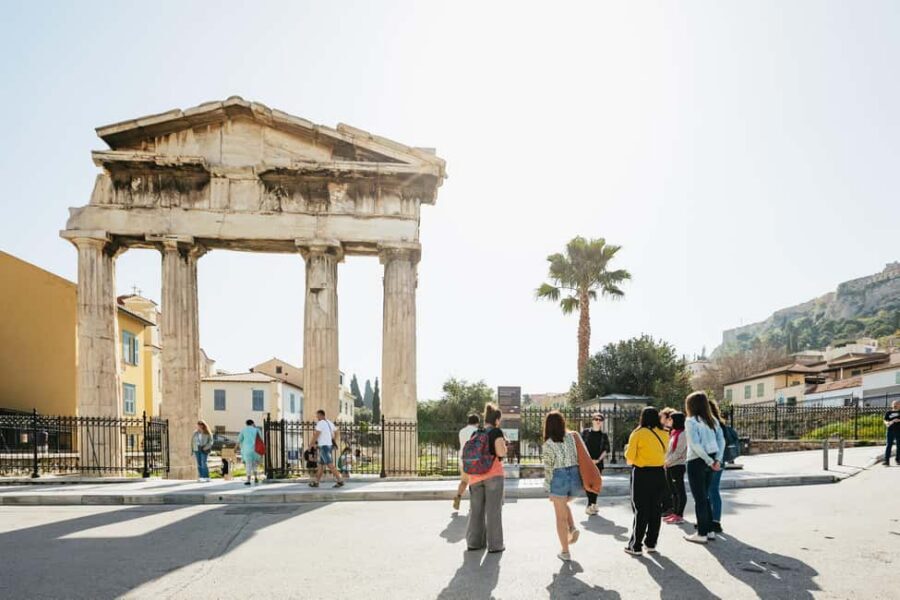
Most Athens tours give you the usual story: wars, kings, big architecture, and men in charge. This one does something smarter. It keeps asking a simple question as you walk: where do women fit into the picture?
You’ll hear how Greek mythology and goddesses weren’t just bedtime stories. They helped define roles, morality, and social behavior—so women’s lives in ancient Athens weren’t only politics and household routines. They were also religion, symbolism, festivals, and famous legends that people treated like lessons.
The guide you may meet—often Maelle (English-speaking)—is part of why this works. Multiple people mention her friendly style, her willingness to answer questions, and her habit of turning the tour into a two-way conversation rather than a lecture. That matters, because women’s history can feel easy to reduce to stereotypes. Here, it’s treated as lived experience.
You can also read our reviews of more walking tours in Athens



Where you start: Monastiraki Square and the Church of the Virgin Mary Pantanassa
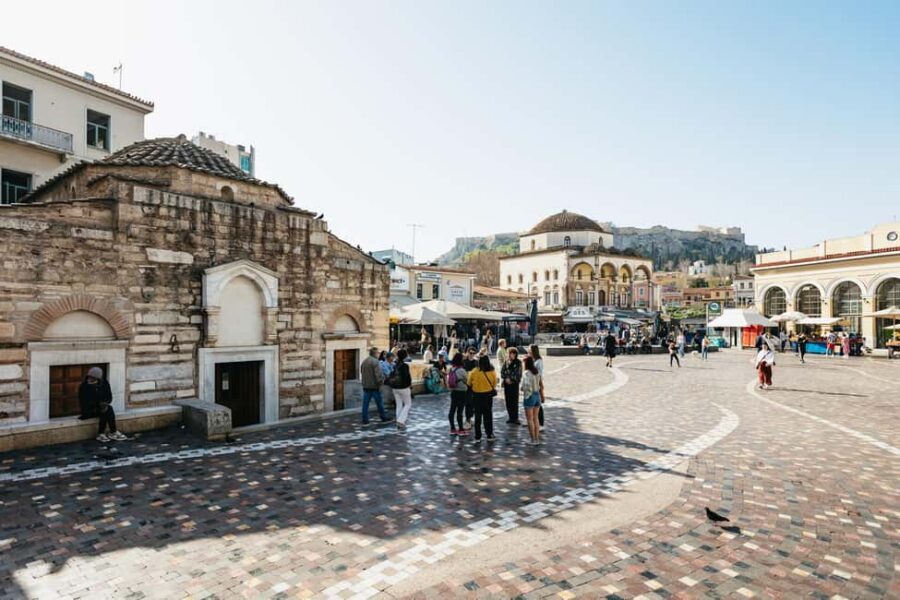
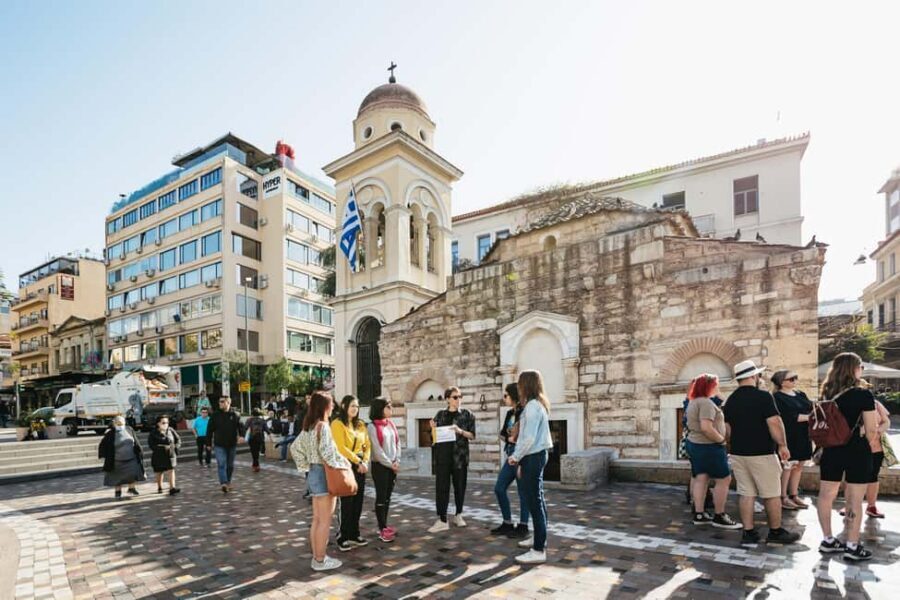
You’ll meet at Monastiraki Square in front of the Holy Church of the Virgin Mary Pantanassa. The guide holds a sign that reads Women in Ancient Greece, so you can spot the group fast.
This is a good start location because you’re already near major walking arteries—Monastiraki is busy, central, and easy to orient from. You also get daylight energy early, which helps if you’re planning to combine this with other classics later (like the Acropolis and Plaka).
If you’re the kind of traveler who likes to get your bearings before diving into heavy sightseeing, you’ll appreciate how the tour builds context site by site. It’s not just a list of monuments. It’s a story that keeps changing as you move.
The mythology thread: Athena, Penelope, Demeter, and Pandora in everyday terms

One of the strongest parts is how mythology gets used like a map. Instead of only describing deities as names, the guide ties them to the kinds of expectations women faced.
Expect stops where the theme shifts from goddess to society. Athena shows up as a kind of model for role and intellect. Penelope is used to talk about household responsibilities and reputations. Demeter helps explain fertility and religious importance. And Pandora brings in the darker moral framing that shaped how people interpreted women, curiosity, and consequences.
You’ll also get myth-flavored stories with real social implications—like the account of kidnapped Spartan girls and the idea of a mysterious women’s festival in Athens. Those stories are especially useful because they help you understand why women’s lives were often shaped by ritual and myth, not only law or politics.
Stop-by-stop Athens: from Hadrian’s Library to the Pnyx voting hill
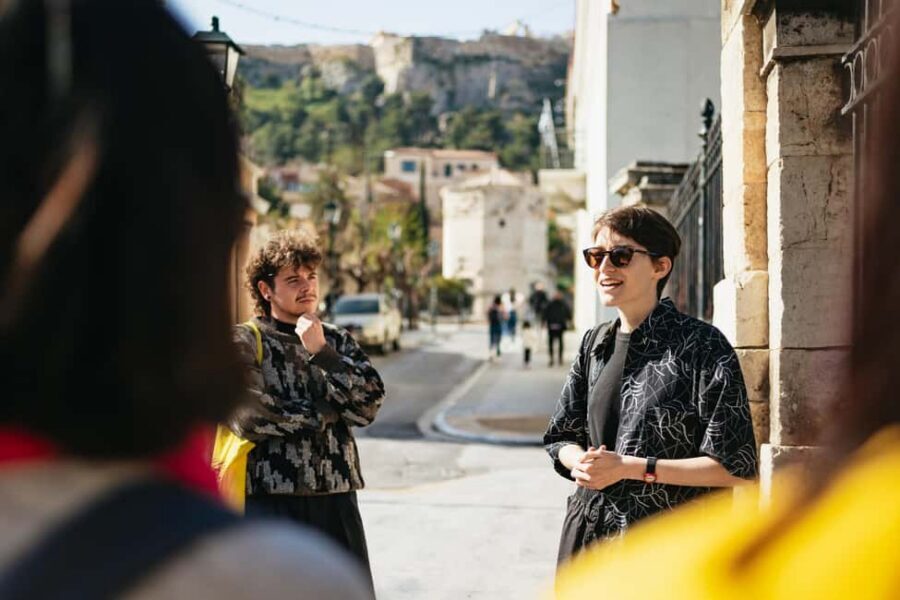
This tour is designed as short, guided segments. Each stop is relatively brief, so you keep your momentum while still getting enough time to ask questions.
Monastiraki (quick orientation)
You begin with a brief guided moment in Monastiraki—just enough to set the tone. You get situational context for the places ahead and how the day’s theme connects to the neighborhoods you’re walking through.
Think of this as the warm-up phase: it gets you ready to see Athens with a different lens. It also helps if your Greek history knowledge is light, because the guide sets baseline context without being condescending.
You can also read our reviews of more guided tours in Athens




Hadrian’s Library (exterior viewing)
Next up is Hadrian’s Library. You’ll get guided sightseeing but not an inside visit. The payoff here is framing: the tour connects cultural life and learning to social roles, and you’ll learn how sites can be “about more than what you can photograph.”
Because tickets to archaeological sites are not included, this type of stop works well. You’re not waiting in lines. You’re not stopping to navigate ticket rules. You’re simply seeing and learning.
A drawback to flag: if you were hoping to enter buildings, you’ll need to plan that separately.
Plaka (10-minute walk with story focus)
Then you move into Plaka, Athens’ postcard-friendly district. The time here is shorter than a full neighborhood stroll, so it won’t replace an independent Plaka wander. But it’s a useful pause that keeps the tour grounded in real streets and real neighborhood feel.
This is also where the myth-and-life approach can land. Streets and old stone make it easier to imagine how people moved, met, and organized social life—especially when the guide is tying the route to women’s experiences.
Gate of Athena Archegetis (myth in stone)
At the Gate of Athena Archegetis, the tour leans into symbolism. You’re not just looking at another architectural fragment. You’re being taught how Athena could function as an idea in the civic imagination—especially in a city where public identity and gender expectations often collided.
The guided time is about 10 minutes, which is long enough for context but short enough to keep the walk flowing.
A secret stop (the bonus that changes the experience)
About mid-route you’ll reach a secret stop, guided for around 10 minutes. The tour doesn’t overload you with details here, which is partly the point. You get one surprise moment that feels personal to the theme of the day instead of being another check-box monument.
If you’ve taken standard tours before, this is the part that breaks the routine. It also makes the tour feel less like a copy-paste route.
Ancient Agora of Athens (power, public life, and constraints)
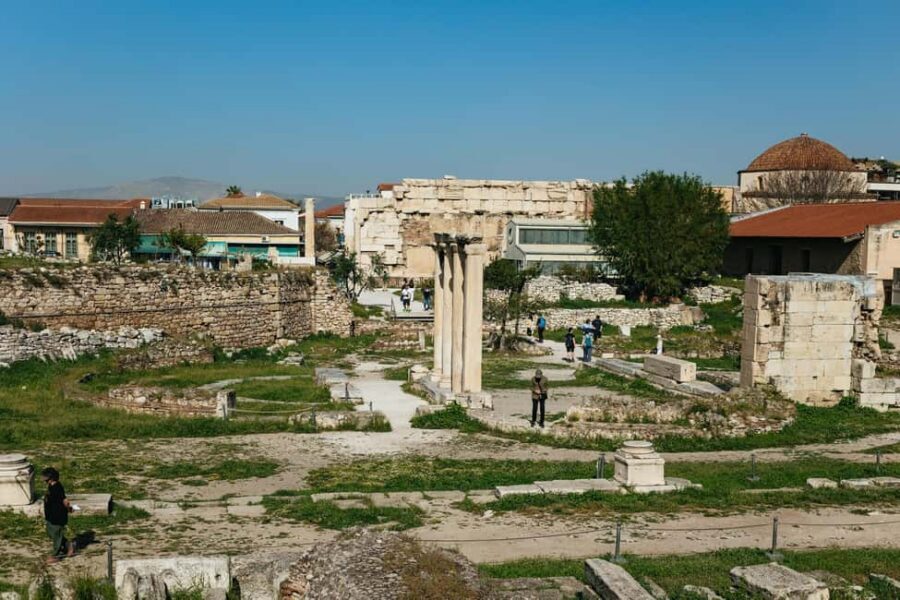
Next is the Ancient Agora of Athens, guided around 10 minutes. Here’s where you’ll see how the tour handles a tricky topic: women were not equally visible in civic power structures, yet daily life was still profoundly shaped by public culture.
You’ll get story connections that treat the Agora as a social stage, not only an archaeological zone. And because the tour uses female perspectives, the Agora doesn’t feel like a museum of male achievements. It feels like a window into what women could access—and what they were pushed outside of.
Pnyx (15 minutes): where voting began
Then comes Pnyx, the hill tied to the early democratic voting process. The guide uses the site to talk about democracy and gender limits—what women could not do, and how civic life was defined around them.
This is one of the most intellectually satisfying stops. It forces a contrast: big public milestones versus who was actually included. It’s also the part that tends to make people think more after the tour, because the comparison can feel uncomfortably familiar.
Viewpoint moment (5 minutes) and Filopappou Hill (10 minutes)
You’ll get a short viewpoint stretch on the way, then finish at Filopappou Hill with about 10 minutes of guided time and scenic views.
This ending matters. A lot of tours end in a rush or in a gift shop. Here, the finish gives you a visual reset. It helps you remember where the day’s stories took place—so women’s history isn’t stuck as facts in your head. It becomes geography you can recall.
How good is the walking pace and what should you bring?
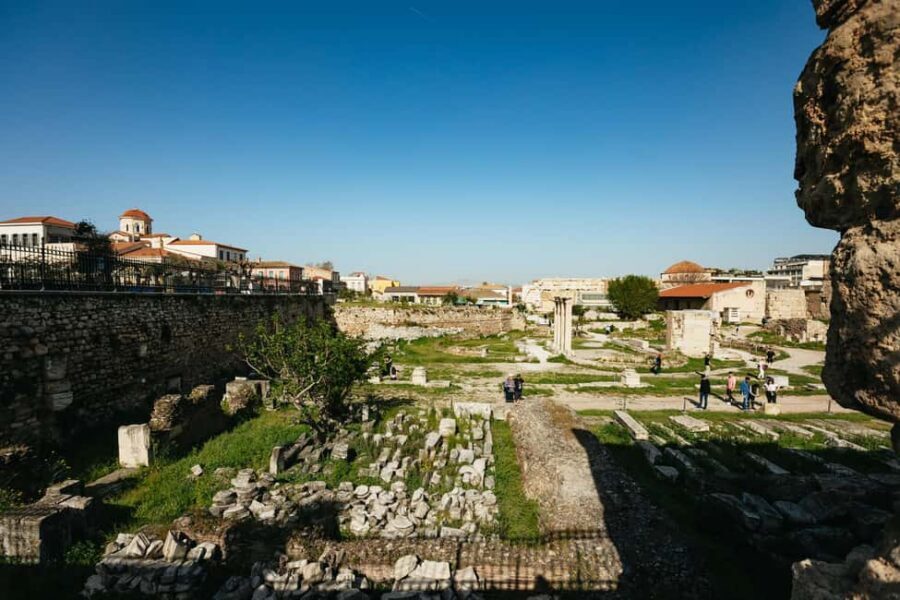
The tour lasts about 2 hours, and it includes steps. That means you should plan on a moderate walking experience, not an easy stroll.
You’ll want the practical stuff ready:
- Sun hat
- Sunscreen
- Water
On hot days, a helpful detail from the guide style is that she tends to find more comfortable shady spots while pausing. That can make a real difference in Athens heat, especially when your stops are spread across open areas.
If you have mobility concerns, this is one to think through early. It’s not suitable for wheelchair users, and it may not work well for people with health or mobility difficulties.
Price and value: what $44 gets you in Athens
At $44.04 per person, you’re buying a focused 2-hour guided story walk, not a full museum day. Tickets to archaeological sites are not included, which keeps the tour simpler and faster—but it also means you’re mostly seeing exteriors and viewpoints.
So the value depends on what you want:
- If you want guided context and women-centered stories while walking between classic areas, this is a strong deal.
- If you want inside access and long site visits, you’ll likely feel limited and should pair it with other paid attractions.
The included items help too: you get a guide, a walking tour, and a small gift. There’s also a private group option if you want the experience tailored for just your group.
And if you’re trying to pack an Athens morning, this timing is friendly. You can do this in the day and still save time for bigger ticket sights.
Who this tour is for (and who might skip it)

You’ll love it if you want:
- a women’s perspective on Athens mythology and daily life
- an engaging guide who answers questions
- a route that covers major areas like the Agora, Pnyx, and the Acropolis area (view-based)
You might skip it if:
- you’re only interested in indoor sites and official ticketed museum time
- you need a fully accessible walking route (this one includes steps)
- you’re traveling with health constraints that make uphill walking and crowds harder
This tour is also a great match if you’re planning to visit the Acropolis and Plaka anyway. The stories help those later stops feel more connected, not just scenic.
Should you book Athens: Women in Ancient Greece?
If you care about how history is told—and who gets centered—this is a smart booking. For $44, you get a guided walk that treats major Athens sites as part of a larger social story. The women-focused approach is the point, and it’s delivered in a way that stays conversational and thought-provoking.
Book it if you want your Athens morning to feel purposeful, not repetitive. Skip it only if you need inside-entry sites or you can’t handle steps and an outdoor walking route.
FAQ
How long is the Athens Women in Ancient Greece guided walking tour?
The tour lasts about 2 hours.
Where do I meet the guide?
Meet at Monastiraki Square in front of the Church Pantanassa. The guide will be holding a sign that says Women in Ancient Greece.
What languages are available?
The live tour guide is available in English and French.
Are archaeological site tickets included?
No. Tickets are not included, and the tour is described as exterior views only.
Does the tour include food or drink?
No. Food and drink are not included.
Is this tour suitable for wheelchair users or people with mobility impairments?
No. The tour includes steps and is not suitable for wheelchair users or people with mobility impairments. It’s also not suitable for people with heart problems.
Can I cancel for a refund?
Yes. Free cancellation is available up to 24 hours in advance for a full refund.


More Walking Tours in Athens


More Tours in Athens


More Tour Reviews in Athens
- All Day Cruise -3 Islands to Agistri,Moni, Aegina with lunch and drinks included
★ 5.0 · 4,958 reviews