REVIEW · ATHENS
Guided Walking Tour of the Acropolis in Athens in Spanish
Book on Viator →Operated by Secrets of Greece · Bookable on Viator
The Acropolis feels huge, even on foot. This guided walk puts the spotlight on the story of Athena and the Classical Greek monuments you came to see—without forcing you through the most jammed entrance route.
Two things I really like about this tour: you get a Spanish-speaking official guide, and the route starts on the southeast side to help you dodge some of the worst crowds. The pace also leaves room to look, absorb, and grab photos instead of turning it into a nonstop sprint.
One consideration: the Acropolis entrance ticket isn’t included (it’s listed separately as €20), and you’ll be walking on a historic site with real steps. If you’re not used to uneven stone, bring comfortable walking shoes and pace yourself with water.
In This Review
- Key highlights worth knowing before you go
- The southeast start: a smarter way to approach the Acropolis
- What 90 minutes on the Acropolis really means
- Stop-by-stop: what you’ll see and what to look for
- 1) Acropolis site: the big temples with the guide doing the connecting
- 2) Teatro di Dioniso: where tragedy and performance lived
- 3) Temple of Asclepios: a sanctuary for healing gods
- 4) Herod Atticus Odeon: the best-preserved monument here
- 5) Tempio di Athena Nike: small temple, big symbolism
- 6) Propylaea: the ceremonial gateway in the fortification
- 7) Parthenon: the crowned symbol on top
- 8) Erectheion: sacred space and the Caryatids
- The monuments map: why this mix of stops is the real value
- Price and value: what you’re paying for (and what you’re not)
- Pacing, photos, and comfort on stone steps
- Spanish guide tips: how to get more out of Juan-level storytelling
- Should you book this Acropolis walking tour?
- FAQ
- Is the tour guided in Spanish?
- How long does the walking tour last?
- Is the Acropolis entrance ticket included?
- Where do I meet for the tour?
- Where does the tour end?
- What is the ticket type for this tour?
- How many people are in the group?
- What stops are included during the tour?
- Do I need to bring water and wear comfortable shoes?
- Can I cancel for a full refund?
Key highlights worth knowing before you go
- Southeast-side start to reduce time stuck at the main bottleneck
- Spanish-speaking official guide with legends and art you can actually connect to
- Small group size (max 15) so you’re not lost in a crowd
- A focused route that hits the Parthenon and also the “less famous” monuments
- Photo-friendly timing built into the stop lengths for looking up close
The southeast start: a smarter way to approach the Acropolis
The Acropolis has a rhythm. If you enter through the main flow, you can end up spending energy just getting positioned. This tour starts on the southeast side, which is designed to avoid that heavy main entrance crowd. That matters because the first impression on the rock sets the tone for everything after.
Right away, you’re not just staring at stones. You’re hearing how the site connects to Athena, including why the monuments were built where they are. It also helps your brain: when you understand what you’re looking at early, the later stops feel less like random landmarks and more like chapters in the same story.
You can also read our reviews of more walking tours in Athens


What 90 minutes on the Acropolis really means
This is about 1 hour 30 minutes of guided walking and looking, with shorter timed stops built around the big wow sights and the key structures between them.
In practice, that kind of timing works for three types of travelers:
- You want the essentials without burning your whole morning.
- You hate the feeling of wandering with zero context.
- You’re okay with fast movement but still want time to pause.
The stop lengths are your clue. The Parthenon gets a longer look (30 minutes), while other monuments like the Temple of Athena Nike or Propylaea are shorter (around 10 minutes each). That doesn’t mean they’re minor. It means the tour is trying to keep you oriented while still hitting the most important visuals.
Also, the group limit (max 15) helps. With fewer people, it’s easier to hear the guide clearly and to slip away for photos without feeling like you’re leaving your entire party behind.
Stop-by-stop: what you’ll see and what to look for
You’ll cover a set route that moves through the main monuments on the sacred rock—starting at the archaeological area on the Acropolis grounds and moving across major landmarks.
1) Acropolis site: the big temples with the guide doing the connecting
The tour begins at the Acropolis archaeological area and focuses on the overall site and its temples. Even if you’ve seen the Parthenon from photos before, being on the ground changes how everything reads. Proportions look different, and details in the stone feel more human when you can stand near them.
What makes this stage valuable is the guide’s framing. The tour isn’t only about naming structures—it’s about legends and meaning, so you’re not just collecting facts. You’re learning how the Greeks imagined their city and gods, and why these buildings were built to last.
Tip for this first block: don’t rush upward. Take a few seconds to look outward too. The Acropolis is a viewpoint as much as it is a monument.
2) Teatro di Dioniso: where tragedy and performance lived
Next comes the Theater of Dionysus area. It was the largest theater in ancient Greece, and even if much of it is in ruins, you can still feel the scale. This stop is brief (about 10 minutes), so treat it like orientation: you’re learning the role of performance in civic life.
What to look for: notice how the theater would have fit into ceremonies and crowds. If you can, pause for a moment and imagine the seating shape in relation to the open space.
You can also read our reviews of more guided tours in Athens


3) Temple of Asclepios: a sanctuary for healing gods
Then you’ll see the Temple of Asclepios and the sanctuary dedicated to Asclepius and Hygieia. This is one of those stops that helps you understand the Acropolis wasn’t only a political or religious center in a narrow sense—it also connected to care, health, and protection through divine belief.
This is also a quick stop (about 10 minutes). Use that time to look for the way sanctuaries differed from temple buildings. The vibe changes when the focus shifts from Athena-centered symbolism to healing-related dedication.
4) Herod Atticus Odeon: the best-preserved monument here
The tour then heads to the Odeon of Herodes Atticus, described as the best preserved monument in the Acropolis enclosure. That alone makes it worth your attention: you’re seeing a structure that holds onto more of its original form than many ruins.
This stop is about 10 minutes. Don’t just glance at the facade—look for the structure’s coherence. It’s a good reminder that ancient Athens wasn’t only about myth and marble; it also built performance spaces that mattered.
5) Tempio di Athena Nike: small temple, big symbolism
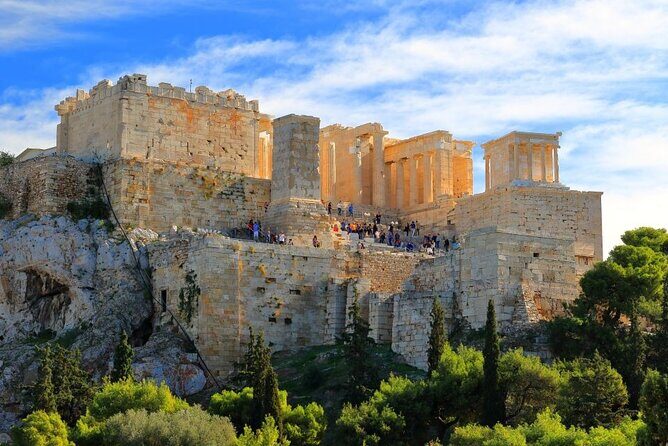
Next up is the Temple of Athena Nike. It’s dedicated to the protective goddess of the city, and even though it’s not the largest structure in the lineup, it carries heavy meaning.
This is about 10 minutes. Your best move here is to look for why “Nike” (victory) fits into the city’s identity. Think of it as part of the visual language of protection, strength, and triumph.
6) Propylaea: the ceremonial gateway in the fortification
Then you’ll reach the Propylaea, the access point to the interior of the Acropolis fortification. Even if you’re not a “gateway” person, this stop helps you understand how the site was organized: it wasn’t random. It was planned.
This is another shorter stop (about 10 minutes), but it’s a key way to read the space. Once you understand it as an entrance/transition, the whole route feels more logical.
7) Parthenon: the crowned symbol on top
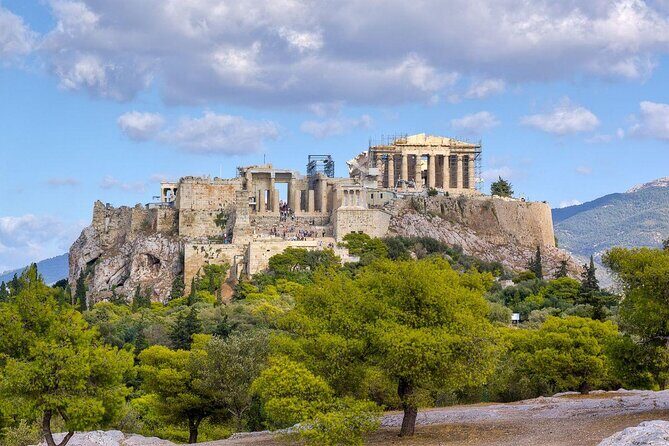
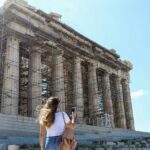
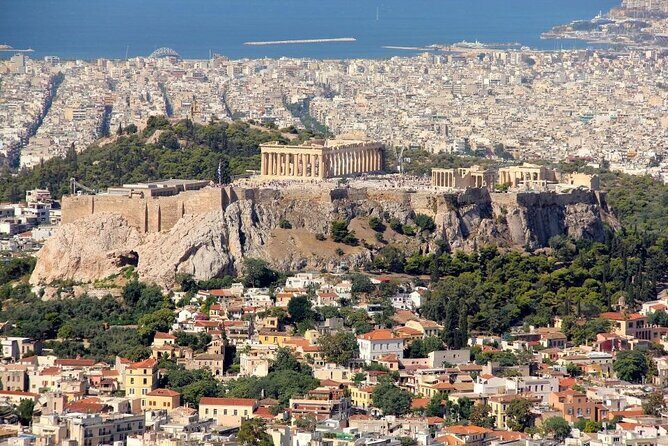
Now for the star: the Parthenon, the emblem of Athens and the crowned temple on the sacred rock. You get about 30 minutes here, which is the right amount. It’s long enough to view it from different angles and still keep your feet moving when it’s time.
What I think works best at the Parthenon is doing one slow loop. Start with a frontal look, then angle your body to catch side details, then finish with a glance outward. You’re collecting three viewpoints at once: the monument, its design lines, and its relationship to the city around it.
8) Erectheion: sacred space and the Caryatids
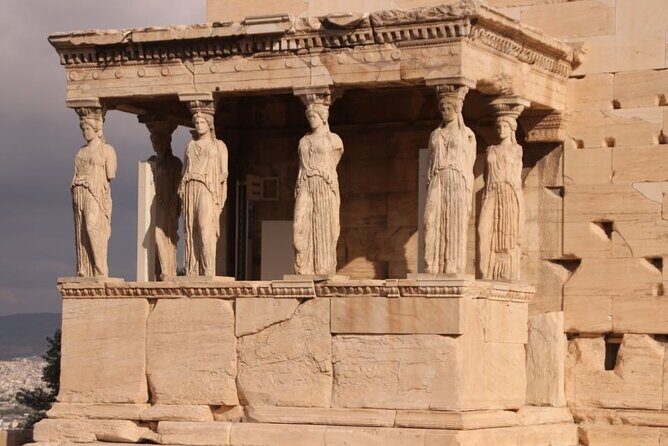
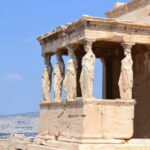
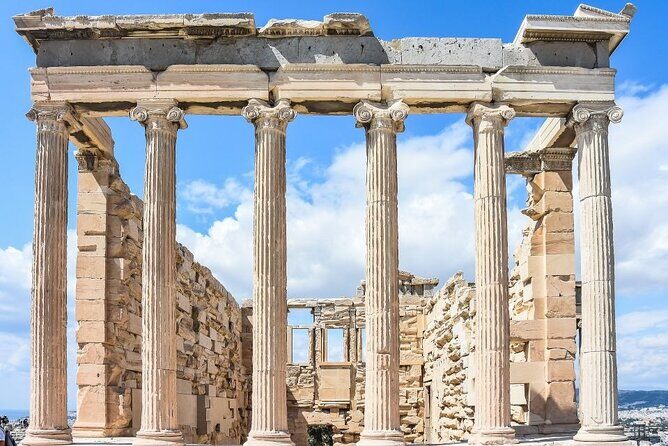
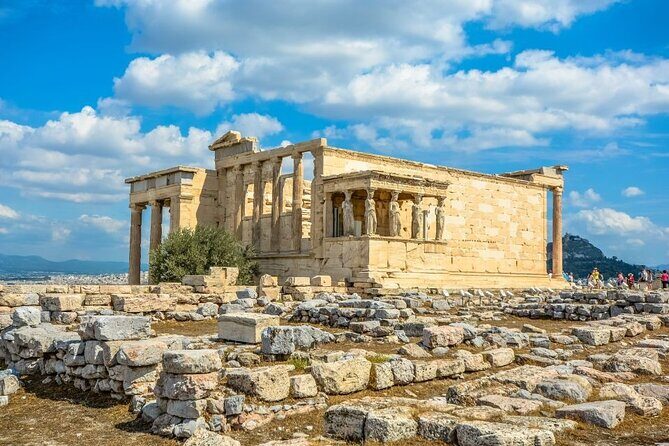
Finally, you’ll see the Erechtheion, described as the most sacred temple in the enclosure and famous for the Caryatids. This is the kind of stop where the details matter—because the Caryatids aren’t just decorations. They’re part of the temple’s character and message.
This stop is about 10 minutes. If you only do one thing with your time here, make it close-range looking: notice how the figures connect the idea of sacred guardianship to a human form.
After you finish the full loop, the tour ends at the Acropolis area you’ve just been touring.
The monuments map: why this mix of stops is the real value
If your only goal is the Parthenon photo, you could do a quick visit alone. The real value of this guided walk is the way it stacks monuments with different roles.
You get:
- Athena’s core identity through the main sacred complex.
- Civic life through the theaters and performance spaces (Dionysus and Herodes Atticus).
- Belief beyond politics via the healing sanctuary for Asclepius and Hygieia.
- Protective symbolism through Athena Nike.
- Architecture as movement at Propylaea, where you feel the site’s design logic.
- Sacred personhood at the Erechtheion through the Caryatids.
That mix is what turns the Acropolis from a single famous building into a working picture of how Athens saw itself.
Price and value: what you’re paying for (and what you’re not)
The price is $33.57 per person, and the listed duration is around 1 hour 30 minutes with an official Spanish-speaking guide.
Two things matter for value here:
- Guided context costs money, especially when it’s an official guide and the explanations connect legends, art, and monument meaning.
- You still need the Acropolis entrance ticket separately (listed as €20), and that’s a key part of your total spend.
So your real total is the tour fee plus the entrance ticket. If you already know you’ll spend most of your time staring at the Parthenon without understanding what you’re looking at, the tour fee becomes less “extra” and more “buying time and understanding.”
Also, the small group size (max 15) is part of the pricing logic. This isn’t a giant bus-tour experience where you lose the guide.
Pacing, photos, and comfort on stone steps
This is not a sit-and-talk museum tour. You’ll walk and climb around a historic site, which means your comfort setup matters.
Here’s how to make this tour feel easy instead of exhausting:
- Wear comfortable walking shoes you trust on steps and uneven ground.
- Bring a bottle of water (it’s explicitly recommended).
- Plan to look up often; the Acropolis makes you want to stare. Don’t fight it—just pace your body with short pauses.
- If you care about photos, take advantage of the time given to each monument, especially the Parthenon stop.
And because local conditions can change, it’s smart to check current Covid19-related rules before you go. The tour notes it’s worth checking local restrictions for activities.
Spanish guide tips: how to get more out of Juan-level storytelling
You’ll have a Spanish-speaking official tour guide. That matters because the best parts of the Acropolis are the connections: why Athena matters, what different temples represent, and how the myths link to the layout you’re walking through.
Feedback in the guide style points to explanations that work on two levels:
- enough history and art detail to understand what you’re seeing
- the right amount of space for photos so you don’t feel rushed
One name that comes up with strong praise is Juan, described as exceptionally knowledgeable about the history and art of ancient Greece. Even if your guide is someone else, use that as a clue: you’re looking for a guide who can explain legends clearly without drowning you in jargon.
If you want to get the most, go in with one simple question in mind: Which monument feels most important to you right now? Then listen for the guide’s reason why that structure matters.
Should you book this Acropolis walking tour?
I’d book it if you want:
- a Spanish-guided walk that covers major monuments without dragging it out
- a route that tries to avoid the worst crowds by starting on the southeast side
- a small group experience where your guide’s explanations matter
- enough time at the Parthenon to actually see it, not just pass it
I’d think twice if:
- you hate any amount of walking on stone steps
- you’d rather save money and handle navigation on your own with no guide context
- you’re only interested in one building and don’t care about the broader Acropolis story
If you’re weighing “guide or self-guided,” this tour leans heavily toward the best-case scenario: you’ll leave with the Parthenon and more, because you’ll understand what the rest of the site is doing and why.
FAQ
Is the tour guided in Spanish?
Yes. It includes a Spanish-speaking official tour guide.
How long does the walking tour last?
The duration is about 1 hour 30 minutes.
Is the Acropolis entrance ticket included?
No. Entrance to the Acropolis is listed as €20 and is not included in the tour price.
Where do I meet for the tour?
The start point is Makrigianni, Athina 117 42, Greece.
Where does the tour end?
The tour ends at the Acropolis of Athens, after visiting the full site.
What is the ticket type for this tour?
You receive a mobile ticket.
How many people are in the group?
The maximum group size is 15 travelers.
What stops are included during the tour?
You’ll pass by the Acropolis site and major monuments including the Theater of Dionysus, Temple of Asclepios, Odeon of Herodes Atticus, Temple of Athena Nike, Propylaea, Parthenon, and the Erechtheion.
Do I need to bring water and wear comfortable shoes?
Yes. Bringing a bottle of water and wearing comfortable walking shoes are recommended.
Can I cancel for a full refund?
Yes. You can cancel up to 24 hours in advance for a full refund. Less than 24 hours before start time is not refundable.




More Walking Tours in Athens


More Tours in Athens


More Tour Reviews in Athens
- All Day Cruise -3 Islands to Agistri,Moni, Aegina with lunch and drinks included
★ 5.0 · 4,958 reviews