REVIEW · ATHENS
Private Walking Tour: Ancient Agora, Plaka and Monastiraki monuments
Book on Viator →Operated by Athens Walking Tours · Bookable on Viator
Athens hits different when you walk it with a specialist. This private tour strings together Ancient Agora big moments with the everyday stuff in Monastiraki and Plaka, plus a surprising archaeology stop right by Syntagma. I especially like how the route starts with the Syntagma Metro museum finds and keeps you moving through changing eras, from Roman and Ottoman to classic Greek civic life. I also love the guide focus on the Tower of the Winds and the Stoa of Attalos, which makes the Agora feel like a living place, not just ruins.
One thing to plan for: the main Ancient Agora site has an extra entrance fee (€20 per person) that’s not included, and you should expect about 3 hours of walking.
In This Review
- Key things I’d circle before you go
- Syntagma Metro’s tiny archaeology museum: a great warm-up
- Metropolis Square and Athens Cathedral: when Athens gets formal
- Monastiraki flea market streets: Ottoman monuments in the middle of daily life
- Plaka’s lanes, the Medrese doorway, and Hadrian’s Library columns
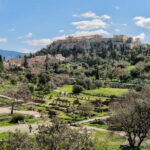
- Ancient Agora: the commercial and political heart of Athens
- Temple of Hephaestus: a standout pause in the ruins
- Stoa of Attalos and the Agora museum: where daily life gets specific
- Avyssinias Square and Athinas Street: the finish smells like Athens
- Price and value: what you’re really paying for
- Who this private walk is best for
- Should you book this private walking tour?
- FAQ
- Where does the tour start?
- Where does the tour end?
- How long is the tour?
- Is this tour private?
- What’s included in the price?
- What entrance fees should I expect?
- Are food and drinks included?
- Is the tour offered in English?
- Is there free cancellation?
Key things I’d circle before you go
- Syntagma Metro museum start: burial tomb remains, a 2,000-year-old beehive, and Roman mosaics (5th century BC is how the remnants are described)
- Monastiraki Ottoman landmarks: Tzistarakis Mosque and Fethiye Mosque show up in a real shopping neighborhood
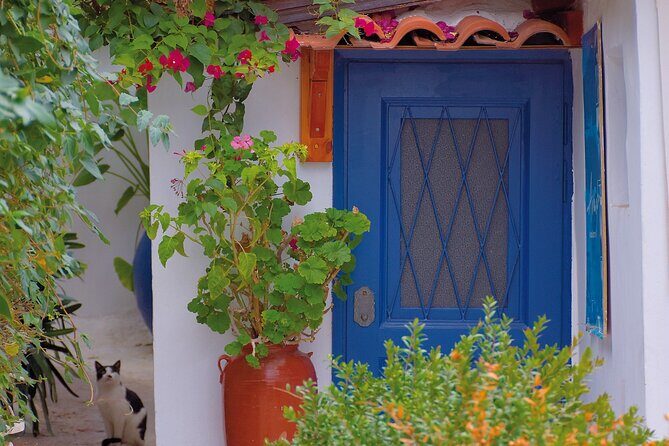
- Plaka photo moments with history built in: Hadrian’s Library columns and the Doorway of the Medrese
- Agora with context: the commercial, political, and social center that ties to the 6th century BC and the idea of democracy
- Practical pacing: you’ll get a real guide-led walkthrough, then end near the Agora so you can linger
Syntagma Metro’s tiny archaeology museum: a great warm-up
Your tour starts near Syntagma Metro station, right in central Athens, and the first stop is a small museum space tied to the area’s excavations. This is a smart opener because it sets the tone: Athens didn’t just change eras once. It stacked them.
I like that you begin with objects you can actually picture. The museum shows remains of burial tombs, a 2,000-year-old beehive, and remnants of Roman mosaics thought to date to the 5th century BC. Even if you’re not a “museum person,” these details make it easier to understand what you’ll see later at the Agora—because you’re already thinking in layers, not straight lines.
Practical tip: arrive with comfortable shoes. That first stretch is short, but you’ll keep walking for the full 3 hours, and the day only gets more active once you hit Monastiraki and Plaka.
You can also read our reviews of more walking tours in Athens


Metropolis Square and Athens Cathedral: when Athens gets formal
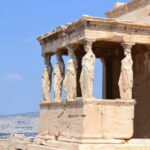
From Syntagma’s area, you move toward Mitropoleos Square, home to Athens Cathedral. The church (built in 1862) is the seat of the archbishop of the Greek Orthodox Church in Athens.
This stop works well even for people who usually skip churches. It’s not just a building to see and move on from. It gives you a quick “present-day Athens” reference point right before the route drops into the older, more maze-like streets of Monastiraki and Plaka. You’ll also get a sense of how the city centers religious power alongside civic life—an echo of what you’ll later learn about the Agora.
What to watch: architecture details. The cathedral’s ornate look is a contrast to the ruin-and-stone feel of the sites ahead.
Monastiraki flea market streets: Ottoman monuments in the middle of daily life
Next comes Monastiraki—one of those neighborhoods where history doesn’t sit behind ropes. The lanes are busy with shops, and the flea market energy can be part of the tour’s charm if you enjoy a sensory, real-world Athens.
Your route includes Ottoman-era landmarks, specifically the Tzistarakis Mosque and the Fethiye Mosque. These aren’t presented as museum artifacts. You see them while surrounded by everyday movement—so the city’s past feels less distant.
This is also a good area for photos, but keep your timing in mind. If you try to take pictures right where foot traffic bottlenecks, you’ll feel rushed. Instead, pause slightly off the main flow and let the street clear for a minute.
Plaka’s lanes, the Medrese doorway, and Hadrian’s Library columns
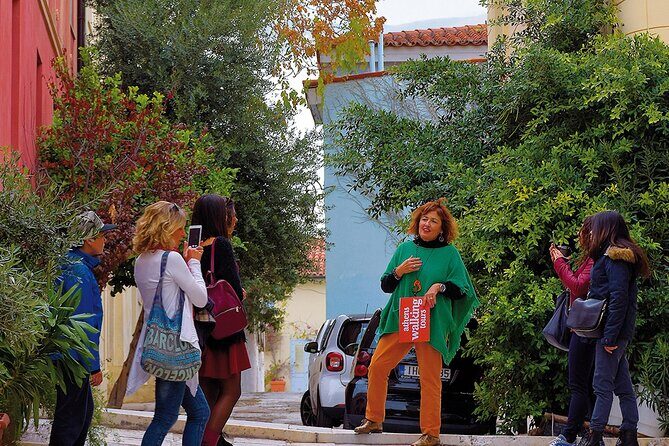
After Monastiraki, you head into Plaka, the old-town heart where the streets turn into a paved maze. The vibe shifts from market chaos to a more slow-stroll feel, though it stays lively.
Two highlights here:
- The Doorway of the Medrese: described as the entrance to a former Turkish theological school. It’s a small structure, but it carries weight because it points to how learning and faith changed hands across centuries.
- The remaining columns of Hadrian’s Library, built by Emperor Hadrian in 132 AD. The columns are all that’s left, but they still give you a clear visual of what “major civic culture” looked like in its heyday.
I like this stop because it’s the kind of Athens detail that helps your brain connect the dots. You start seeing a pattern: older Athens wasn’t only about temples. It was also about education, institutions, and public life.
Photo tip: if columns are your thing, take a minute to frame shots from more than one angle. Even with a “simple ruins” view, the way the street lines up around Hadrian’s Library columns can make a big difference.
Ancient Agora: the commercial and political heart of Athens
Then you reach the big one: the Ancient Agora. This is where the tour really earns its name.
You’ll inspect the ruins with your guide and hear how the area developed in the 6th century BC. The Agora was the commercial, political, and social heart of ancient Athens, and the tour ties it to the idea of democracy—because this is where people gathered to discuss matters of the city.
If you’re used to thinking of the Agora as just a set of famous ruins, let the guide talk for a bit longer than you think you need. You’ll get a better picture of daily life: trades, meetings, and the constant movement of people with opinions.
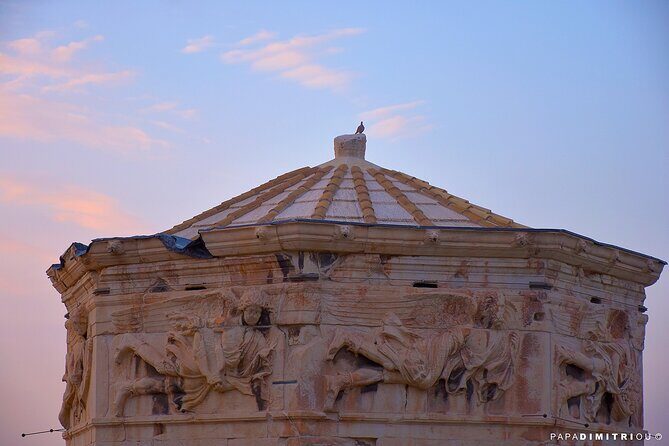
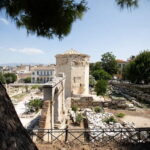
Stop highlight: the Tower of the Winds. It served as a timepiece for the forum. That detail matters because it shifts your thinking from monuments-as-sculpture to monuments-as-tools. This wasn’t only about aesthetics. It was about organizing daily schedules.
Note on tickets: the Ancient Agora entrance fee (€20 per person) is not included, so budget for it if you’re doing the tour on a tighter travel spend.
You can also read our reviews of more private tours in Athens




Temple of Hephaestus: a standout pause in the ruins
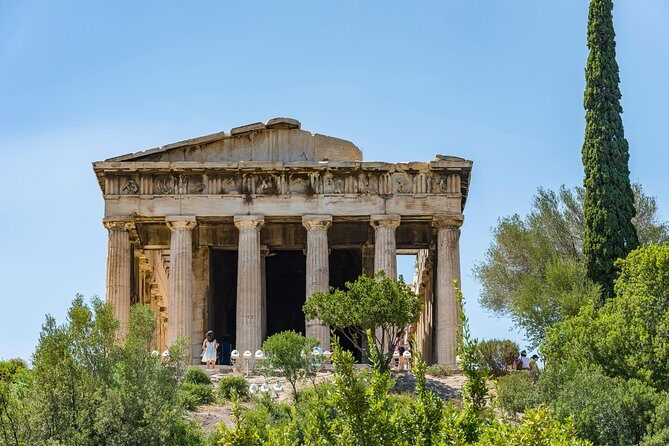
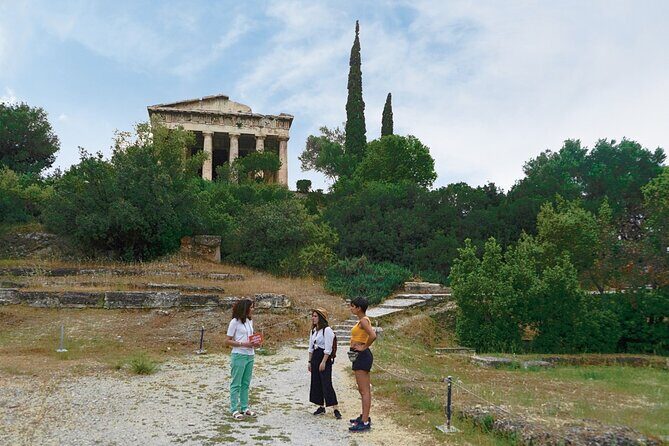
Along the way through the Agora area, you’ll visit the Temple of Hephaestus. Even if you’ve seen photos before, it tends to feel better in person because you can see how it fits the space around it.
For me, this is one of those moments where the tour’s “walking momentum” slows down naturally. The temple becomes a visual anchor: you can tell where you are, and you can imagine how the surrounding public life worked around a major religious structure.
If you want an easy win, ask your guide to connect this temple to the way the Agora functioned as a civic center. That’s when the stop stops being just a photo and becomes context.
Stoa of Attalos and the Agora museum: where daily life gets specific
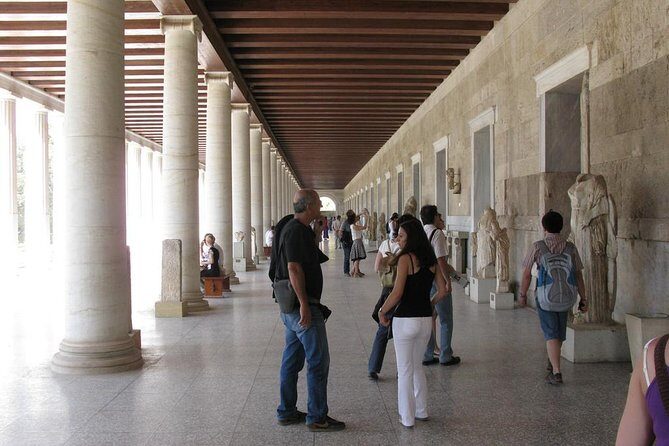
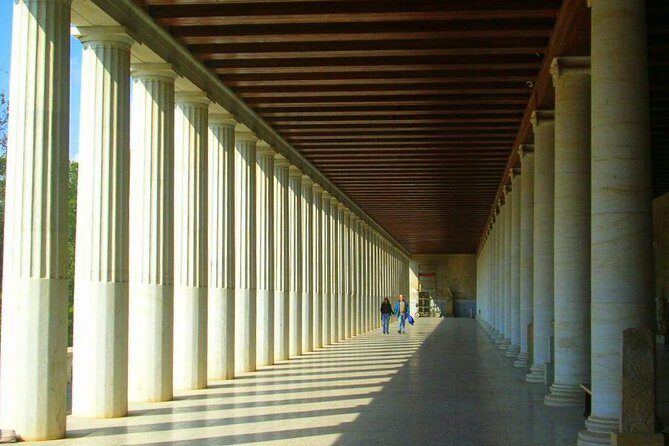
Next is the Stoa of Attalos. This is a reconstructed ancient shopping hall, and the stop includes access to its archaeological museum, which shows a rich selection of artifacts used in daily life of the Athenians.
I love this pairing because it balances the outdoors. You’ve been walking through lanes and open ruins, then you get a chance to sit with objects that explain what people actually did and used. The artifacts are the bridge between grand civic ideas and ordinary routines.
How to get more out of it: spend a little time reading labels and then go back and look at the space outside with those objects in mind. It helps you stop thinking of the Agora as only political speeches and start picturing markets, tools, and everyday decisions.
Also, your guide departs after the visit to the museum of Stoa of Attalos. That ending is useful: you can keep exploring at your own pace without needing to keep the group moving.
Avyssinias Square and Athinas Street: the finish smells like Athens
To close, you walk through Avyssinias Square to Athinas Street, where the atmosphere shifts into food and spice market territory.
This ending is practical. It lets you spend your last energy on something you can use immediately. If you want a quick snack, a small souvenir spice tin, or just a final browse, this is a natural moment.
Even if you don’t buy anything, it’s still a helpful contrast to the ancient stuff. You leave the Agora with a sense of time travel, not time freezing.
What to do: if you’re planning to eat soon after the tour, decide now. Once you’re done with the guide, you’ll have the most momentum here, while you’re already in the market zone.
Price and value: what you’re really paying for
The price is $319.39 per person for a private tour, about 3 hours. That’s not a bargain price, but it’s also not trying to be. You’re paying for three things that matter in Athens:
1) A local guide who can connect sites across eras. Ottoman monuments next to classic civic spaces requires someone who can explain the transitions without losing you.
2) Private pacing. This matters at the Agora, where it’s easy for a group tour to rush you through. In a private format, you can slow down for the details that actually stick—like the Tower of the Winds and how the Agora’s 6th century BC development fits the bigger story.
3) Route intelligence. The walk includes major sights and also the kind of extra thinking that makes the city feel less like a checklist. One guide named Kostas was praised for making the tour memorable and easy to enjoy, including with a mixed group that had teens in it.
Two quick value notes to keep your budget sane:
- The Ancient Agora entrance fee (€20 per person) is not included, so add that to your total.
- Food and drinks are also not included unless specified, so decide if you’ll snack on the Athinas Street market stretch.
Who this private walk is best for
I think this tour hits hardest if you fit one (or more) of these profiles:
- You want context, not just standing near ruins and moving on.
- You like walking through neighborhood texture—Monastiraki flea market lanes and Plaka’s older streets matter here.
- You’re the type who enjoys spotting how different time periods sit next to each other.
- You’re traveling with mixed ages, since the route is guided in a way that can work even when the group has teens.
If you only want the top two or three headline monuments and nothing else, you might find the Ottoman and market segments less relevant. But if you want Athens as a layered city, this route makes a strong case.
Should you book this private walking tour?
Yes, if you want Athens to feel like a story you can walk through. The combination of the Syntagma Metro museum warm-up, the Ottoman-era sights in Monastiraki, Plaka’s doorway and columns, and the Agora’s civic core is a smart sequence. The Stoa of Attalos museum is a particularly good payoff because it turns ruins into everyday life.
Book it if:
- you’re willing to add the Ancient Agora entrance fee to your plans,
- you enjoy guided explanation while you’re walking,
- and you value a private setup where you can linger over details.
Skip it (or consider a shorter option) if:
- you hate walking for about 3 hours,
- or you prefer self-guided time over guide-led pacing.
FAQ
Where does the tour start?
It starts near Syntagma Square at Pl. Sintagmatos, Athina 105 63, Greece.
Where does the tour end?
After the Stoa of Attalos museum visit, the guide departs. The tour ends at the Ancient Agora of Athens at Athens 105 55, Greece.
How long is the tour?
It’s about 3 hours.
Is this tour private?
Yes. It’s a private tour/activity, meaning only your group participates.
What’s included in the price?
A local guide and a private tour are included.
What entrance fees should I expect?
Entrance to the Ancient Agora of Athens is €20.00 per person and is not included.
Are food and drinks included?
Food and drinks are not included unless specified.
Is the tour offered in English?
Yes, the tour is offered in English.
Is there free cancellation?
Yes. You can cancel up to 24 hours in advance for a full refund.
If you tell me your travel dates and whether you want to prioritize photo stops or explanations, I can help you decide the best time of day to do this walk.
More Walking Tours in Athens

More Tours in Athens


More Tour Reviews in Athens
- All Day Cruise -3 Islands to Agistri,Moni, Aegina with lunch and drinks included
★ 5.0 · 4,958 reviews