REVIEW · ATHENS
Private Walking Tour: The Acropolis & Athens City Tour
Book on Viator →Operated by Athens Walking Tours · Bookable on Viator
Acropolis views start before you climb. This private walking tour strings together Athens’ big-hitters from Syntagma Square through Plaka and the UNESCO-listed Acropolis, so the Parthenon lands with context, not just awe. You also get a real guide who can slow down, pause, and explain as you go.
I love two things most. First, the early stop near Syntagma Square includes a small local archaeological exhibition with household pottery, mosaics, and a 2,000-year-old beehive. Second, the guide’s focus is on how and why the monuments were built, using clear explanations from guides like Giota, Marta, and Aristotle.
The main trade-off is that you’re doing serious walking uphill, and the Acropolis entrance fee is not included (about 28 euros, paid in cash on the day). If weather is rough or you come without good shoes and water, the pace can feel like a lot for 3 hours 30 minutes.
In This Review
- Key things to know before you go
- Where it starts: Syntagma Square and a smart warm-up
- Greek Parliament to Zappeion: architecture and the first big photo stretch
- Temple of Olympian Zeus: seeing scale without needing a museum
- Plaka and the trophy monument: why the Acropolis isn’t isolated
- Dionyssiou Areopagitou walkway: the approach that makes the climb worth it
- Entering the Acropolis: tickets, then temples, then the Parthenon
- Private attention in practice: how guides change the whole day
- Walking tour logistics that actually matter
- Price and value: what $324.40 per person buys you
- Weather, heat, and comfort: your best strategy
- Who should book this private Acropolis & Athens tour
- Should you book this tour?
- FAQ
- How long is the Private Walking Tour: The Acropolis & Athens City Tour?
- Where does the tour start and end?
- Is the Acropolis entrance fee included?
- What’s included in the tour price besides the guide?
- Do I need hotel pickup?
- What language is the tour offered in?
- Is there a cancellation refund available?
Key things to know before you go

- Skip-the-ticket line so you spend more time looking and less time waiting
- Expert Acropolis storytelling that connects sites you can actually see from the street up to the Parthenon
- A warm-up start at Syntagma Square with an archaeological exhibition before the big climb
- Temple of Olympian Zeus to Plaka links the Acropolis to everyday Athens neighborhoods
- Dionyssiou Areopagitou walkway gives you a dramatic approach to the citadel
- Stop-by-stop photos with views over Athens as you walk the slopes
Where it starts: Syntagma Square and a smart warm-up
Meeting in Syntagma Square is a smart choice because it puts you in the center of modern Athens while you’re still learning about the ancient city. Before you head toward the big archaeological showpieces, you begin with a quick archaeological exhibition featuring small everyday items and local finds—household pottery and mosaics, plus a striking 2,000-year-old beehive dating from classical times.
Right away, you get the message of the tour: this isn’t only about huge monuments. It’s about how ordinary life, worship, and power all fed into what later became the Acropolis we recognize today. You’ll also see the Greek Parliament House on one side of the square and the Monument to the Unknown Soldier with the brightly uniformed evzones standing guard. The change-of-guards segment is brief (about 20 minutes), but it’s a fun way to orient before you head into quieter, older streets.
Practical tip: this is a standing-and-walking day. Even if you love history, plan to dress for sun and keep expectations realistic about moving through the city on foot.
You can also read our reviews of more walking tours in Athens


Greek Parliament to Zappeion: architecture and the first big photo stretch
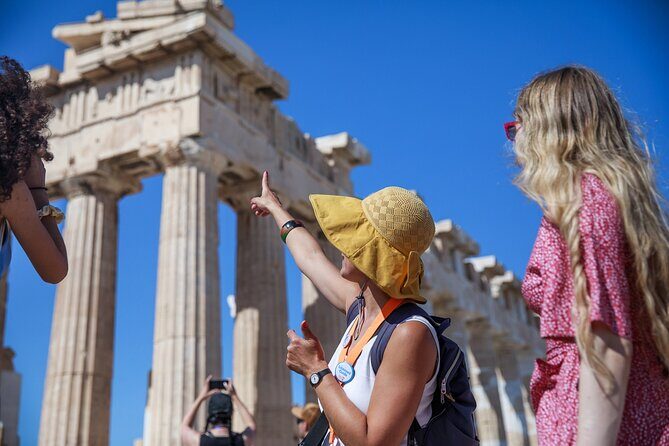
After Syntagma Square, you cross through the National Gardens area and head toward the Zappeion Conference & Exhibition Center. The building here is neoclassical, with elegant columns facing the gardens, and it’s a nice contrast to the ruins you’ll see later.
What I like is that the tour doesn’t treat these stops as separate sightseeing boxes. You’ll also hear about what’s right there in plain sight: the ancient columns in front of Zappeion relate to remains from the area—including the Temple of Zeus and Hadrian’s Arch. It’s a neat trick for your brain: Athens starts to feel like one long story instead of scattered “must-sees.”
You also get a chance for photos before you reach Plaka and the Acropolis approach. This is good energy management, because once you start climbing, you’ll want your phone charged and your camera ready without stopping constantly.
Temple of Olympian Zeus: seeing scale without needing a museum
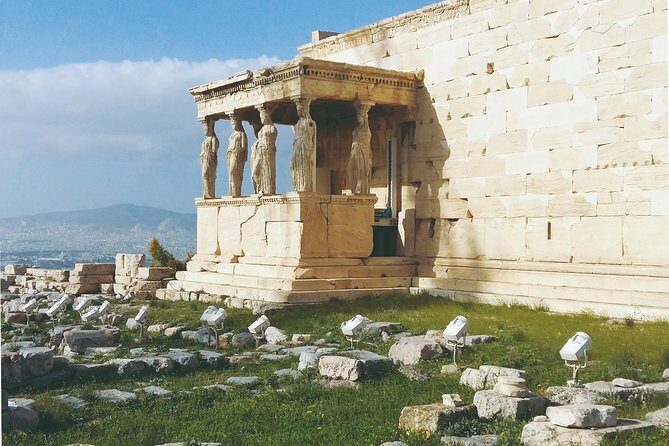
Next up is the Temple of Olympian Zeus, one of Athens’ most impressive “big idea” ruins. The time here is around 25 minutes, and you’ll hear the key fact: it’s described as the biggest temple ever built in Athens.
Even in ruin form, the site is about scale. Columns and spacing tell you how the builders wanted people to feel—smaller humans, bigger gods, and a sense of ceremony you can almost recreate just by walking the edges. If you like architectural history, you’ll appreciate the way this stop tees up your understanding of later Acropolis temples, especially when the guide talks about construction choices and purpose.
Drawback to consider: this temple stop is closer to a “look and absorb” visit than a long, guided room-by-room museum experience. If you expect lots of time inside buildings, you’ll want to be ready for open-air archaeology.
Plaka and the trophy monument: why the Acropolis isn’t isolated
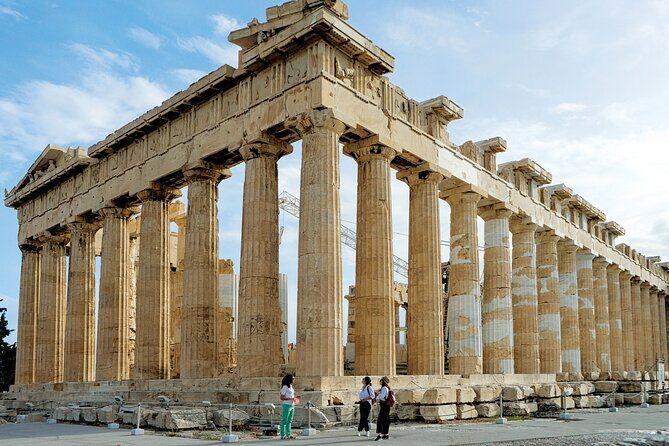
From there, you move into Plaka, Athens’ Old Town. Plaka is where the city’s mood changes—paved streets, tavernas, bars, and a sense of wandering even if you’re following a path. The tour uses this neighborhood walk to connect the Acropolis to the lived-in city around it.
One stop that helps you understand Athens’ layers is the Lysicrates Monument. You’ll pass by the stone pedestal used to display a competition trophy in the 4th century BC. That detail matters because it shows the Acropolis wasn’t only about religion and rulers—it was also tied to public competitions and civic identity.
You’ll also see remnants of an early Christian church. That shift is part of the point of this route: the Acropolis area and its surroundings kept changing roles over the centuries. So even if you’re focused on the Parthenon, the tour nudges you to notice time passing in stone.
Practical tip: Plaka is charming, but it can also slow you down if you stop for snacks and photos too often. If you want the full Acropolis experience, keep those breaks short and save time for the viewpoints on the slopes.
Dionyssiou Areopagitou walkway: the approach that makes the climb worth it
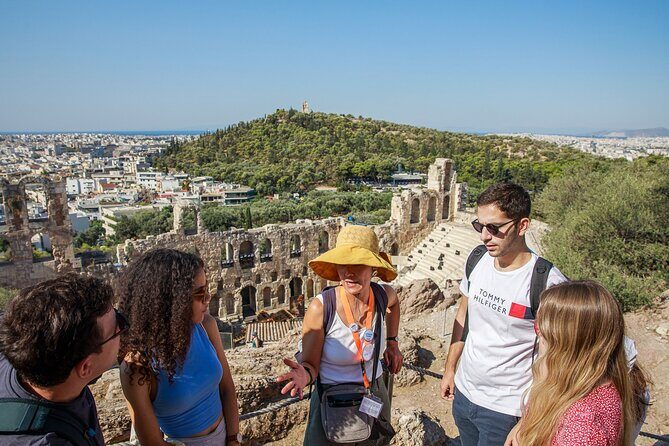
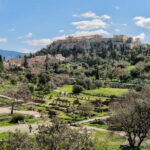
Once you leave Plaka behind, you follow the Dionyssiou Areopagitou walkway toward the Acropolis, the ancient citadel on a rock high above the city. This is UNESCO-listed, and the approach is where you start feeling the geometry of Athens—streets dropping away, rooftops spreading out, and the Acropolis standing above everything like a final act.
As you climb, the guide pauses at key points such as the Dionysius Sanctuary, Mars Hill, Philopappos Hill, and the Odeon of Herodes area. Each stop is short, but together they create a pathway of landmarks instead of a single wall of stone.
Two specific “first theater” moments you’ll enjoy here:
- Theatre of Dionysus (about 15 minutes) is highlighted as the first theater of the Western World.
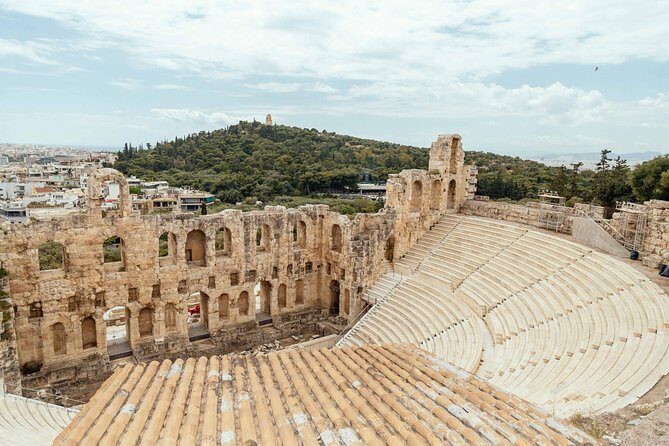
- Herod Atticus Odeon (about 10 minutes) is treated as one of the most iconic ancient odeons in Athens.
These are the kinds of sights where a guide really helps. Standing in the right spot changes how you understand what you’re looking at. And with a private format, you can ask questions without the tour group moving on before you’ve absorbed it.
Real talk: this is uphill walking. I recommend comfortable shoes with grip. You’ll feel better if you start slow and trust that the guide will keep you on schedule.
You can also read our reviews of more city tours in Athens





Entering the Acropolis: tickets, then temples, then the Parthenon
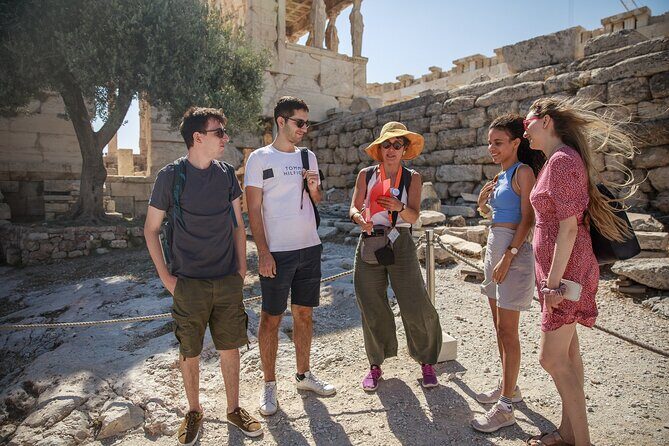
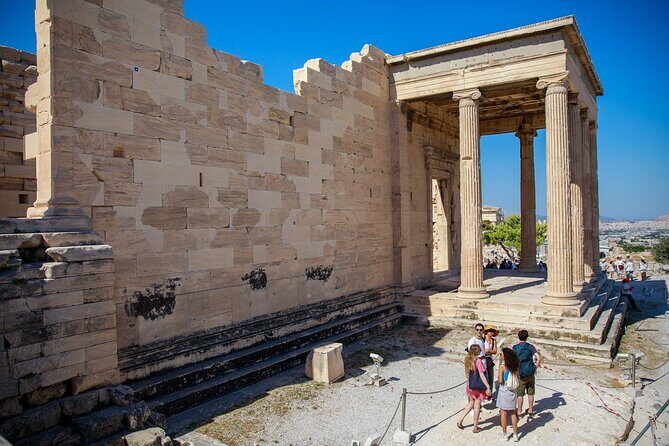
At the Acropolis area, you’ll pay the entrance fee (about 28 euros, cash on the day). The tour includes skip-the-ticket line service, so the waiting tends to be shorter than it would be otherwise. Once you’re in, the tour length at the Acropolis portion is about 1 hour 30 minutes.
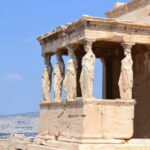
The guide shows you a sequence of highlights, including the Temple of Athena Nike and the Propylaea gateway, before focusing on the star of the show: the Parthenon. The time spent on the Parthenon (around 20 minutes) isn’t meant to be rushed. It’s enough time to read the main features, understand what they represent, and learn how the site fits together as a system.
I like that you don’t just hear facts. The guide connects construction to history—what materials and techniques were used, how the building was designed, and why specific elements mattered. It’s also a place where your eyes keep getting new details the longer you stand there. If you’re into architecture, this is where the tour earns its price.
Also, the Acropolis viewpoints are real. You’ll pause to absorb the views down over Athens and capture them on camera. This is one of the few times you’ll feel both present in the landscape and removed from it at the same time—looking down while studying stone up close.
Private attention in practice: how guides change the whole day
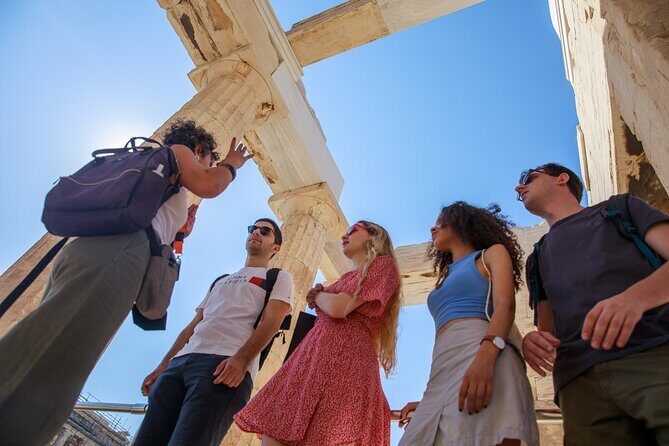
This tour is marketed as private, and in practice that often means one big thing: you set the rhythm. You’re not stuck watching someone else’s pace. A lot of the best feedback you’ll see about this tour boils down to guides who explain clearly, answer questions, and adapt.
You’ll notice patterns in the guide styles from names like Giota, Marta, Artemis, Nicos, Nicholas, Marianna, Despina, and Vicki. People mention everything from strong English to humor to a willingness to tailor pacing. One standout example: Despina reportedly adjusted the content for children, and they carried the facts forward during the rest of the trip. That tells me the guide team takes audiences seriously, not just scripts.
If you’re the kind of traveler who asks questions, this format helps. If you’re traveling with mixed ages or mixed interests, it helps even more.
Walking tour logistics that actually matter
You’re looking at about 3 hours 30 minutes of walking and stopping. The route starts at Syntagma Square (Pl. Sintagmatos, Athina 105 63) and ends at the Acropolis area (Acropoli, Athens 117 42). There’s no hotel pickup or drop-off, so you’ll want to plan how you’ll arrive and how you’ll continue on after the guide departs.
Entrance fees are separate (about 28 euros) and paid in cash on the day. That’s not a deal-breaker, but it’s a key planning point—bring the cash before you arrive so you don’t slow down at the gate.
Also, food and drinks aren’t included. If you want water and a quick snack buffer, build it in. The day includes both modern Athens and ancient sites, so you’ll likely want breaks even if you don’t plan to eat long.
Price and value: what $324.40 per person buys you
At $324.40 per person, this is not a budget tour. The value comes from three things you can feel on the day:
- Private guiding at multiple landmarks, not just the Acropolis entrance experience.
- Skip-the-ticket line service, saving time and frustration at a site where lines can eat your morning.
- A route that builds context from modern Athens to classical monuments to UNESCO-listed ruins.
You’ll also need to add the Acropolis entrance fee (about 28 euros cash). Even then, you’re paying for a guided interpretation service, not only access to stone monuments.
Where it makes the most sense is if you want more than a checklist. If you enjoy explanations, construction details, and the “why” behind what you see—this kind of guided walk tends to pay off quickly. If you only want to photograph monuments and move fast, you might feel the cost more than the benefit.
Weather, heat, and comfort: your best strategy
Athens can be hot, and the tour involves uphill sections to reach the Acropolis. People have specifically requested early starts for that reason. So if you can choose timing, aim earlier in the day when possible.
If the weather is bad, you might still do the tour, but your enjoyment may drop because views and ruins are harder to appreciate when it’s unpleasant. The good news: this tour format still provides structure, so you’re not stuck wandering with no plan.
Bring practical basics:
- comfortable walking shoes
- water
- sun protection (hat/sunscreen)
- a small amount of cash for entrance fees
Who should book this private Acropolis & Athens tour
Book it if you:
- want a guided walk that connects Syntagma Square, Plaka, and the Acropolis into one narrative
- like architecture and construction details, not just general sightseeing
- value a guide who can answer questions and adjust pacing
- prefer private attention over crowded group logistics
Consider something else if you:
- hate uphill walking
- want only a quick Acropolis stop and don’t care about the surrounding Athens context
- would rather spend the day independently and don’t plan to engage with a guide’s explanations
Should you book this tour?
Yes, if you want your Acropolis visit to feel like an informed experience. The best reason to book is the route itself: it starts with local context in Syntagma Square, links ruins to neighborhoods like Plaka, then builds naturally toward the UNESCO Acropolis. With private guiding, you’re not just looking at famous monuments—you’re learning how they connect.
I’d especially recommend it to first-timers who want to get their bearings fast and understand what they’re seeing as you walk. If you’re fit, comfortable with stairs and hills, and you’ll pay attention to explanations, this is a strong value use of your time in Athens.
FAQ
How long is the Private Walking Tour: The Acropolis & Athens City Tour?
It’s approximately 3 hours 30 minutes.
Where does the tour start and end?
It starts in Syntagma Square and ends at the Acropolis (Acropoli).
Is the Acropolis entrance fee included?
No. Entrance fees are not included and are about 28 euros, paid in cash on the day of the tour.
What’s included in the tour price besides the guide?
The tour includes a local guide, a private tour format, skip-the-ticket line service, and an Athens guide magazine and map.
Do I need hotel pickup?
No. Hotel pickup and drop-off are not included.
What language is the tour offered in?
The tour is offered in English.
Is there a cancellation refund available?
Yes. You can cancel up to 24 hours in advance for a full refund, and cancellation is free.


More Walking Tours in Athens

More Tours in Athens


More Tour Reviews in Athens
- All Day Cruise -3 Islands to Agistri,Moni, Aegina with lunch and drinks included
★ 5.0 · 4,958 reviews