REVIEW · ATHENS
Athens: Guided Mythological Walking Tour & Creation Stories
Book on GetYourGuide →Operated by Secrets of Greece IKE · Bookable on GetYourGuide
Athens has receipts from the gods. This 2-hour walking tour turns everyday city sights into Greek-myth clues, with Athena at the center of the story. It’s a fun way to see how myths shaped real Athens, from the look of buildings to the names you’ll pass on the sidewalk.
I especially like two things: the guide-led, interactive storytelling, and the way the myths connect to daily life themes like commerce and love. One thing to consider: the tour runs in Spanish, so you’ll get the most if you’re comfortable following a lively guide in that language.
If you want a mythology walk that feels like conversation (not a lecture), this is an easy pick. Small-group size also helps the pace stay friendly and questions feel welcome.
In This Review
- Key things you’ll notice on this Athena walking tour
- Meeting the gods at the Academy stairs
- What you’ll actually do: a 2-hour walk built around myth clues
- Why the walking format works
- The pace and group size
- How Athena’s trail shows up in buildings and street names
- Athena and Poseidon: the big rivalry turned into city understanding
- Theseus and the Athens connection you can’t miss
- Religion as the map for everyday life (commerce, love, and expressions)
- How the guides bring it to life in Spanish
- Value check: is $28 for 2 hours actually a good deal?
- Who this tour is best for (and who might want something else)
- Tiny practical tips so you enjoy the whole 2 hours
- Should you book this Athena myth walk in Athens?
- FAQ
- How long is the Athens Guided Mythological Walking Tour & Creation Stories?
- What is the price per person?
- What language is the tour guide?
- Where do we meet?
- Is this a small-group tour?
- Is there free cancellation?
Key things you’ll notice on this Athena walking tour
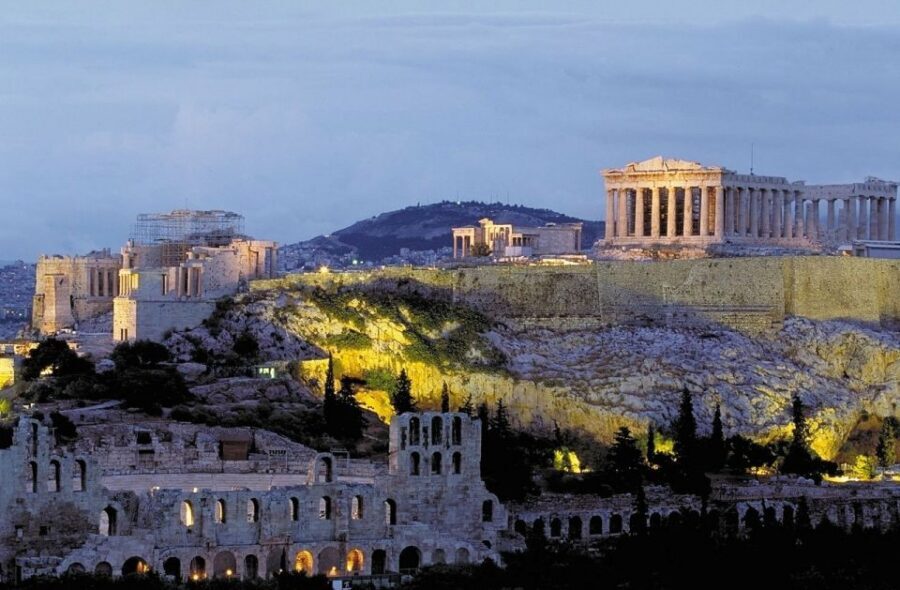
- Street-name and building-detail myth spotting: you’ll learn what to look for as you walk
- Athena vs Poseidon creation stories: the big rivalry made human-scale
- Theseus and Athens links: why this city is tied to the hero’s legacy
- A small-group vibe: better Q&A and more back-and-forth with the interpreter
- Spanish live guidance: you’re walking with the story, not just reading it
Meeting the gods at the Academy stairs
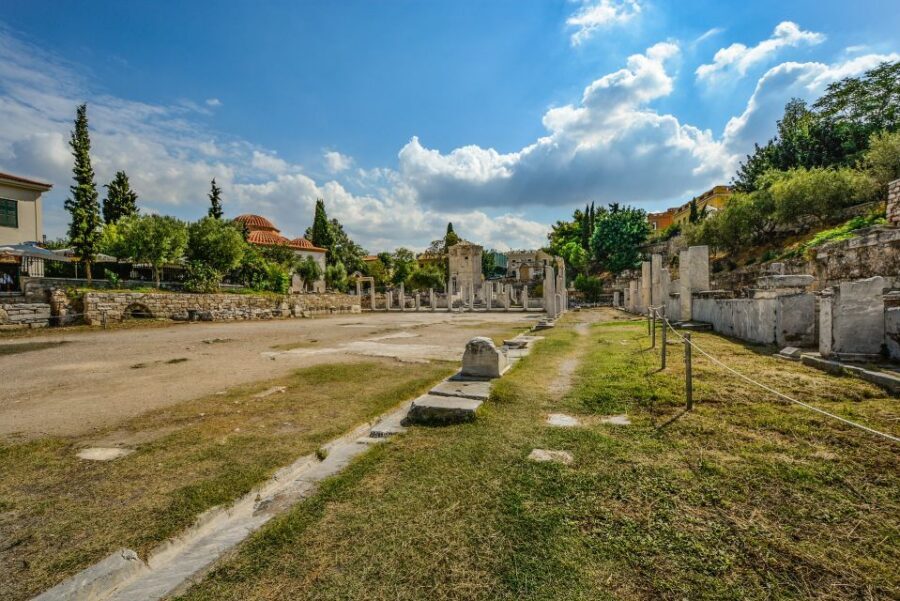
You start at the stairs in front of the Academy. That matters more than you might think. It sets a scene right away: Athens isn’t just full of ruins. It’s a living city where ancient ideas still show up in language, design, and who gets remembered.
The tour is led by a heritage interpreter, and the reviews highlight that the guides bring serious knowledge with a warm, talky style. In Spanish tours like this, that mix is huge. You don’t just hear facts—you get the story in a way you can actually follow while walking.
Practical note: the meeting point is literally on steps, so give yourself a few minutes to find the exact spot and settle in before the group moves off. And yes, wear walking shoes. Two hours in central Athens is enough time to turn sore feet into a distraction.
You can also read our reviews of more walking tours in Athens


What you’ll actually do: a 2-hour walk built around myth clues
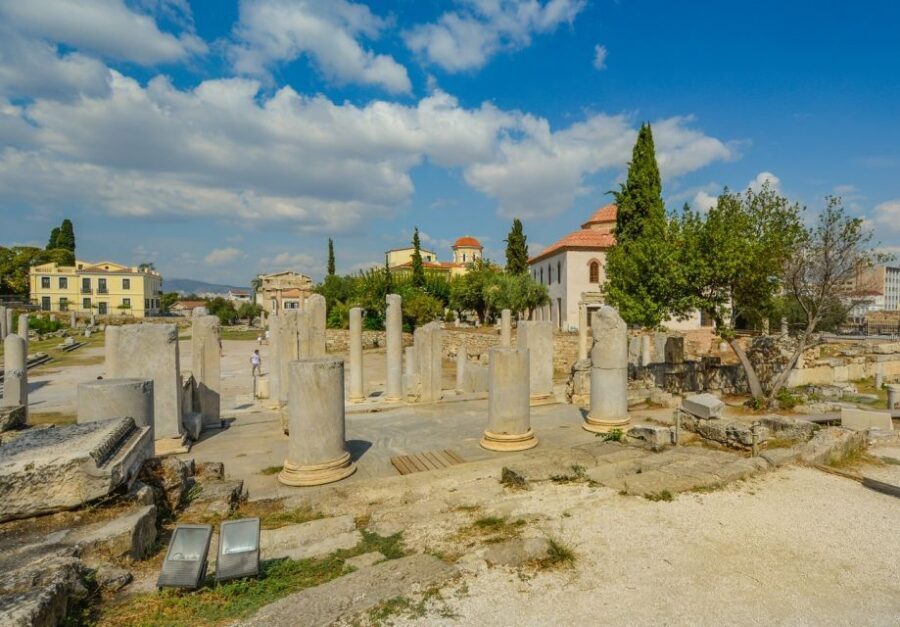
This isn’t a museum-style tour with a single “main attraction.” Instead, it’s structured as a walk through central Athens where Greek mythology explains what you see. The tour description is clear: you’ll connect the decoration of buildings and the names of streets to the gods of Olympus.
That approach is smart. Athens can be confusing if you only look at it through modern eyes. But when you start seeing myth references embedded in the city, the whole experience clicks.
Why the walking format works
- You’re constantly moving, so the story stays active.
- You’re learning visual cues on the spot, not later from a map.
- It’s easier to remember names and themes when you attach them to real streets and facades.
The pace and group size
The tour is a small group. That’s a real value point, because it usually means:
- the guide can check that you’re following,
- questions aren’t lost in a big crowd,
- and the atmosphere feels more like guided conversation.
From the ratings (4.8 across 46 reviews), this small-group style seems to be a big part of why people feel satisfied.
How Athena’s trail shows up in buildings and street names
Athens is often marketed as an open-air history lesson. This tour adds another layer: the mythology behind the city’s visible details.
The core idea is simple. Greek myths didn’t live in separate folders like today’s textbooks. They influenced culture across many parts of life. The tour focuses on how those beliefs left marks—especially on the decoration of buildings and even on the names of streets.
This is the kind of learning that sticks. Instead of memorizing myth plot points in a vacuum, you learn them as explanations for real-world symbols:
- Why certain gods matter in public memory
- How legends become part of place identity
- Why language carries old stories forward
If you’ve ever looked at a street name and wondered what it’s really referencing, you’ll like this. It turns “just walking” into active myth-hunting.
You can also read our reviews of more guided tours in Athens


Athena and Poseidon: the big rivalry turned into city understanding
A major theme is getting closer to the legend of Athena and the god Poseidon. In Greek mythology, their rivalry isn’t just drama for drama’s sake. It’s tied to how Athens is imagined—how the city earned its identity in mythic terms.
On this tour, that rivalry becomes more than a story you’ve heard before. You’ll connect it to the way Athenians understood the world, where divine conflict explained how a city took shape culturally and spiritually.
Here’s why that matters for you: once you understand the Athena-Poseidon contrast, Athens reads differently. You start noticing how myth can serve as an origin story for civic pride, values, and even the way people think about what a city should stand for.
The “creation stories” angle is also useful if you’ve only encountered Greek myths as entertainment. It nudges you toward how religion functioned as explanation—science for ancient people, basically, except with gods.
Theseus and the Athens connection you can’t miss
Another key myth thread is why the hero Theseus is forever linked to Athens. This matters because Theseus isn’t treated like an unrelated character who happens to appear in Athens. In Greek storytelling, he becomes part of the city’s identity.
Walking through central Athens while learning these connections makes the place feel less random. Instead of the city being a collection of landmarks, it becomes a map of stories—stories the Athenians told themselves so the world made sense.
This is also where you’ll likely appreciate the guide’s style. One review notes that the experience felt like talking with people who share a passion for mythology. That’s not just a vibe comment. It’s practical. When the guide explains why Theseus belongs to Athens, it’s easier to remember because the tone is human, not robotic.
Religion as the map for everyday life (commerce, love, and expressions)
The tour doesn’t stop at gods and heroes. It addresses how religion touched nearly every aspect of life in Ancient Greece. The description specifically calls out commerce and love affairs, plus the way religion shaped concepts and expressions that reached modern times.
This part can be a little philosophical, but it’s one of the best reasons to book a walking myth tour instead of just reading mythology on your own. In a book, you get stories. On the street, you get context—how those stories functioned as social guidance.
A practical example of what this means for you: you’ll start noticing that myths often explain human behavior and social relationships, not just supernatural events. So even if you’re not a die-hard mythology fan, you’ll still find the themes relatable:
- power and protection
- loyalty and heroism
- community identity
And if you do enjoy mythology, this is where you’ll feel the tour earn its time. It connects myth to culture, not just plot.
How the guides bring it to life in Spanish
Live tour guide is in Spanish. That’s the big language constraint—and also the big value reason this tour feels personal. The reviews make it clear that the guide matters.
One review highlights Juan Pablo as prepared, kind, and friendly. Another mentions a guide named Pablo who provided lots of information. In both cases, people specifically praised the guide’s knowledge and the interactive, informative style.
That lines up with how these myth-walk tours work best. The guide isn’t only reciting. They’re pointing, explaining, and making connections as you walk. When it’s interactive, you can ask quick questions like:
- What does this reference mean in the story?
- Why would Athenians talk about this here?
- How did myth ideas shape daily life?
If your Spanish is only basic, you can still enjoy the walk, especially if the guide keeps repeating key points. But you won’t get the full story depth. So be honest about your comfort level before you book.
Value check: is $28 for 2 hours actually a good deal?
At $28 per person for a 2-hour guided walk, you’re paying for more than “someone walking with you.” You’re paying for:
- an interpreter who can translate mythology into city-level understanding,
- a small-group setting,
- and a guided pace that turns Athens into a story map.
Two hours is also a sweet spot. It’s long enough to see patterns and follow themes, but short enough that you’re not stuck for half a day if the style isn’t your thing.
Compared to self-guided wandering, this kind of tour usually gives you faster results. Instead of spending time guessing what a street name or facade might reference, you learn what to notice as you go. That saves mental energy, and it helps the city make sense faster.
So if you like culture that’s explainable in a human way—myth as history, history as context—this is strong value.
Who this tour is best for (and who might want something else)
This tour is ideal if you:
- enjoy Greek mythology but want more than plot summaries
- like learning by seeing real-world details (street names, building decoration)
- prefer small-group interaction over crowd-control audio headsets
- want a guided story walk in Spanish
You might reconsider if:
- you only want archaeology-level specifics and floor plans
- you strongly prefer tours in English or you can’t comfortably follow Spanish
- you dislike story-heavy tours and prefer purely factual site interpretation
In plain terms: if you’re here for stories that explain the city, book. If you’re here for ruins only, you may want a different format.
Tiny practical tips so you enjoy the whole 2 hours
- Start with comfortable shoes. You’re walking enough for foot fatigue to matter.
- Bring a bottle of water if you’re there in warm weather.
- Arrive a bit early at the Academy stairs so you’re not scrambling when the group gathers.
- If your Spanish is mid-level, still go. Just mentally expect more questions to be answered in real time than in slow, simplified chunks.
Should you book this Athena myth walk in Athens?
Yes, if you want Athens to feel connected instead of like random sightseeing. This tour turns the city into a mythology reading system: you’ll learn how Athena, Poseidon, and Theseus tie into place identity, plus how religion shaped everyday life ideas.
The best sign is the repeat praise for the guide’s knowledge and the interactive, informative style—especially mentions of Juan Pablo and Pablo. With a small group and a clear 2-hour structure, you get a tight experience without wasting hours.
If Spanish is a dealbreaker for you, then skip it. Otherwise, it’s a fun, practical way to see Athens with fresh eyes. Book it and let the city tell its myth side while you walk.
FAQ
How long is the Athens Guided Mythological Walking Tour & Creation Stories?
The tour duration is 2 hours.
What is the price per person?
The price is $28 per person.
What language is the tour guide?
The live tour guide/interpreter runs the tour in Spanish.
Where do we meet?
You meet in the stairs in front of the Academy.
Is this a small-group tour?
Yes, the experience is described as a small-group tour.
Is there free cancellation?
Yes, you can cancel up to 24 hours in advance for a full refund.


More Walking Tours in Athens


More Tours in Athens


More Tour Reviews in Athens
- All Day Cruise -3 Islands to Agistri,Moni, Aegina with lunch and drinks included
★ 5.0 · 4,958 reviews