REVIEW · ATHENS
Athens:Acropolis – Historical Center Walking Tour in Spanish
Book on GetYourGuide →Operated by TOP TOURS GREECE · Bookable on GetYourGuide
Early Acropolis beats the crowds. This tour is interesting because it mixes the big-ticket monuments with a smart, story-led route through Athens’ old center. I love the south-slope entrance approach that helps you get oriented before the busiest gates fully kick in, and I also love how the guide stops you at the Parthenon to explain why it was built, not just what it looks like. One drawback to plan for: the Acropolis entrance ticket is not included, and you need a timed entry slot from 08:00–09:00.
You start early enough to feel like Athens is waking up, not like you’re arriving to an already-crowded museum line. The tour is in Spanish with a licensed guide, and headphones are included, which makes a big difference when you’re standing close to noisy crowds and listening for details.
From Teatro de Dionisio and the Propylaea gateway to Temple of Athena Nike and the Caryatids, you get the Acropolis in clear, human terms. Then you move into the old town and Plaka, with stops like the Tower of the Winds and the Mitropolis of Athens, where you can connect the ancient city to today’s Orthodox life.
In This Review
- Key points to know before you go
- Early Start at the Lower Gate: the South-Slope Entry Setup
- Teatro de Dionisio and the Acropolis Myth Thread That Keeps You Oriented
- Propylaea, Temple of Athena Nike, and the Caryatids Up Close
- The Parthenon Stop: Understanding Why It Was Built 2,500 Years Ago
- Big-View Athens From the Top: Hadrian, Zeus, Herod, and the Hill Names
- From Acropolis to the Old Town: Plaka and the Ancient Agora From the Street
- Tower of the Winds and Mitropolis: Science, Weather, and Orthodox Athens
- Spanish-Language Guidance That Actually Changes the Experience
- Value for $57: What You Pay For (and What You Still Need to Arrange)
- Practical Planning: Tickets, Shoes, and What the Route Demands
- Who Should Book This Acropolis and Plaka Tour in Spanish
- Should You Book This Spanish Acropolis and Plaka Tour?
- FAQ
- Is the Acropolis entrance ticket included?
- What meeting point do we use?
- What language is the tour guide?
- How long is the tour?
- Is hotel pickup and drop-off included?
- Is this tour suitable for people with mobility impairments?
Key points to know before you go
- South-slope entry means you begin with a calmer route and different sightlines inside the Acropolis.
- Parthenon stop with context helps you understand the why, not only the wow.
- Headphones included so you can hear every explanation at key moments.
- Plaka walk at the right pace lets you enjoy the streets, not just race past them.
- Tower of the Winds ties ancient design to how people measured the sky and weather.
- Mitropolis of Athens adds a modern Athens layer, including a link to Queen Sofía and Juan Carlos.
Early Start at the Lower Gate: the South-Slope Entry Setup
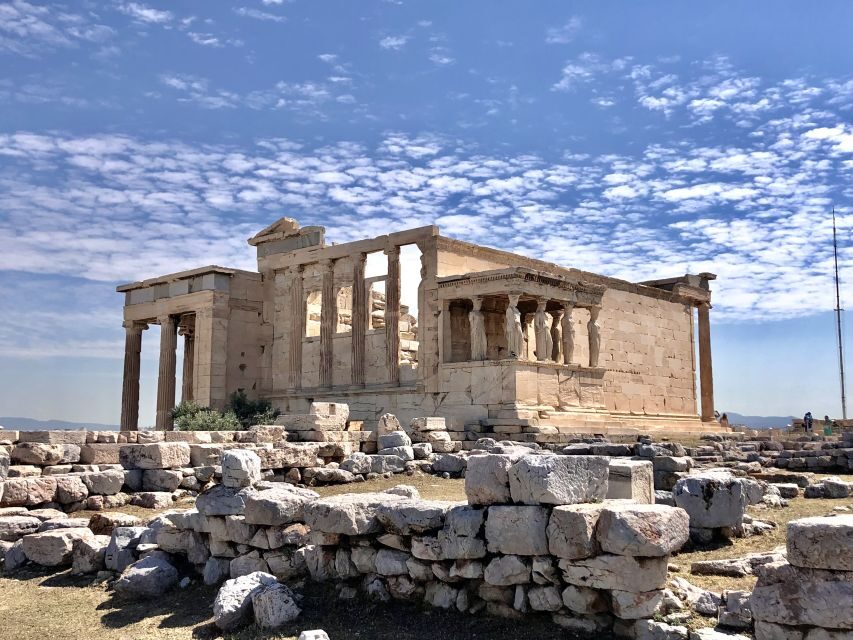
You’ll meet at the lower gate of the Acropolis, a few meters from the Acropolis Museum. It’s a good meeting point because you’re already at the right location before anything gets complicated. The tour starts early in the day, and that matters here. The Acropolis is famous, so crowds happen. The best way to enjoy it is to be there when your energy is still intact.
Here’s the practical twist: your entrance into the enclosure is through the side door on the south slope. That’s the tour’s clever move. Instead of being swept through the main access with everyone else, you start through a quieter path and build momentum right away.
You’ll also want comfortable shoes. This is a walking tour with ancient stone steps and uneven surfaces. If you know you’ll be in flip-flops or fancy sneakers, switch now. Your feet will thank you.
You can also read our reviews of more walking tours in Athens


Teatro de Dionisio and the Acropolis Myth Thread That Keeps You Oriented

Right away, the guide aims you at the stories behind the stones. The side-door route is designed so you can see Teatro de Dionisio, often described as the oldest theater in the world. Even if you don’t know Greek theatre history, you can still appreciate the sense of place: people gathered here, and the Acropolis wasn’t only a monument. It was part of civic life.
Then the tour connects myth to location. You’ll hear how Athena, goddess of wisdom, became the patron of the city after the dispute with Poseidon at the very top of the Acropolis. This isn’t just mythology as trivia. It’s a way to remember what you’re looking at, because you can tie a name, a symbol, and a reason to each stop.
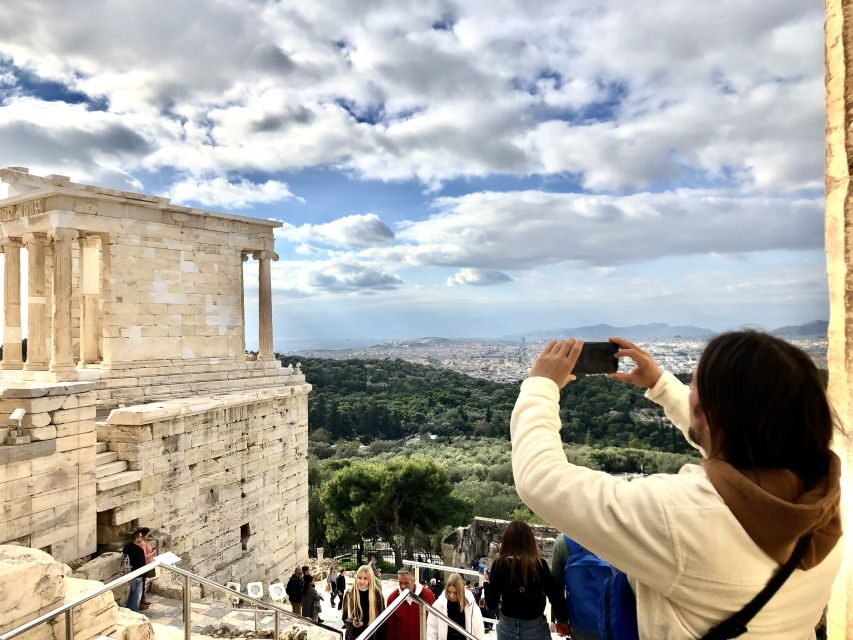
From there, you move through the Propylaea, the monumental entrance that worked like a funnel against enemies and also helped shape the emotional shift before you reach the Parthenon area. The effect is simple: you stop thinking like a tourist for a moment and start seeing the route the way ancient visitors would have experienced it.
Propylaea, Temple of Athena Nike, and the Caryatids Up Close
The itinerary isn’t only about the biggest building. It gives you the in-between moments too, and that’s where the Acropolis becomes more than a single photo.
As you progress, you’ll see the Temple of Athena Nike, described as the Ionian jewel of the site. You’ll also learn what makes it special, which helps you notice details you might otherwise walk past. Nearby are the Caryatids, the marble female columns that people love for their faces and their strong, sculpted presence. It’s one of those spots where you suddenly understand why artists were so obsessed with proportion and expression.
This is also where headphones help. In open-air sites, it’s easy to miss the most useful bits. With headphones, you can actually follow the guide’s explanation while you reposition for photos or simply catch your breath.
The Parthenon Stop: Understanding Why It Was Built 2,500 Years Ago
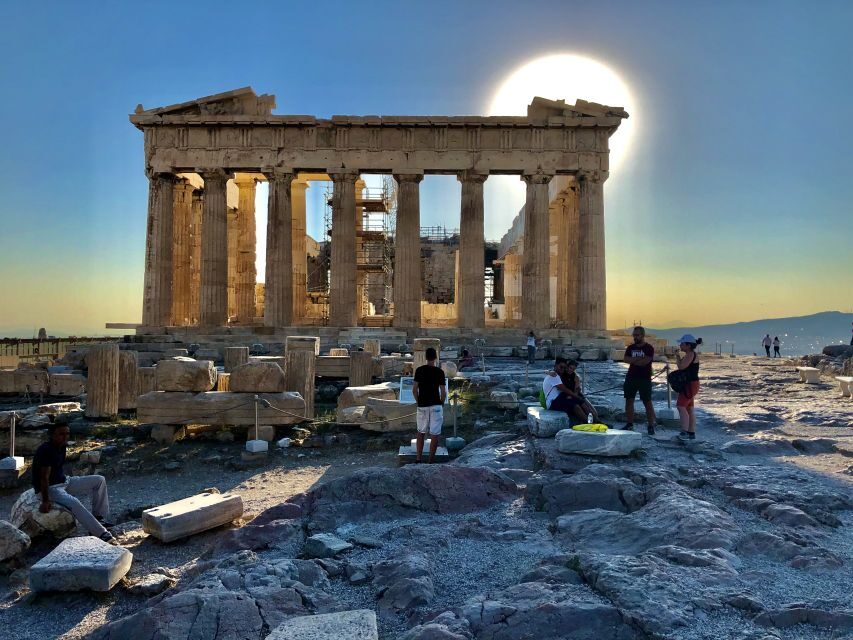
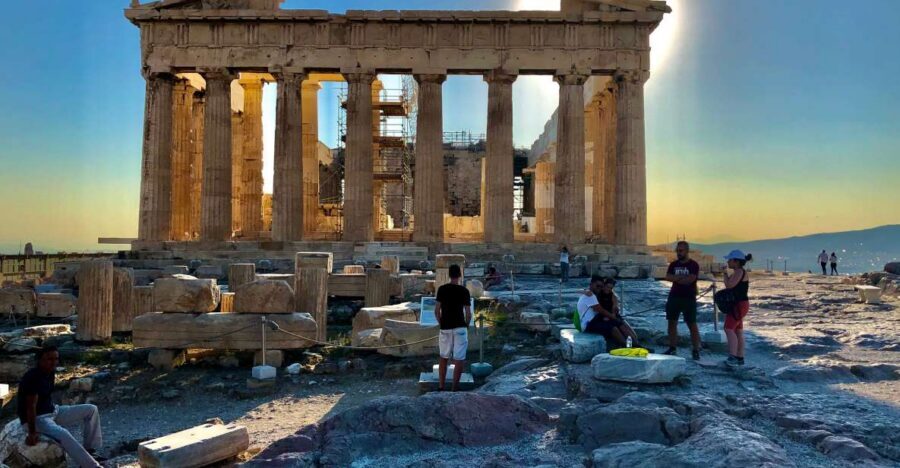
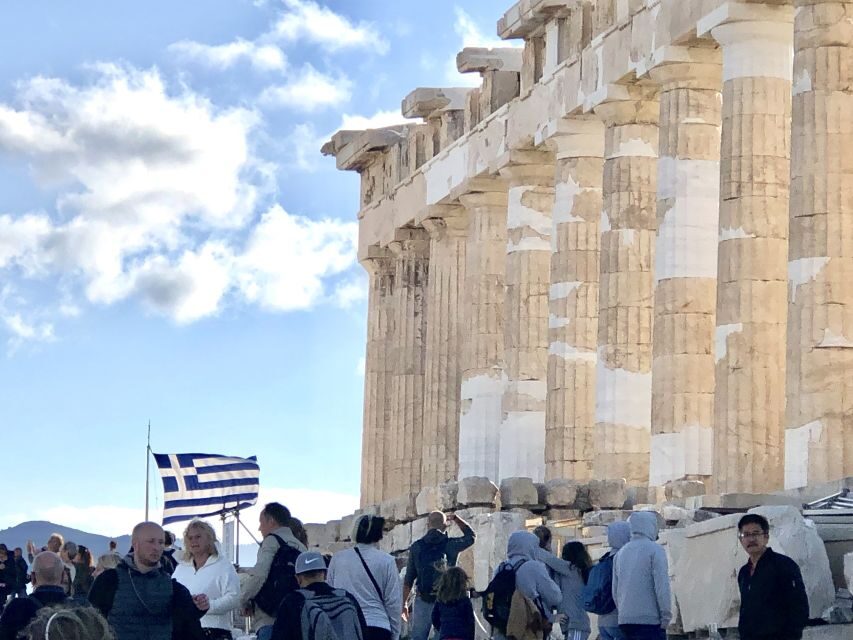
The tour’s big payoff is the moment you stop right in front of the Parthenon. This isn’t treated like a quick “here it is” photo break. You learn the real reasons it was built around 2,500 years ago, and you’ll connect the building to what makes it famous worldwide: harmony and architectural balance.
This is the difference between seeing a monument and understanding it. A lot of people view the Parthenon as a symbol. This tour frames it as a project with a purpose. When you understand the purpose, the sightlines make more sense. You start noticing how different parts of the structure relate to each other and how the whole building “works” as one idea.
If you like architecture, this stop will feel like the anchor point of the entire morning. If you’re not an architecture person, it still works, because the guide aims to make the explanation clear and story-based, not overly technical.
Big-View Athens From the Top: Hadrian, Zeus, Herod, and the Hill Names
From the Acropolis height, you’ll spend time looking out over Athens and learning what you’re actually seeing. The tour includes several named landmarks and areas you can spot from above:
- The Arch of Hadrian
- The Temple of Zeus
- The Odeon of Herod the Attic, tied to the Athens festival held there today
- The National Observatory
- The hill of Lycabetus
- Philopappos and Areopagus among others
That list could turn into a blur, so the guide’s job is to keep it connected. The value for you is practical: once you know the name and the idea, you can identify what’s in front of you. Even if you never memorize everything, you’ll come away with a sense of direction in the city.
There’s also a photo break after these viewpoints. It’s not just standing around. It’s time to capture the city from the angle you earned, not from the back of a crowded line.
You can also read our reviews of more historical tours in Athens



From Acropolis to the Old Town: Plaka and the Ancient Agora From the Street

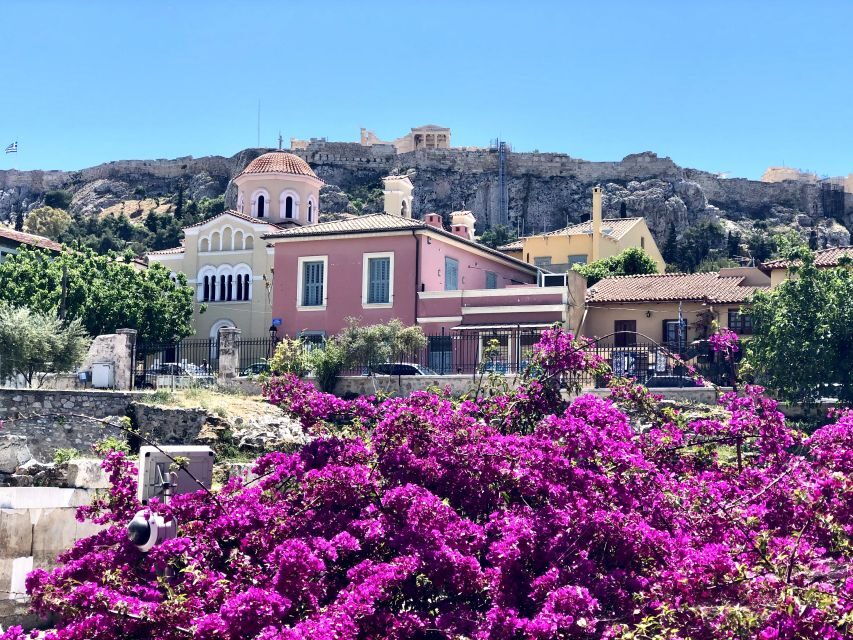
After the Acropolis, you shift gears. The tour continues through Athens’ historic center, including the Plaka neighborhood, which is widely considered the most picturesque and photogenic part of the city. Plaka is the kind of place where you can slow down without feeling like you’re losing time, because the streets invite strolling.
One of the clever choices here is that you see parts of the ancient landscape while you’re moving like a local in a living neighborhood. The Ancient Agora is handled as an outside visit, but you’ll still get the context, including the best preserved temple in Athens. You’ll also learn about the philosophical atmosphere tied to Socrates, Plato, and Aristotle, described through their connection to the spaces where people left their footprints.
That “outside the site” approach is useful for two reasons. First, it keeps the day flowing. Second, it shows you how the ancient world overlaps with everyday Athens. You’re not just stepping into a time capsule. You’re stepping into a city that kept going.
Tower of the Winds and Mitropolis: Science, Weather, and Orthodox Athens
The tour ends with two stops that feel like different centuries shaking hands.
First is the Tower of the Winds, considered the oldest meteorological observatory in the world. This is a satisfying stop because it’s not only about beauty. It’s about measurement, design, and how people tried to read the atmosphere long before modern forecasting.
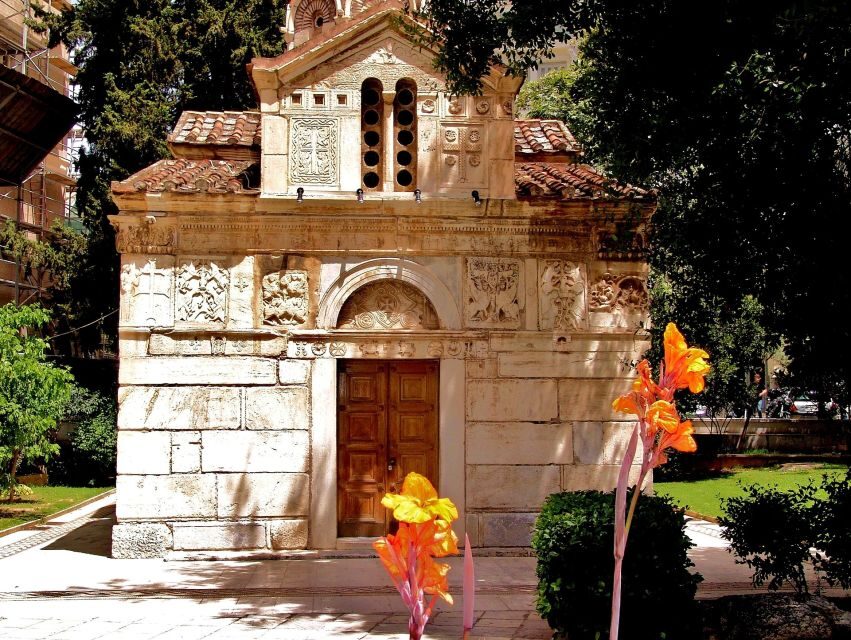
Then you visit the Mitropolis of Athens. This church is noted as the place where the marriage of Queen Sofía with Juan Carlos took place. That detail gives the building a modern anchor, so you’re not learning religion as a distant concept. You’ll also have the chance to learn about Orthodox religion, which predominates in Greece.
It’s a strong finish because it connects the ancient city’s civic spirit to today’s religious and cultural identity.
Spanish-Language Guidance That Actually Changes the Experience
Because the guide is licensed and the tour runs in Spanish, you don’t have to piece together meanings from bits and pieces. The headphones help you stay engaged even when you’re surrounded by other groups.
The quality of the explanations shows up in the guide style. Guides like Efi and Andrea have a reputation for being clear, patient, and detailed, and for pacing the tour so you can rest and take photos without feeling guilty. On top of that, there’s often practical guidance included for your broader trip to Greece, like tips during the walk that go beyond the monuments.
So if you’re learning Greek history from scratch, you’ll get structure. If you already know the big names, you’ll still benefit because you’ll connect them to specific buildings and spaces as you walk.
Value for $57: What You Pay For (and What You Still Need to Arrange)
At $57 per person for a 4-hour experience, this can be good value if you’re prioritizing guided interpretation over self-guided wandering. You’re getting a licensed Spanish guide, plus headphones, which makes listening much easier during an active walking route.
What’s not included is important: entrance fees to the Acropolis. You must obtain an Acropolis entrance ticket for a time slot between 08:00–09:00. If you don’t have the ticket after booking, the operator will contact you and manage tickets at the official cost.
Also not included: hotel pickup/drop-off and food and drinks. That’s normal for this kind of tour, but it affects planning. Build in time for breakfast beforehand, or you may end up hungry while you’re navigating stairs and viewpoints.
In other words, you’re paying for guided access and expert storytelling, not for a full packaged day with meals and transportation.
Practical Planning: Tickets, Shoes, and What the Route Demands
Here’s the planning checklist that keeps your morning smooth:
- Get your Acropolis timed entry ticket for 08:00–09:00.
- Wear comfortable shoes. You’ll be on foot for most of the tour.
- Expect a walking route through uneven ancient surfaces.
- No baby carriages or electric wheelchairs are allowed.
The tour also isn’t suitable for people with mobility impairments. If you’re navigating mobility limits, you’ll need a different plan than a standard Acropolis walking tour.
One more tip: because the tour begins early, treat it like an appointment. Plan to arrive at the meeting point on time so you don’t lose that early momentum.
Who Should Book This Acropolis and Plaka Tour in Spanish
This tour fits best if you’re a first-time visitor who wants the Acropolis to make sense quickly. It’s also a good choice if you want more than monuments. You’ll connect myth, architecture, and everyday Athens through Plaka and the old town stops.
If you love photos, the day has natural photo moments: the top-of-Acropolis viewpoints and the photo break after. If you don’t love photos, the pacing still helps because the guide pauses you in logical places instead of letting you drift.
If you’re traveling with limited Spanish, this one might be harder. The tour is in Spanish, and the experience is built around following the guide’s explanations, not reading signs.
Should You Book This Spanish Acropolis and Plaka Tour?
Yes, if you want a guided, story-led way to see the Acropolis plus the historic center without turning the day into a messy scavenger hunt. The biggest reasons to book are the south-slope entry approach, the careful explanation at the Parthenon, and the way the route continues into Plaka instead of ending at the top.
Skip it or rethink it if you’re not able to handle lots of walking and uneven stone. Also, be sure you can handle the timed entry requirement for the Acropolis ticket, since entrance fees aren’t included in the price.
If you’re ready for an early start and you want the monuments connected to real context, this is a solid way to spend 4 hours in Athens.
FAQ
Is the Acropolis entrance ticket included?
No. Entrance fees to the Acropolis are not included, and you need to obtain an Acropolis entrance ticket in the 08:00–09:00 time slot.
What meeting point do we use?
You meet at the lower gate of the Acropolis, a few meters from the Acropolis museum. The guide holds a sign with the office logo.
What language is the tour guide?
The tour is in Spanish, and you’ll use headphones during the experience.
How long is the tour?
The tour duration is 4 hours.
Is hotel pickup and drop-off included?
No. Hotel pickup and drop-off are not included.
Is this tour suitable for people with mobility impairments?
No. This option is not suitable for people with mobility impairments, and it does not allow baby carriages or electric wheelchairs.




More Walking Tours in Athens


More Tours in Athens



More Tour Reviews in Athens
- All Day Cruise -3 Islands to Agistri,Moni, Aegina with lunch and drinks included
★ 5.0 · 4,958 reviews