REVIEW · ATHENS
4 Day Private Tour, Mycenae, Nafplio, Olympia, Delphi, Meteora
Book on Viator →Operated by Private Tours Greece · Bookable on Viator
One trip. Five big names of Greek mythology and ancient life. This private route strings together Delphi and Olympia with Mycenae, Epidaurus, and Meteora, so your days feel like a clear story from oracle to games to stone monasteries. You also get hands-on breaks in pretty towns like Nafplio, plus food stops that make the drive more than just transportation.
I especially like how it’s designed for comfort: a private car with an English-speaking driver and 3 nights of lodging means you can actually breathe between sites. I also like the built-in chances to slow down, like the sunset time around Meteora rocks and the tasting stops in Olympia.
One possible drawback is that this is a lot of ancient sites in a short window, and admission fees aren’t included. Meteora can also be physically demanding because you’ll climb stairs to monasteries, even if you choose monasteries with fewer steps than others.
In This Review
- Key points to know before you go
- Why this private 4-day route works so well
- Day 1: Corinth Canal views, Epidaurus theater, and Nafplio lunch breaks
- Mycenae to Olympia: when the drive turns into the point
- Day 2 in Olympia: Zeus, the oath, and real food stops
- Delphi plus Arachova: the oracle zone and a mountain pause
- Kalambaka and Meteora sunset: how to do the big views right
- Day 4: Meteora monasteries up high, then Thermopylae’s Leonidas
- Price and value: what’s included, what you’ll pay extra
- Practical tips that make a big difference
- Who this tour suits best
- Should you book this private 4-day Athens route
- FAQ
- What time is pickup, and where do you meet?
- Is accommodation included for the full trip?
- Are entrance fees for the sites included?
- Are licensed tour guides included?
- What food or tasting experiences are included?
- Do I need to pay hotel city tax?
Key points to know before you go
- Private car, English-speaking driver: less stress, more time at each stop.
- Epidaurus acoustics + Olympia stadium blocks: big, unforgettable anchor sights.
- Tastings that feel local: olive oil and wine in Olympia, honey farm treats, plus Arachova cheese.
- Meteora sunset time is built in: you’re not only rushing up for a quick look.
- Admission tickets not included: budget for site entry fees and plan for walking.
- Licensed guides are not included by default: consider adding them for the highest-payoff explanations.
Why this private 4-day route works so well
This tour is made for people who want the headliners without the daily chaos. You’re not piecing together buses, timed entries, and long transfers. Instead, you get a private car picked up from your hotel or Athens Airport, with a driver and a daily rhythm that’s straightforward: see the site, then get time to absorb it.
The best part is how the itinerary connects themes. You start with art and performance at Epidaurus, move into power and myth at Mycenae, then hit the world’s earliest sports culture at Olympia. From there, Delphi brings prophecy and politics into the same bowl, and Meteora caps it with religion and dramatic geography. It’s not random stops. It’s a route with logic.
And yes, it’s a fast schedule. If you’re the type who wants every museum room at leisure, you may wish you had an extra day. But if you want big ancient landmarks in a guided-but-flexible format, this one is built for you.
You can also read our reviews of more private tours in Athens


Day 1: Corinth Canal views, Epidaurus theater, and Nafplio lunch breaks
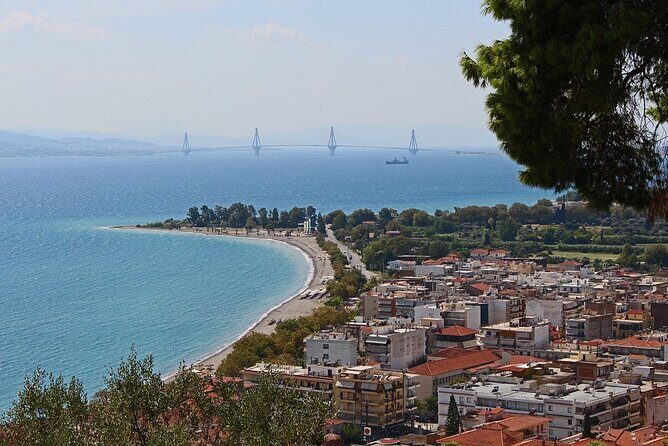
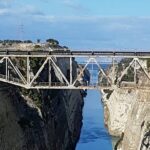
Day 1 starts with a quick, high-impact scenic moment at the Canal of Corinth. The viewpoint is the bridge above the canal, with the sense of scale coming fast: about 80 meters high and stretching roughly 6 kilometers. This is the kind of stop that helps your trip feel like it has momentum before you even reach the ruins.
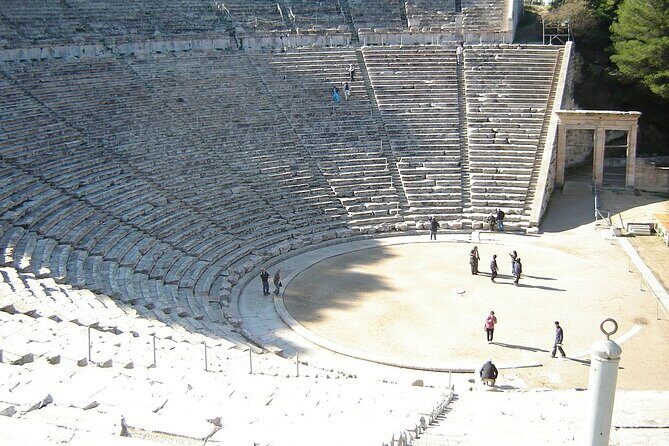
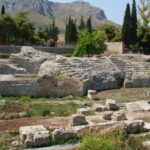
Next up is the Ancient Theatre of Epidaurus (dating back to the 4th century BC). Epidaurus is famous for its acoustics, and even if you know nothing else about the place, standing in the space makes the reputation make sense. You’ll get about an hour here, so it’s enough time to understand the layout and take photos without feeling like you’re trapped in a lecture.
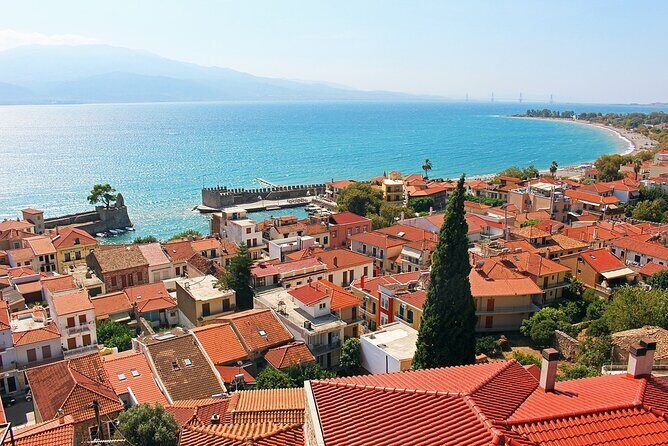
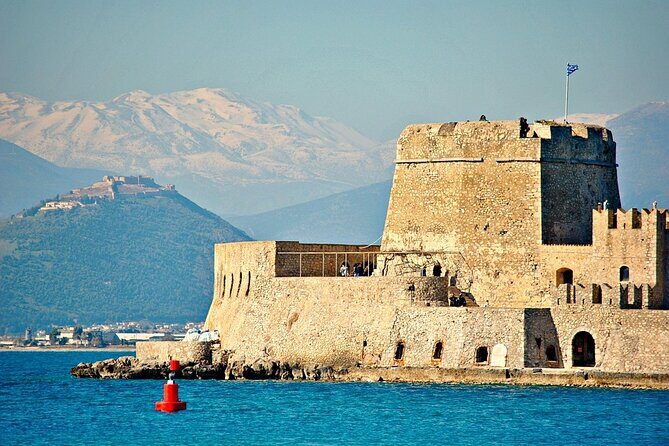
Then comes Nafplio, one of Greece’s prettier base towns. You get free time for lunch, plus optional ways to see the area like visiting Palamidi castle, which you can reach by climbing 999 steps, or taking a small boat to see Bourtzi out in the bay. This is a smart inclusion because it breaks up the heavy archaeology with a real town moment.
After Nafplio, the day turns ancient again at Mycenae. You’ll visit the Lion Gate, the Cyclopean Walls, the palace area, and the tomb of Agamemnon. Two hours is a good amount of time for Mycenae because it lets you move between the main features and still stop to picture what each area might have meant to people back then.
Finally, you drive to Olympia for an overnight. That’s a practical choice: it reduces the amount of rushing you’d have to do if you tried to sleep in Delphi or further north on day one.
Mycenae to Olympia: when the drive turns into the point
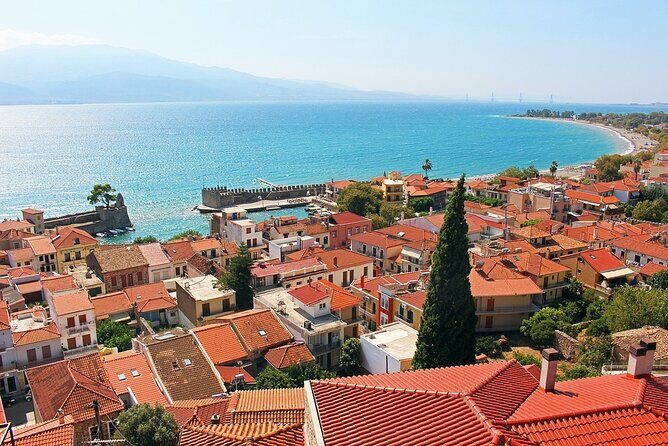
This whole day is about transitions. You leave the modern seaside vibe of Nafplio and step into fortress-minded Mycenae, where the walls and gate feel built for defense and authority. Then you roll onward to Olympia, birthplace of the Olympic Games.
The long road between these places is exactly where having the private driver matters. You’re not navigating, guessing routes, or timing connections. You can use the downtime to stretch, check your photos, and mentally reset before the next ancient site.
One practical note: you’ll likely spend a mix of time walking on uneven ground and standing for viewpoints. I’d pack for that, even if you’re not a “ruins person.” Solid shoes matter here because the itinerary includes stairs, stone paths, and long outdoor stretches.
Day 2 in Olympia: Zeus, the oath, and real food stops
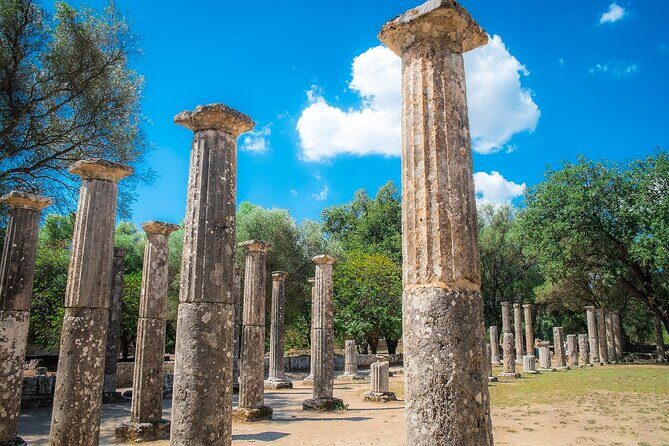
Day 2 starts with Ancient Olympia, the famous birthplace of the Olympic Games. You get around two hours at the site, which is enough time to cover the major zones without feeling frantic.
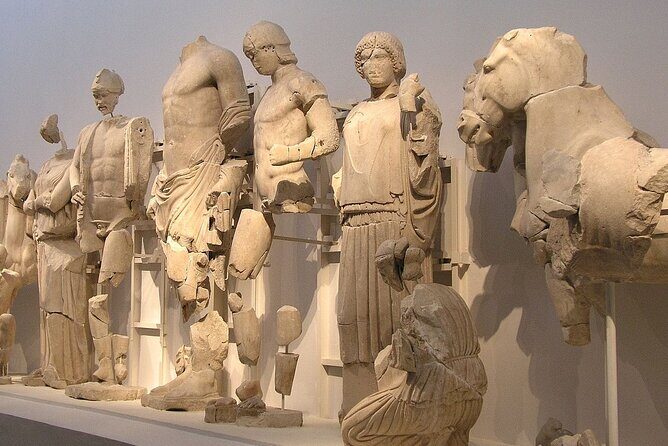
Key highlights you’ll see include the gold and ivory statue of Zeus (as represented at the site context), the Council house where athletes took the Olympic oath, Treasury houses, the Gymnasium, and the Palestra. You’ll also visit the stadium, including the marble starting blocks still in position. Seeing the starting blocks is one of those moments that makes ancient sport feel startlingly concrete.
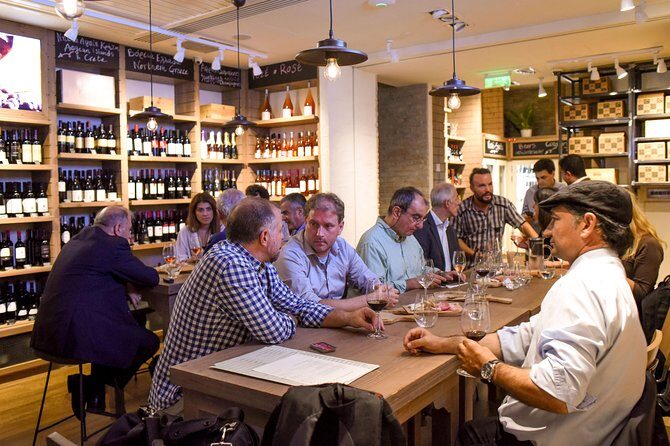
After the main archaeological visit, you shift into the fun, edible side of the day. There’s a stop at the Market of Ancient Olympia with olive oil and wine tasting. You’ll also get a chance to do a quick browse atmosphere-style through the area.
Then you’ll head to Klio’s Honey Farm. Here the tempo slows again under the shade of trees. You can expect coffee or juice and hand-made desserts made with honey produced on the farm. This is the kind of stop that turns a travel day into an actual memory, not just a photo run.
You’ll also make a short stop in Naupactus (Nafpaktos) for lunch time. The town sits by the sea with a Venetian castle and port area nearby, so it gives you a different kind of “wow” without stealing too much time from Olympia and Delphi.
You finish day 2 in Delphi for overnight, setting you up well for a more focused Delphi morning.
Delphi plus Arachova: the oracle zone and a mountain pause
Day 3 is built around the Delphi experience. After breakfast, you visit the Delphi archaeological site and related highlights with a full arc of ancient storytelling.
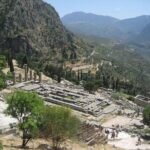
You’ll see the Ancient Oracle at the sanctuary dedicated to Apollo, the stadium, the Ancient Theatre that held more than 5,000 spectators, and then the Museum of Delphi where you can admire famous pieces like the Charioteer. Delphi is one of those sites where you’ll either enjoy the meaning or enjoy the drama of the place, but it’s hard to not feel something at the viewpoint even without a lot of background.
Then you drive to Arachova, a traditional village around 1,000 meters altitude. You get time to take a coffee or lunch break, and the stop includes tasting Arachova formaela in different forms (cheese-focused and very local).
After that, you move on to Kalambaka, at the base of Meteora’s grey rock towers. You get about three hours here to enjoy the scenery and the area around the rocks, including time tied to sunset.
Arachova and Kalambaka together work because you’re changing settings: Delphi’s sacred stone in the morning, then mountain village life, then the rock-world of Meteora. It’s a good reset before Meteora’s stairs and monasteries take over your attention.
You can also read our reviews of more tours and experiences in Athens
Kalambaka and Meteora sunset: how to do the big views right
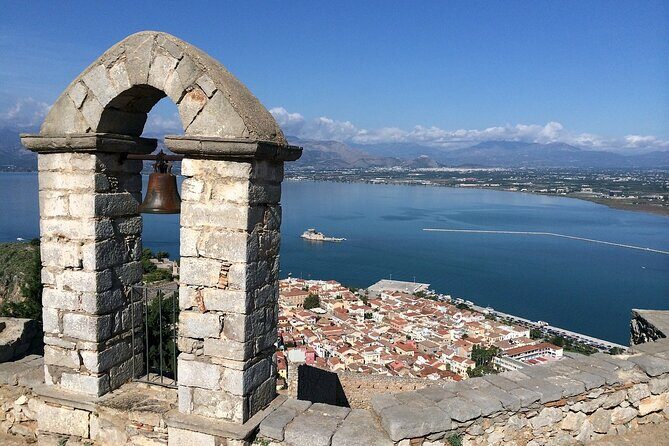
Meteora is the kind of place people either rush through or savor. This tour gives you time to do it properly because sunset time around the rocks is included, and that timing matters.
On the drive day to Kalambaka, you’ll already be near the dramatic rock formations. So when you later get the Meteora morning, you’re not starting from zero. You’ve already seen the scale from the ground.
This matters for photos, yes, but more importantly, it matters for your brain. Meteora can look like a single giant photo spot, until you realize the monasteries sit at different heights and angles. With a slower approach, you start noticing patterns and relationships between viewpoints.
Wear shoes you trust. Even if you’re not climbing all day, you’ll likely do more walking than you expect in rocky outdoor spaces.
Day 4: Meteora monasteries up high, then Thermopylae’s Leonidas
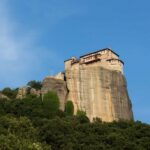
Day 4 begins with Meteora and a visit to major monasteries. You’ll see the first great monastery of Varlaam (or a similar one), founded in the 16th century, sitting on a rock around 380 meters high. Then you’ll visit the Monastery of St. Stephan from the 15th century, also built on another huge rock, with a museum inside featuring Byzantine and Christian items.
This is the core of the tour, and it’s where physical effort can show up. Even when you’re choosing among monasteries, you can expect steps and walking. If you’re traveling with someone older or with limited mobility, plan ahead for what stairs feel like for them. This route can still work, but it’s worth being realistic.
After Meteora, you make a short stop at Thermopylae / Loutra Thermopilon. You’ll see the statue of Leonidas, placed there as a memorial to the battle of the 300 Spartans against Persian soldiers. This is a quick, meaningful historical checkpoint on the way back toward your hotel area.
By late afternoon, your driver drops you off back at your hotel.
Price and value: what’s included, what you’ll pay extra
At $2,052.07 per person, the price is not “cheap,” especially since this is a private format. But it’s also not just a taxi ride with ruins tickets. You’re paying for a private car, an English-speaking driver, 3 nights of accommodation, and a set of experiences that soften the edges of a tight itinerary.
Here’s what’s included that you’ll feel in your budget:
- 3 nights accommodation (you can choose 3-star or 4-star)
- Meteora sunset tour
- Olive oil and wine tasting in Olympia
- Honey tasting at the honey farm
- Breakfast (3)
What you should plan to pay for separately:
- Licensed tour guides (not included)
- Admission tickets for sites and museums (not included)
- Hotel city tax, listed as €12 per person for 3-star and €15 per person for 4-star
How I think about the value: private tours are usually worth it when the itinerary has long drives and tight sequencing. That’s exactly what you get here: Epidaurus, Mycenae, Olympia, Delphi, and Meteora in 4 days. If you’re the type who hates logistics stress, the driver value alone can feel like savings. If you’re a museum-first traveler, you might also want to add licensed guides at the biggest sites because admissions alone won’t explain the “why.”
Practical tips that make a big difference
First, think about licensed guides. The tour provides an English-speaking driver, but not licensed guides at the sites. If you want higher-payoff explanations at places like Epidaurus, Olympia, Mycenae, Delphi, and Meteora, ask to arrange guides for the key stops. This can turn an hours-long walk into real understanding.
Second, expect stairs and uneven ground. Meteora is the biggest one, but Nafplio’s Palamidi castle option is no joke either at 999 steps. Plan for clothing and shoes that handle steps comfortably.
Third, admissions. Since site entry tickets aren’t included, budget for them and keep some cash or a card ready. Also check your timing for museum days since you’ll be visiting multiple sites with limited hours.
Fourth, communication. You’ll get your program on your mobile device or in chat, and you’re advised to use WhatsApp for immediate communication. If your phone battery is unreliable, bring a charger. It’s the simplest way to keep pickup times smooth.
One last small tip: if your driver is especially attentive with route timing and pacing, the whole tour feels easier. In the past, drivers like Demetrias have been mentioned as helpful and knowledgeable, and that kind of support matters when you’re moving every day.
Who this tour suits best
This is a strong match if you:
- Want a private experience that covers the major ancient sites efficiently
- Like day-by-day structure but still want some free time for lunch and town breaks
- Enjoy food-focused stops like wine/olive oil tasting, honey farm treats, and Arachova cheese
- Are okay with a schedule that moves, not one that lingers all day
It may not be the best fit if you:
- Want museums in slow motion with minimal walking
- Prefer a purely city-based trip rather than a ruins-and-drives route
- Need a fully step-free itinerary (Meteora monasteries can involve stairs)
Should you book this private 4-day Athens route
I’d book it if your priority is seeing Delphi and Olympia plus Mycenae, Epidaurus, and Meteora without spending your whole vacation on logistics. The mix of ancient anchors, town time in Nafplio, and actual tasting stops gives it a better feel than a “checklist-only” tour.
Before you commit, do two things: plan your budget for admission tickets and city taxes, and decide whether you want to add licensed guides for the big sites. If you do, you’ll get more out of every hour you spend standing in front of stone that survived wars and centuries.
If that sounds like your style, this private route is a smart way to experience Greece’s most iconic layers in just four days.
FAQ
What time is pickup, and where do you meet?
Pickup starts at 8:30 am, and the driver can pick you up from your hotel or from Athens Airport.
Is accommodation included for the full trip?
Yes. The tour includes 3 nights accommodation, with options for 3-star or 4-star.
Are entrance fees for the sites included?
No. Admission tickets are not included, so you should budget separately for site entries and museum fees.
Are licensed tour guides included?
No. Licensed tour guides are not included, though you may be able to arrange them separately depending on your needs.
What food or tasting experiences are included?
You’ll have olive oil and wine tasting in Olympia and a honey farm visit with honey tasting and local honey-made desserts.
Do I need to pay hotel city tax?
Yes. Hotel city tax is not included, listed as €15 per person for 4-star and €12 per person for 3-star.



More Private Tours in Athens


More Tours in Athens


More Tour Reviews in Athens
- All Day Cruise -3 Islands to Agistri,Moni, Aegina with lunch and drinks included
★ 5.0 · 4,958 reviews