REVIEW · ATHENS
Athens Social and Political Walk
Book on Viator →Operated by Planetwonk · Bookable on Viator
Politics shows up on street corners.
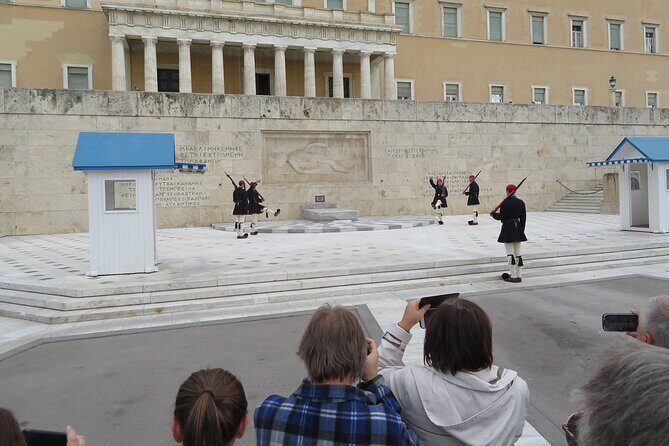
This Athens Social and Political Walk is built for people who want context, not just photos. In about 2.5 hours, you trace how power works in Greece by stopping at the Prime Minister’s official seat, the President’s residence, Parliament, and the Old Parliament House, before finishing at the National Technical University of Athens tied to the Athens Polytechnic uprising.
I especially like two things: the guide, Isaac, brings a political-scientist lens and turns what you see into clear connections to Greece’s past and today’s headlines. I also like that it’s a small-group walk (up to 15), so you can ask questions instead of shouting over a crowd.
One drawback: this is a niche tour. If you mainly want ancient ruins and big-ticket sightseeing, this route is more about institutions, civic conflict, and how the country got from past crises to the present.
In This Review
- Key highlights you’ll feel on the walk
- A Political Walk Through Athens’ Power Centers
- 2.5 Hours on Foot: Where You Meet and How the Timing Works
- Stop 1: The Prime Minister’s Official Seat and the Idea of Governance
- Stop 2: The President’s Residence and the Balance Between Ceremony and Power
- Stop 3 and 4: Parliament and the Old Parliament House
- Stop 5: The Athens Polytechnic Uprising at NTUA (Nov 17, 1973)
- How Isaac Teaches: Political Science With Human Stories
- Price and Value: Is $47.92 Worth It?
- Who This Walk Suits Best (and Who Might Want Something Else)
- Should You Book Athens Social and Political Walk?
- FAQ
- How long is the Athens Social and Political Walk?
- What’s the group size?
- What language is the tour in?
- Where do I meet and where does it end?
- Is the tour physically demanding?
- Do I get a mobile ticket?
- Can I cancel, and what if weather is bad?
Key highlights you’ll feel on the walk

- Small group energy (max 15): more back-and-forth, less rushing.
- Isaac as your guide: a non-Greek perspective living in Greece, with political science framing.
- Government sites, explained: Prime Minister’s seat, the President’s residence, and Parliament through real-world politics.
- Context for modern Greece: connections from the Greek independence era through the Junta and democratic reforms.
- Nov 17, 1973 at NTUA: the Athens Polytechnic uprising as a turning point you can actually stand near.
- Ask questions anytime: the tour is designed for history and current events to meet.
A Political Walk Through Athens’ Power Centers
If Athens feels like a city of layers, this tour treats it like that on purpose. You’re not hopping from museum to museum. Instead, you’re walking the places where Greece’s political decisions get made—and where public pressure has changed the country’s direction.
The route is also very “current events friendly.” Even when you’re standing in front of institutions, the guide links the ideas to what’s been happening more recently: polarization in Greek society, how crises shaped public trust, and how political culture keeps evolving.
And because it’s a walk, you get something tours by bus can’t: a sense of scale and street-level reality. These buildings aren’t just concepts; they’re part of the city you’re living in while you travel.
You can also read our reviews of more walking tours in Athens


2.5 Hours on Foot: Where You Meet and How the Timing Works

This is a 2 hours 30 minutes walk, designed to keep moving without feeling like a sprint. The physical requirement is listed as moderate fitness, so it’s a good fit if you can handle a steady walking pace and some time outdoors.
You’ll start at Leof. Vasilissis Sofias 2-4 (Athina 106 74). The walk ends at the main entrance of the National Technical University of Athens on Patision Avenue (Athina 106 82). The tour is offered in English and uses a mobile ticket, with confirmation received at booking.
One smart practical point: since it’s near public transportation, you can usually build it into your day without stress. It also helps if you’re trying to avoid backtracking through central Athens.
Stop 1: The Prime Minister’s Official Seat and the Idea of Governance

Your first major stop is the official seat of the Prime Minister of Greece. Standing there makes a simple thing click: governments are not abstract. They’re buildings, rules, and routines backed by legitimacy.
What I like about this first stop is how it sets the tone. Instead of treating the day like a history quiz, the guide frames governance as a system that has been tested—by wars, economic strain, public protests, and political shifts over time.
You also get a chance to ask questions early, which matters. If something feels confusing—like why certain political ideas take hold in one period and not another—this is when it’s easiest to clear it up, while the discussion is still building.
Possible drawback to keep in mind: because it’s focused on institutions, you won’t get the “wow” feeling of a monument from every angle. The value is the meaning behind what you see.
Stop 2: The President’s Residence and the Balance Between Ceremony and Power

Next you stop at the official residence of the President of the Hellenic Republic. Even if you don’t know the exact constitutional role of the President when you arrive, the stop works as a real-world anchor.
This is where you learn to read political roles like a system: how a country distributes authority, what’s symbolic versus what’s practical, and why that balance matters during moments of pressure. It also helps explain why Greek politics can feel intense: institutions don’t operate in a vacuum, and people pay attention when the rules of the game seem to be changing.
From the way the guide teaches, you can expect the discussion to connect the modern political landscape back to earlier turning points. One of the recurring themes in the feedback is that the guide runs a storyline stretching from the independence era through the Junta period and toward democratic reform—so you understand how today’s institutions came to be.
Stop 3 and 4: Parliament and the Old Parliament House
Then you reach the Parliament of Greece and also the Old Parliament House. This pair of stops is great because it lets you compare the political present with the physical reminders of earlier civic life.
What you’ll likely appreciate here is the guide’s ability to explain political conflict without turning it into party gossip. The emphasis is on structure: what Parliament represents, how public debate changes over time, and how social division can harden into political behavior.
One theme that stood out in the feedback is how the guide ties Greece’s political development to broader patterns you might recognize from your own country. If you’ve ever felt that politics is complicated because it involves more than policies—institutions, public trust, economic expectations—this part of the tour helps you see that clearly.
At the Old Parliament House, you’re also getting a sense of continuity and change. Even if you’re not a history person, comparing old and newer civic spaces makes the political evolution feel concrete rather than theoretical.
- All Day Cruise -3 Islands to Agistri,Moni, Aegina with lunch and drinks included
★ 5.0 · 4,958 reviews




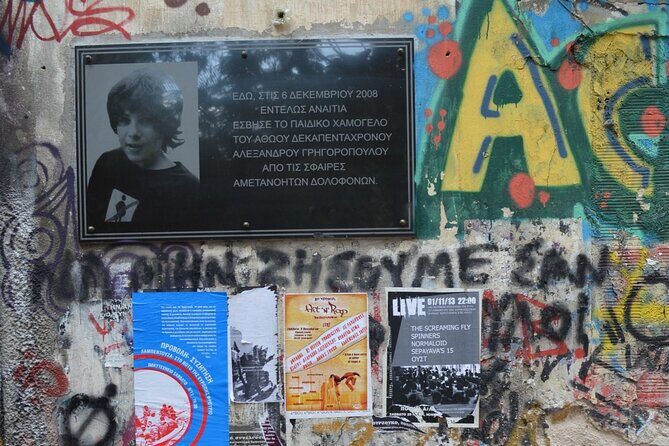
Stop 5: The Athens Polytechnic Uprising at NTUA (Nov 17, 1973)
The finish is at the National Technical University of Athens, sometimes known as Athens Polytechnic—tied to the Athens Polytechnic uprising on November 17, 1973.
This stop is the emotional and historical anchor of the walk. It’s where the day stops being only about how politics works and becomes about why people fought over it. You’re learning that Greek society has been shaped by moments when students and citizens challenged the state—and forced the country to confront what democracy should mean.
If you’re hoping for a single takeaway, this is usually it: Greece’s political present makes more sense when you understand the events that people still remember and reference. For many visitors, this is the part that turns the walk from informative to meaningful.
Practical tip: since you’re finishing at NTUA on Patision Avenue, plan an easy next step after the tour. It’s a logical place to transition into a meal or a walk through central Athens.
How Isaac Teaches: Political Science With Human Stories

The big reason this tour earns such strong marks is the way Isaac connects ideas to everyday reality. The feedback points to his wide range: he connects Greece’s political story from the independence period to the modern era and explains how major regimes shaped what came next.
He also does something that helps a lot of people: he makes comparisons that can help you understand Greek politics through a lens you already know. If you’re from the U.S. (or anywhere with a strong political culture), those comparisons can help concepts click faster.
Another standout theme is balance. Multiple remarks highlight that his perspective feels nuanced, not preachy. He’s also described as someone living in Greece but not Greek, which can be useful when you want clarity without assuming you already know every cultural reference.
You should also expect discussions to include topics beyond voting and government. The tour is described as covering angles like the economy and culture, with anecdotes connected to recent news stories. That mix is exactly what makes a “social and political walk” different from a pure sightseeing loop.
And yes, the Q-and-A part matters. This isn’t a script you’re forced to sit through. It’s a conversation built into the route.
Price and Value: Is $47.92 Worth It?

At $47.92 per person, this isn’t the cheapest walk in Athens—but it also isn’t priced like a full-day private experience. For me, the value comes down to two things:
First, it’s a small-group tour with a specialist guide. If you’ve ever done a large tour where you can’t ask questions, you know what you’re paying to avoid that frustration.
Second, you’re not just buying access to buildings. You’re buying a way to interpret them: how Greece’s institutions connect to historical events like the Junta and the lead-up to democratic reforms, and how modern crises and polarization affect everyday life.
If you want a quick photo tour, skip it. If you want to understand what you’re looking at—why people care, why disputes intensify, and why certain events still matter—this price feels more reasonable.
One extra timing detail: it’s often booked about 14 days in advance on average. If your schedule is tight, that’s a small signal to lock in early.
Who This Walk Suits Best (and Who Might Want Something Else)
This tour is ideal if you fall into one of these groups:
- You like history but hate vague timelines.
- You want current events context while you’re in Greece.
- You enjoy asking questions and hearing different angles.
- You’re comfortable walking steadily for about 2.5 hours with a moderate fitness level.
It’s also a good fit if you want something more focused than the standard Athens highlight loop. This route gives you a different lens on the city: not just what’s old, but what shapes decisions now.
Who might skip it: if you’re traveling with people who want pure sightseeing and no political discussion, the itinerary focus could feel narrow. Also, if you’re expecting lots of stops with iconic ruins, you’ll need to adjust your expectations.
Should You Book Athens Social and Political Walk?
I’d book this if you want Athens to make sense politically, not just visually. The combination of Isaac’s teaching style, the small group format, and the way the route moves from institutions to the November 17, 1973 remembrance at NTUA creates a strong “cause and effect” story.
I’d skip it if your main goal is classic monuments and easy sightseeing pacing. This is a thoughtful walk for people who want context, and it rewards curiosity.
If you’re on the fence, here’s a simple rule: if you’d rather understand why people argue than just what they built, this tour fits you well.
FAQ
How long is the Athens Social and Political Walk?
It’s approximately 2 hours 30 minutes.
What’s the group size?
The tour has a maximum of 15 travelers, and it’s designed as a small-group walk.
What language is the tour in?
The tour is offered in English.
Where do I meet and where does it end?
You start at Leof. Vasilissis Sofias 2-4, Athina 106 74 and end at the main entrance of the National Technical University of Athens on Patision Avenue (Athina 106 82).
Is the tour physically demanding?
It’s listed for travelers with moderate physical fitness. It’s a walking tour, so you’ll want to be comfortable walking for the full duration.
Do I get a mobile ticket?
Yes. The tour uses a mobile ticket, and you’ll receive confirmation at the time of booking.
Can I cancel, and what if weather is bad?
You can cancel for a full refund up to 24 hours in advance. The experience requires good weather; if it’s canceled due to poor weather, you’ll be offered a different date or a full refund.


More Walking Tours in Athens


More Tour Reviews in Athens
- All Day Cruise -3 Islands to Agistri,Moni, Aegina with lunch and drinks included
★ 5.0 · 4,958 reviews